Physical Journals for Self Reflection: Why Digital Apps Can’t Reach Your Soul
September 6, 2026 · 18 min read
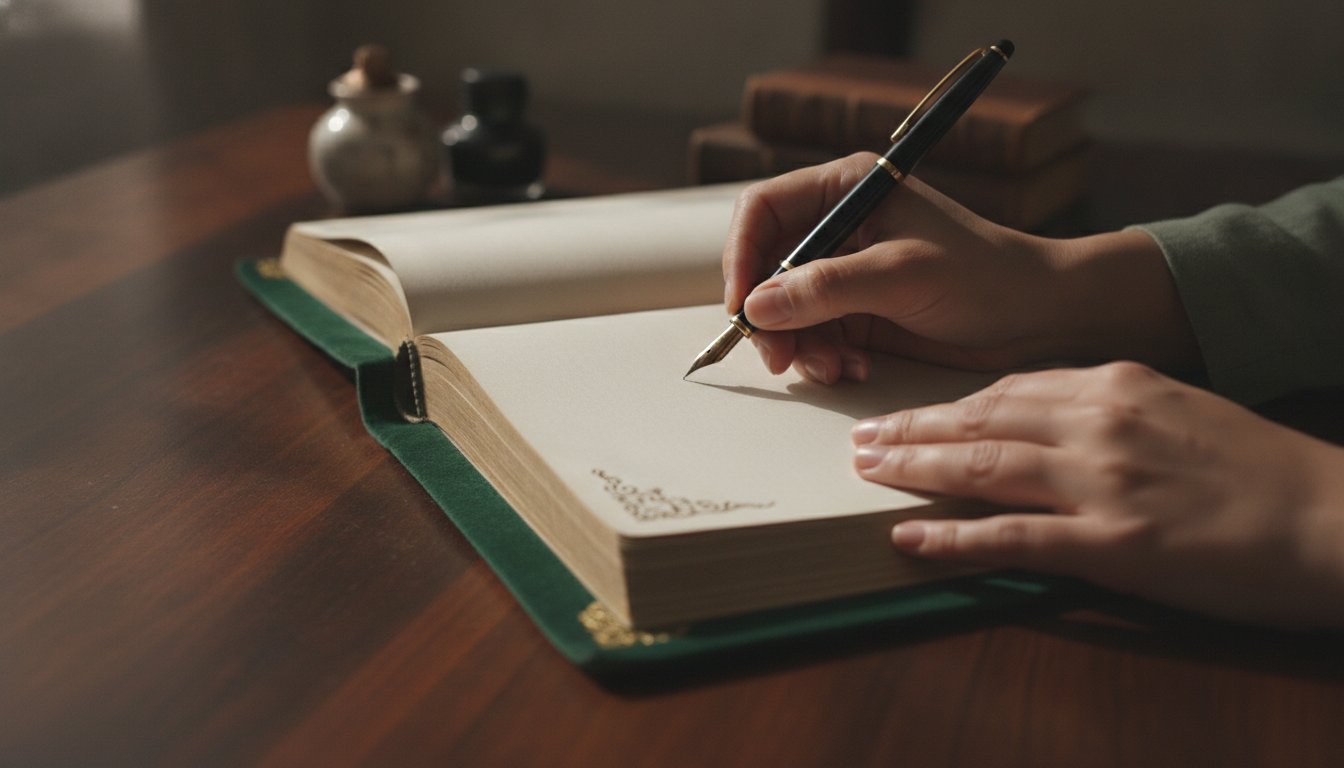
What if the screen you hold is the very barrier keeping you from the person you're becoming? We live in a world of constant pings and glowing glass. It’s exhausting. You reach for an app to record your thoughts, but the blue light feels hollow. It’s hard to find depth when your reflection is interrupted by a notification. We’ve all felt that digital fatigue. You want to grow, yet your digital notes feel like a cluttered junk drawer rather than a soul sanctuary. Using physical journals for self reflection isn’t just a nostalgic choice. It’s a vital act of reclamation.
You deserve a space that breathes. In this article, you’ll discover why the tactile rhythm of writing by hand is the essential anchor for true emotional restoration and personal evolution. We’ll look at how the physical presence of a book creates a tangible record of your journey. It’s about quiet restoration. It’s about deeper emotional intimacy with yourself. We will explore why your spirit needs a place to land that doesn’t require a battery, a password, or a Wi-Fi connection.
Key Takeaways
- Discover how the privacy of paper creates a safe sanctuary for your heart, far away from the performative nature of digital apps.
- Learn why physical journals for self reflection ground your senses and help rewire your brain through the rhythmic act of writing by hand.
- Release the pressure of perfection by embracing your journal as a place for honest discovery rather than an artistic performance.
- Explore how a structured 30-day rhythm, such as the Just 30 Days series, provides the consistency your spirit needs to evolve.
- Find out how to choose a reflective companion that acts as a gentle guide on your path toward deeper emotional intimacy.
The Digital Delusion: Why Apps Can’t Reach Your Inner Landscape
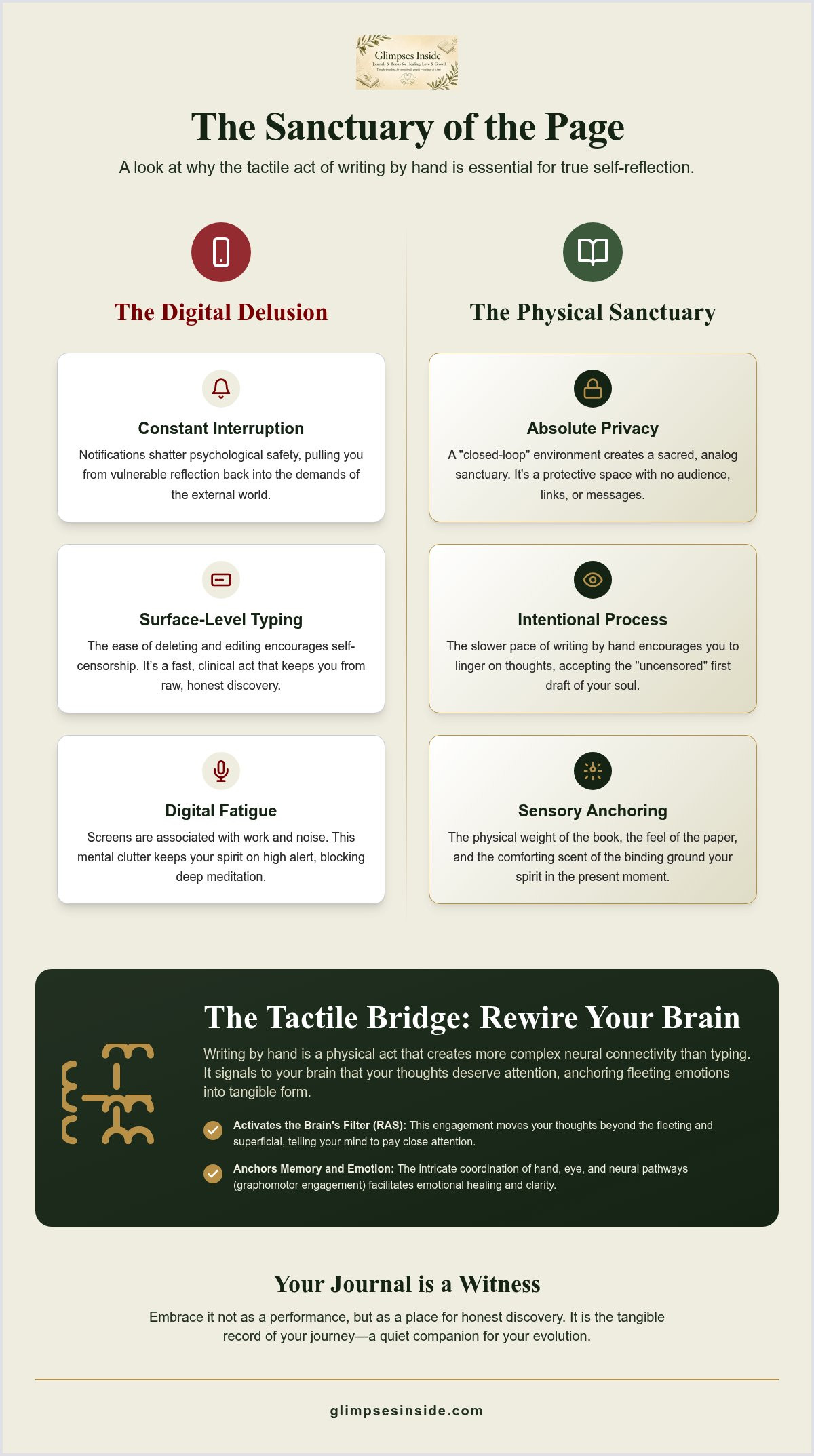
An app is a tool for productivity. A journal is a witness to your existence. When we reach for physical journals for self reflection, we aren't just choosing paper over pixels. We're creating a sacred, analog sanctuary for the heart to speak. Digital spaces are designed for the world. They're built for speed, sharing, and performance. But your inner landscape requires something different. It needs a place that doesn't demand an audience or a battery. It needs the quiet safety of a page that never looks back at you with a glowing glare.
Screen fatigue is more than just tired eyes. It's a barrier to emotional restoration. When we're constantly tethered to glass, our spirits remain on high alert. We've been conditioned to associate screens with work, news, and the endless noise of others. This mental clutter makes it nearly impossible to sink into the deep, meditative state required for true self-discovery. Many practitioners of Journal therapy suggest that the physical act of writing is what allows the subconscious to finally exhale.
The Interruption of the Notification
A digital ping is a thief. It steals your focus exactly when you're on the verge of a vulnerable realization. Every time a notification slides across your screen, the psychological safety of your reflection is shattered. You're pulled from your internal world back into the demands of the external one. Physical journals provide a necessary boundary. They offer a "closed-loop" environment. Within the covers of a book, there are no links to follow and no messages to answer. It's just you, the ink, and the unfolding truth of your own story. This isolation isn't lonely; it's protective.
Surface Typing vs. Deep Inking
We've been taught that speed equals efficiency. In the world of personal growth, this is a myth. Typing is a surface-level activity. It’s fast, clinical, and detached. When we type, we often edit as we go. We delete sentences. We move paragraphs. We curate our thoughts before they've even had a chance to breathe. This digital editing is a form of self-censorship that keeps us from reaching the raw, honest layers of our identity.
Writing by hand is a slower, more intentional process. You can't simply hit backspace on a stroke of ink. This permanence encourages you to accept the "uncensored" first draft of your soul. The movement of the pen allows for a deeper connection between the mind and the heart. It forces you to linger on a thought, to feel the weight of a word, and to stay present with the feeling until it's fully expressed. It’s not about being fast. It's about being seen by yourself.
The Tactile Bridge: How Writing by Hand Rewires the Heart
Writing is a physical act that demands your brain's full presence. When you use physical journals for self reflection, you activate the Reticular Activating System (RAS). This is your brain's filter. It decides what is important and what can be ignored. By guiding a pen across paper, you signal to your mind that these specific thoughts deserve attention. It moves beyond the fleeting, surface-level nature of a screen. Using physical journals for self reflection helps you anchor the spirit in the here and now. It creates a necessary bridge between your internal chaos and external clarity.
Recent research on handwriting and the brain shows that this manual movement creates more complex neural connectivity than typing. It bridges the gap between thought and action. It slows the spirit. This deliberate pace mimics a steady, calm pulse. It allows your internal landscape to catch up with your external world. You aren't rushing to finish a task. You're pausing to understand a feeling. This slow rhythm is where healing begins.
The Science of the Scribble
Graphomotor engagement is the intricate coordination of your hands, eyes, and neural pathways that anchors memory and facilitates emotional healing. It’s more than just ink on a page. It’s a tangible anchor for fleeting emotions. Your journal becomes a steady, non-judgmental hand. It holds your vulnerability without blinking or timing your progress. This is the beauty of an unfolding process. You see your evolution in the slant of your letters and the pressure of your pen. Each scribble is a footprint of your growth. It’s a record of where you’ve been and a map for where you’re going.
A Ritual for the Senses
The weight of a physical book signals to your brain that this time is different. It’s a boundary. You feel the grain of the paper against your palm. You smell the faint, comforting scent of the binding. These sensory cues ground you in the present moment. Tactile feedback is essential for presence. It’s why many seek out gifts for mindful living to create these intentional pockets of peace. Your journal isn't just a notebook. It’s a sensory experience that invites you to linger. It asks you to stay a little longer with yourself. Choosing a physical space for your thoughts is a step toward honoring your own story. You can find more inspiration for your practice by exploring curated tools that support your journey toward quiet restoration.
Exposing the Perfection Trap: Why Your Journaling Doesn’t Need to Be Art
Your journal is not a gallery. It is a garden. Many people avoid using physical journals for self reflection because they fear the blank page or worry their thoughts aren't poetic enough. We see curated images of perfectly calligraphed pages and assume that is the standard. It isn’t. Real growth is often unpolished. It’s raw. It’s a spirit in motion. When you let go of the need for an aesthetic outcome, you finally make room for an authentic one. Reflection is about discovery, not decoration. It is the private act of meeting yourself exactly where you are, without the pressure of a filter or a font.
The "fear of the blank page" is often just a fear of our own messy truths. We wait for the perfect moment or the perfect insight before we dare to ink the paper. But the physical journals for self reflection that hold the most power are the ones filled with crossed-out lines and ink-stained margins. These are signs of a mind at work. The cognitive benefits of writing by hand prove that the process itself is the medicine. Writing acts as a thinking tool that helps you organize chaos into clarity. It doesn't matter if the handwriting is legible. It only matters that the feeling was felt and the thought was captured.
The Myth of the Perfect Entry
Messy handwriting is often a sign of true emotional honesty. It means your heart is moving faster than your hand. Performative reflection happens when we write for an imagined audience, even in our own private books. We edit our pain to make it sound more profound. We soften our anger to make it look more reasonable. But paper doesn't judge. Redefine success in your practice as showing up, not sounding poetic. A successful entry is one where you were brave enough to be real. You don't need a masterpiece. You need a mirror.
Busting the Time Constraint Barrier
You don't need an hour of silence to find your soul. You need five minutes of truth. The myth that reflection requires massive blocks of solitude often keeps us from starting at all. In reality, small, consistent actions lead to profound internal shifts over time. This rhythmic approach is the foundation of spiritual journaling for growth. It’s about the steady pulse of a daily habit. By dedicating just a few moments each day to your inner landscape, you create a manageable path toward restoration. Consistency is the anchor, not the clock.
Designing Your Sanctuary: How to Choose Your Reflective Companion
Selecting a journal is an act of deep intentionality. It is the first step in building your soul sanctuary. You aren't just buying a notebook. You are choosing a companion that will hold your most vulnerable truths and your quietest hopes. This companion should feel like a supportive whisper, encouraging you to open up without fear or judgment. When you search for physical journals for self reflection, listen to your intuition. Does the cover invite you in? Does the weight of the book feel grounding in your hands? This choice is deeply personal. It is the foundation of your daily ritual, a promise to yourself that your internal landscape is worth exploring.
To deepen this experience, consider how other sensory elements can support your practice. Integrating gifts for quiet reflection can help you set the stage for your internal journey. A soft candle, a specific chair, or a cup of warm tea can all signal to your spirit that it is time to rest and reflect. These small, consistent actions turn a simple task into a sacred ceremony. They create a boundary between the noise of the world and the stillness of your heart.
Prompts vs. Free-Writing
Some days, the heart is full and the words flow without effort. On those days, a blank page is a gift, offering infinite space for your pen to wander. But other times, we feel lost in our own internal fog. We need a gentle guide to help us find the way back to ourselves. This is where the power of a structured journey becomes clear. The Just 30 Days series provides a rhythmic framework for those seeking clarity in the midst of confusion. It offers the "sweet spot" for habit formation, giving you enough structure to feel safe but enough space to be honest. Prompts act as a steady hand, leading you through your inner landscape one question at a time. They help you uncover what has been hidden in the noise of daily life, ensuring you never feel overwhelmed by the empty page.
The Anatomy of a Soulful Journal
The materials you choose matter for your journey. Paper weight and binding are not just technical details. They contribute to the quiet power of focused attention. When paper is thick and smooth, the pen glides with ease, allowing your thoughts to flow without interruption. There is no bleed-through to distract you from your words. A sturdy binding allows the book to lay flat, creating an open invitation to stay a little longer. You want a journal that feels like a nurturing hug for the spirit. It should be durable enough to withstand the passage of time, becoming a tangible record of your personal evolution. Your story deserves a home that is as enduring as the growth it documents. If you're ready to find your own sanctuary, explore the Just 30 Days series and curated gift boxes to find the companion that speaks to your heart.
A Month of Restoration: The "Just 30 Days" Methodology
The search for clarity often ends where the page begins. After understanding the digital noise and the science of the scribble, the question remains: how do we actually begin? The "Just 30 Days" series is the logical conclusion to this search for depth. It isn't just a collection of pages. It’s a structured invitation to meet yourself. Using physical journals for self reflection becomes most effective when paired with a rhythmic commitment. Science suggests that a 30-day window is the "sweet spot" for neuroplasticity. It’s long enough to rewire the heart's responses but short enough to feel like a manageable promise. It’s where a new habit of awareness starts to feel like home.
To begin your month of discovery tonight, follow this simple framework:
- Honor the space: Find a physical corner of your home that feels quiet. This is your sanctuary.
- Ground your senses: Light a candle or wrap yourself in a blanket. Signal to your brain that the world can wait.
- Commit to the ink: Write for five minutes. Don’t wait for a grand insight. Just let the pen move.
The Power of the 30-Day Rhythm
Small, consistent actions are the core of personal evolution. This is the heartbeat of the Glimpses Inside philosophy. We believe that transformation doesn't happen in a single explosion of effort. It happens in the quiet, daily pulse of showing up. You might face a "middle-of-the-month" slump. This is normal. It’s the moment when the novelty fades and the real work of reflection begins. When you feel this resistance, lean into the structure of the "Just 30 Days" series. Let the prompts carry you through the fog. By the time you reach Day 30, the emotional shift is profound. You'll find a tangible record of your survival and your growth. You'll see that you aren't the same person who opened the book on Day One.
Curating Your First Moment of Stillness
When you open a curated gift box, the sensory details create a boundary that tells your heart it’s safe to stay. These boxes are designed to honor the start of your journey, providing the tools you need to feel seen. As you walk this path, keep an eye toward the future. Upcoming books by Ianthe Writes in 2026 will continue to expand this landscape, offering new ways to deepen your self-awareness. But the most important step is the one you take right now. Step away from the glowing glass. Put down the phone. Pick up the pen. Your inner landscape is waiting for you to arrive. It’s time to stop documenting your life and start living it from the inside out. Your soul sanctuary is ready.
Step Into Your Soul Sanctuary
The journey toward yourself doesn't require a faster connection or a better app. It requires a pause. You've explored how the digital world can often fragment our focus, while the simple act of writing by hand anchors us in the present. By choosing physical journals for self reflection, you're creating a private boundary where your thoughts can finally breathe without interruption. You don't need to be an artist or a poet. You only need to be willing to show up for your own life, one honest ink stroke at a time.
Your evolution is a quiet, rhythmic process. It’s a series of small, consistent steps that lead to profound internal shifts. If you're ready to trade screen fatigue for soul sanctuary, it's time to begin. Begin your month of discovery with the "Just 30 Days" series. These journeys, curated by author Ianthe Writes, are specifically designed for your emotional safety and quiet restoration. Whether you choose a standalone book or one of our soulful gift boxes, you're investing in a tangible record of your growth. Your spirit is ready to exhale. The page is open. Trust the unfolding beauty of your own story.
Common Questions on Your Reflective Journey
Is it better to journal in the morning or at night for self-reflection?
Morning journaling helps you set a soft, intentional tone for the day, while evening reflection allows your spirit to exhale before sleep. There is no wrong time. If you seek clarity for the hours ahead, try a few moments after waking. If you need to release the day's weight, evening is your sanctuary. Choose the rhythm that feels most like a supportive hug for your current season of life.
How do I start a physical journal if I haven’t written by hand in years?
Begin with a single sentence. You don't need to write a manifesto. Focus on the tactile feel of the pen against the paper. This sensory grounding helps bridge the gap if you've been away from handwriting for a long time. Using physical journals for self reflection is about the process, not the product. Let your first entry be a simple greeting to yourself. Your hand will remember the rhythm sooner than you think.
What should I do if I miss a day in my 30-day journal journey?
Gentleness is the core of this practice. If you miss a day in your 30-day journey, simply return to the page tomorrow. There is no penalty and no failed progress. Your evolution is an unfolding process, not a rigid test. Missing a day is just a pause in the music. Pick up the pen where you left off. The Just 30 Days series is designed to be a supportive companion, not a source of pressure.
Can physical journals really help with emotional healing and restoration?
Physical writing acts as a tangible anchor for emotional restoration. Research indicates that the hand-to-paper connection engages the brain in ways typing cannot, helping to process heavy emotions and reduce anxiety. It provides a safe, private space to document your internal landscape. This ritual creates a sense of quiet restoration. By externalizing your feelings, you move them from a place of heavy internal clutter to a place of visible, manageable truth.
What is the difference between a diary and a reflective journal?
A diary often acts as a record of external events, like a log of your days. A reflective journal looks inward. It focuses on your response to those events and the nuances of your emotional evolution. While a diary asks what happened, a reflective journal asks how this shifted your spirit. It is a deeper conversation with yourself. It is a tool for discovery rather than just documentation of the passage of time.
How much time do I actually need to spend journaling each day?
You only need five to ten minutes each day to experience a profound shift. Quality of presence matters more than the quantity of minutes spent. Small, consistent actions are what lead to long-term restoration. You don't need to carve out an hour of silence. Even a brief moment of focused attention before the house wakes up or right before bed is enough. It is about the steady pulse of showing up for yourself.
What happens to my privacy if I use a physical journal?
A physical journal offers a level of psychological safety that digital apps cannot match. There are no clouds to hack and no data to be sold. Your words remain in your hands. To protect your privacy, treat your journal as a sacred object. Store it in a drawer or a personal box. This physical boundary reinforces the idea that this is a private sanctuary meant only for your eyes and your personal evolution.
Should I use prompts or just write whatever comes to mind?
Both have a place in your soul sanctuary. Prompts act as a gentle guide when you feel lost or stuck in the fog of a busy mind. They provide a starting point for deeper self-awareness. Free-writing is beautiful when your heart is full and needs to overflow onto the page. Many find that physical journals for self reflection work best when you alternate between the two based on what your spirit needs in the present moment.