Hopebox Alternatives: 2026 Comfort Care Package Guide
October 9, 2026 · 17 min read
The most comforting care package isn’t always the one filled with the most treats. If you’re searching for Hopebox alternatives for comforting care packages, the right choice depends on what the person can welcome right now: a series of small surprises, a meal that eases the day, or a personal gift they can take in at their own pace. It’s understandable to want your gesture to feel caring, not generic or too cheerful. Quiet presence can mean more than finding perfect words.
This guide compares alternatives by the kind of support they offer, so you can choose with the recipient’s season in mind. We’ll look at options such as food packages for practical comfort and reflective, book-led gifts for someone who welcomes a gentler moment of introspection. You’ll also find a simple way to consider whether a subscription, a one-time delivery, or a personal gift feels like the better fit. The aim isn’t to fix a hard moment. It’s to let someone know they’re remembered, without asking them to reply.
Key Takeaways
- Compare Hopebox alternatives for comforting care packages by the support they offer, from practical food gifts to quieter moments of reflection.
- Match the gift to the recipient’s situation, preferences, and energy rather than choosing by presentation alone.
- Consider delivery pattern and recipient effort to avoid adding another task during an already demanding time.
- A short, thoughtful note can communicate care without asking for a reply or expecting someone to feel better.
- Explore Just 30 Days and Glimpses Inside gift boxes as a literary option for someone who welcomes gentle, self-paced reflection.
Hopebox Alternatives for Comforting Care Packages: Start With Their Needs
Choosing how to show up for someone who is carrying a lot can feel surprisingly difficult. You want the gesture to say, “I’m thinking of you,” not add another decision, task, or expectation. Start with the recipient’s present needs rather than what you would personally find comforting. The best Hopebox alternatives for comforting care packages can look very different depending on the person and the moment.
A comforting care package is a gesture shaped around what the recipient can welcome, not what the giver assumes they should need.
Care packages can take many forms, from practical necessities to small comforts. A brief look at the history and purpose of care packages offers a useful reminder: their meaning comes from thoughtful support, not from any one kind of item. Consider what might feel manageable to receive and use.
What kind of support might feel welcome right now?
Think about the kind of support that could meet the person where they are. Practical relief might mean food they can share or enjoy without much preparation. Sensory comfort could be a soft, calming item or a familiar treat. Encouragement may come through a personal note, while reflective companionship might suit someone who enjoys reading or journaling at their own pace.
Energy matters, too. A book, activity, or self-care item may be welcome if the recipient has room for it, but it can feel like one more thing to do during an exhausting stretch. A gift can offer a small moment of care; it can’t remove grief, illness, fatigue, or the demands of caregiving. Let the gesture be company, not a solution.
When does a personal gesture feel more comforting than a subscription?
A single gift can feel more fitting when the moment calls for a simple, timely reminder of care, or when recurring deliveries might feel like an obligation. Subscriptions can offer a sense of continuity, but they work best when the recipient genuinely welcomes more packages over time. Consider whether repeated surprises would feel comforting or create pressure to respond, make room, or keep up.
A personal gesture doesn’t need to be elaborate. A brief note can explain why you chose it and make clear there’s no need to reply. For ideas on choosing a gift with care and intention, explore this guide to curated gift boxes.
Before choosing, pause over three gentle questions:
- Would practical help, sensory comfort, encouragement, or reflection feel most welcome?
- Does the recipient have the time and energy to use what I’m sending?
- Would one thoughtful delivery feel easier to receive than a recurring commitment?
You don’t have to guess perfectly. A modest gift, chosen with attention to the person’s preferences, can communicate presence without asking them to feel better or give anything back.
Six Hopebox Alternatives, From Practical Care to Quiet Reflection
Care packages aren’t interchangeable. A meal may ease a practical strain, while a sensory gift offers a small moment of comfort. A subscription can provide a recurring gesture, but a reflective book may suit someone who prefers private, self-paced engagement. This comparison of Hopebox alternatives for comforting care packages focuses on fit, not on declaring one format best for everyone.
Which care-package formats suit different moments?
Use the table as a starting point, then consider the recipient’s preferences and circumstances.
| Option type | Best-fit situation | Possible drawback | Decision points |
|---|---|---|---|
| Practical food gift | Someone who may appreciate a ready-to-enjoy meal or shareable food. | Dietary needs, appetite, or delivery timing may make food less suitable. | Consider ingredients, dietary needs, serving size, timing, and storage. Spoonful of Comfort offers sympathy and soup packages. |
| Self-care subscription | A recipient who enjoys recurring deliveries and small rituals. | Regular boxes can feel like an obligation or arrive at an inconvenient time. | Consider delivery frequency, subscription terms, cancellation process, and whether repeat packages would suit the recipient. |
| Sensory comfort box | Someone who welcomes tactile or soothing items as a small pleasure. | Scents, textures, or other sensory details may not suit everyone. | Think about the recipient’s preferences for scents, textures, and other sensory details. |
| Personalized handmade package | A person who values individual touches and familiar, useful items. | Personalization takes thought, and unsuitable choices can miss the mark. | Choose items that fit the recipient’s preferences and are easy for them to receive. |
| Reflective books or journals | Someone who enjoys reading or writing privately, at their own pace. | Reflective material may not feel welcome during a demanding moment. | Consider the subject, format, and whether the recipient welcomes reflective gifts. |
| Patient-focused care package | Someone who may appreciate a gesture tailored to a specific health experience. | A general package may not reflect the person’s needs or preferences. | Consider who the package is intended for and whether it suits the recipient’s circumstances. Phil’s Friends describes care packages for cancer patients. |
When might a reflective book or journal be a thoughtful alternative?
Reading or writing can offer a private way to pause, with no schedule to keep and no need to respond to anyone. It’s a thoughtful fit for someone who already welcomes reflection, rather than a gift meant to prompt a particular feeling or outcome.
Glimpses Inside offers reflective publications and curated gift boxes, including its Just 30 Days series. It’s a book-led alternative for someone drawn to gentle reflection. For more thoughtful-gifting ideas, explore gifts for emotional healing, and browse reflective books and curated gift boxes as one possible way to make a literary gesture.
Hopebox vs. Other Care Packages: Compare the Kind of Comfort
Hopebox and other care packages can all express care, but they don’t create the same experience. A recurring box brings repeated deliveries; a meal may address a practical need; a reflective book leaves room for a quieter, private moment. The useful comparison isn’t simply which package contains more. It’s how the gift fits the recipient’s preferences, space, and energy.
The best alternative depends on what the recipient needs and prefers, not on which package seems most impressive to send.
| Gift type | Personalization | Delivery pattern | Recipient effort | Kind of comfort |
|---|---|---|---|---|
| Hopebox subscription | Curated selection of handmade items | Monthly, according to the current subscription offer | Unpacking and making room for each delivery | Ongoing surprises and self-care-oriented items |
| One-time food package | May allow choices such as meal type or dietary options | Single delivery | Usually focused on receiving, storing, and enjoying food | Practical, shareable nourishment |
| Sensory comfort box | Varies by provider and available selections | Often a single gift, though some are recurring | Depends on the items and the recipient’s sensory preferences | A small tactile or soothing pleasure |
| Personalized handmade package | Can reflect the sender’s knowledge of the recipient | Usually one-time | May involve sorting and finding a place for several items | Individual attention and familiar touches |
| Reflective publication | Chosen around the recipient’s interest in reading or writing | One-time gift, used at the recipient’s pace | Requires time only if and when they choose to engage | Quiet, inward reflection |
Hopebox is currently listed at $58.99 monthly and offers a curated selection of handmade items. That recurring format may suit someone who enjoys regular surprises. A single delivery, by contrast, may be easier for a person who prefers one gesture without anticipating another parcel. Neither pattern is automatically more caring. Consider the recipient’s storage space, their comfort with ongoing deliveries, and whether opening or using the gift asks for attention they may not have.
Is a subscription box or a one-time care package a better fit?
A subscription extends the reminder over time. A one-time package offers a more immediate gesture without creating a continuing delivery. Think about the person’s habits: do they enjoy parcels arriving regularly, or might they feel pressure to unpack, respond, or keep up? A food delivery might be used and shared, while a box of objects may need storage. Choose the rhythm that feels lightest to receive.
How does a reflective gift differ from a conventional care package?
A reflective publication offers an inward experience rather than a collection of consumable items. It can be set aside and returned to whenever the recipient feels ready. Glimpses Inside offers reflective books and curated gift boxes, including the Just 30 Days series. These are a book-led option for someone who welcomes self-paced reflection, not a promise of a particular outcome. For quieter gifting inspiration, browse this guide to gifts for mindful living.
How to Choose a Comforting Care Package Without Adding Pressure
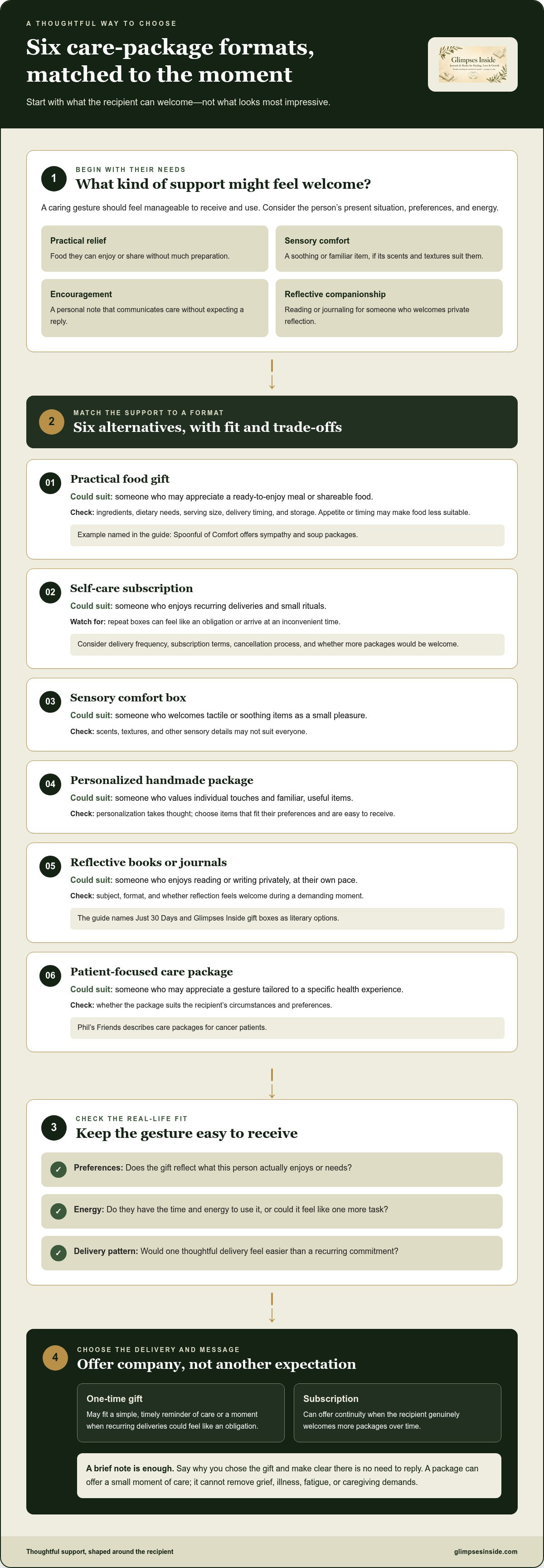
A caring gift should fit the person’s life as it is today. Their preferences, daily routine, and capacity may have shifted during illness, grief, caregiving, or another demanding season. A simple decision sequence can help you choose thoughtfully without expecting the package to carry more meaning than it can.
- Consider the moment. Ask what might be useful now. A practical item may suit a busy or tiring stretch; a quiet, personal gift may feel better when the recipient wants space.
- Recall their preferences. Think about what they already enjoy and what they tend to avoid. A favorite snack may be welcome, while scented products, unfamiliar foods, or activity-based gifts might not be.
- Notice the effort involved. Will the gift need preparation, storage, reading time, or a reply? Choose an option that doesn’t turn receiving into another task.
- Think through practical details. For food, consider ingredients and dietary needs. For a subscription, weigh delivery frequency and terms. For any package, consider timing and how easily the recipient can receive it.
What should you consider before sending a care package?
Use what you know, not what you imagine the recipient ought to want. Consider their routines, available space, and current capacity. A scented box might be comforting to one person and unwelcome to another; a journal may delight someone who likes writing but feel like homework to someone with little energy. If you’re unsure about a potentially sensitive choice, a less demanding gift may be kinder.
Practical details can affect whether a gift is easy to receive and use. Consider dietary needs, delivery timing, subscription frequency, and whether the package requires space or preparation. Thinking through these details can prevent a thoughtful gesture from arriving at an inconvenient time or with an unexpected commitment.
How can a short message make the gift feel more personal?
Keep the note warm and direct. You might write, “I’m thinking of you. No need to reply,” or mention a shared memory that brings you close without asking the person to feel cheerful. Avoid phrases that minimize what they’re facing or suggest the gift will make everything better. Let your words acknowledge the moment, not explain it away.
If you offer practical help, make it specific and easy to accept: “I can leave dinner at your door on Thursday,” rather than “Let me know if you need anything.” A concrete offer gives the person a clear choice, while leaving room to decline. The package and the note can simply say: you matter, and I’m here.
If a reflective, book-led gift feels suited to someone who enjoys quiet time, explore reflective books and curated gift boxes from Glimpses Inside as one thoughtful option.
A Reflective Alternative from Glimpses Inside
Not every care package needs to be edible, scented, or filled with objects for immediate use. For someone who enjoys reading and personal reflection, a literary gift can offer a quieter kind of company: something to return to in private, whenever they feel ready. Glimpses Inside offers reflective publications and curated gift boxes, including the Just 30 Days series, as a book-led alternative among Hopebox alternatives for comforting care packages.
Who might appreciate Just 30 Days as a care-package alternative?
The Just 30 Days series may suit someone who enjoys quiet reading, personal reflection, or receiving a thoughtful literary gift. It’s an optional choice, not a fit for every moment. If the person is short on time or would benefit more from practical help, another kind of support may feel more useful. Let what you know about their interests guide you.
A reflective publication doesn’t need to be read from beginning to end in one sitting. The recipient can make space for it when they want to, or simply set it aside until a quieter moment arrives. That freedom can matter when a person’s attention is already stretched. The gift offers an invitation, not an assignment, and it doesn’t promise to change what they’re going through.
How can a book-led gift become a caring gesture?
Pair the gift with a brief note that makes your intention clear without creating an expectation. For example: “I thought you might enjoy this when you have a quiet moment. No need to reply.” A sincere message like this gives the recipient permission to engage at their own pace. If you share a memory connected to reading or a subject you both enjoy, mention it simply.
Glimpses Inside’s curated gift boxes complement its literary offerings. They offer a tangible way to share a book-led gift with someone who enjoys reflective reading. A book or gift box can be a gentle way of saying you remembered what matters to them. It remains a gesture of care, not treatment or a solution to caregiving challenges.
If reflective practice appeals to you, the 30-day journal for clarity guide offers related reading. And when a literary gesture feels right for the person you have in mind, explore reflective books and gift boxes from Glimpses Inside.
Let Your Gesture Meet Them Where They Are
There’s no perfect package for every difficult season, and you don’t have to find one. A thoughtful choice begins with noticing what the person might welcome now, then offering it without expecting a response or a change in how they feel. The most meaningful Hopebox alternatives for comforting care packages leave room for the recipient to receive care in their own way and time.
Glimpses Inside, owned and operated by author Ianthe Writes, offers the Just 30 Days series and curated gift boxes for those drawn to books and quiet reflection. They’re one possible way to express care, not a promise to solve what someone is facing.
Choose the gesture that feels true to your connection, and let a few sincere words carry the rest. Explore the Just 30 Days series and curated gift boxes from Glimpses Inside as you consider a thoughtful gift. A small act of attention can remind someone they’re not forgotten.
Frequently Asked Questions
Is Hopebox the only care package designed for caregivers?
No. Hopebox is one option, and other care packages focus on particular needs or circumstances. For example, Spoonful of Comfort offers sympathy and soup packages, while Phil’s Friends describes care packages for cancer patients. These aren’t necessarily designed for every caregiver, but they show how gifts can be tailored to a situation. Compare the intended recipient and purpose rather than assuming every comfort package offers the same kind of support.
What is a thoughtful alternative to Hopebox for someone who dislikes subscriptions?
A one-time gift is a natural alternative if recurring parcels don’t appeal. You might choose a single food delivery, a personally selected handmade gift, or a reflective publication for someone who enjoys reading. The best Hopebox alternatives for comforting care packages don’t need to follow a subscription model. A single, carefully chosen gesture can feel complete on its own, without setting up future deliveries the recipient may not want.
Can a book or journal make a comforting care-package gift?
Yes, if the recipient enjoys reading, writing, or quiet reflection. A book can be opened whenever they have the interest and energy, rather than requiring immediate use. Glimpses Inside offers reflective publications, including its Just 30 Days series. Consider the person’s reading tastes and whether a reflective gift feels welcome; it’s a personal gesture, not treatment or a promise to change a difficult situation.
How do I choose a care package for someone going through a difficult time?
Start with what you know about their circumstances, then rule out anything likely to create friction. For someone with limited energy, avoid gifts that need assembly or a new routine. For a recipient sensitive to fragrance, choose an unscented option. If they’re away from home often, consider whether a delivery could be received safely. Small practical details can make a gift easier to welcome.
What should I write in a note with a comforting care package?
Keep the note sincere and specific. You could write, “I’m remembering our quiet walks and thinking of you today,” or “I can pick up groceries this week if that would help.” Avoid trying to explain the person’s experience or promise that things will improve. A warm sentence that reflects your real connection can mean more than polished words, especially when it leaves space for the recipient’s own feelings.
Are food gifts appropriate for a caregiver care package?
They can be, particularly if the recipient enjoys the food and it fits their circumstances. Before sending a meal or snacks, consider allergies, dietary restrictions, household preferences, and whether the food needs refrigeration or preparation. A shareable item may suit a household, while a single-serving option could be more practical for someone living alone. Choosing food that fits their needs and circumstances helps make the gift usable, not another thing to manage.
Can I send a care package without expecting a reply?
Absolutely. You can say so plainly in the note: “No need to respond. I just wanted you to know I’m thinking of you.” Avoid pairing the gift with a question that asks the recipient to report how they’re doing or acknowledge the delivery. A package can carry a quiet message of care all by itself. Let them receive it in their own time, with no reply owed.