Gifts for Someone Who Doesn't Like Flowers: 2026 Ideas
October 6, 2026 · 16 min read
What if the most thoughtful alternative to flowers isn’t another pretty object, but a gesture that makes someone feel understood? If you’re searching for gifts for someone who doesn't like flowers, start with what the person actually enjoys. Familiar alternatives can feel just as predictable as a bouquet, and guessing at someone’s tastes can add pressure to an otherwise kind moment.
A flower-free gift can be practical, playful, comforting, or quietly meaningful. The right choice doesn’t need to be grand or expensive. It should fit the person, the occasion, and the way they like to receive gifts.
This guide compares ideas by recipient, occasion, and the feeling you hope to offer. You’ll find options for shared experiences, useful everyday pleasures, and gifts that invite a little reflection, including books and curated gift boxes. Whether you know their tastes well or are choosing with care from a little distance, you can find a gesture that lets them enjoy the moment in their own way.
Key Takeaways
- Choose a flower-free gift by noticing what helps the recipient feel understood, rather than trying to replace a bouquet.
- Compare practical items, favourite treats, books, shared experiences, and plants against the recipient’s preferences and daily life.
- Let the occasion shape the gesture’s tone, while your relationship helps guide how personal it feels.
- If you’re unsure, use a simple four-step process to narrow down gifts for someone who doesn't like flowers without making the choice feel grand or high-pressure.
- For someone who enjoys reading or reflection, consider the Just 30 Days series or a curated gift box designed to complement books and journals.
Why choose gifts for someone who doesn't like flowers?
Not liking flowers is simply a preference, not a problem to solve with a more convincing bouquet. A gift can carry warmth and care when it reflects what the recipient enjoys, rather than following a familiar gifting convention. The gesture matters; it doesn’t have to look a certain way.
Gift-giving has long been one way people sustain social relationships. Thoughtfulness, however, doesn’t depend on choosing the traditional option. A good flower-free gift suits the recipient’s tastes and the relationship you share. Consider practical everyday items, favourite treats, shared experiences, plants, and reflective gifts, then choose what feels right for the person receiving it.
What makes a flower-free gift feel thoughtful?
Start with something you’ve genuinely noticed: the tea they make each morning, a hobby they return to, or a small pleasure they mention often. That personal detail is different from assuming what they should enjoy. A gift connected to their real routines feels attentive, not prescriptive. Add a short note to explain the connection, such as, “I remembered you enjoy a quiet read at the end of the day.”
How close is your relationship with the recipient?
With someone you’ve only recently met, choose something useful and low-pressure, such as a familiar treat or a simple item suited to their routine. For a close friend or family member, a gift tied to a shared memory can feel more personal. Match the intimacy of the gesture to your relationship. A reflective book can be a gentle invitation, but it shouldn’t suggest that the recipient needs to change or share private feelings.
Let the gift feel like an open hand, not an expectation. A shared activity might suit someone who values time together; a favourite snack may be more welcome than a keepsake. If you’re considering something reflective, keep the choice light and leave the meaning in their hands. They can engage with it in their own way, or simply appreciate the thought behind it.
As you compare gifts for someone who doesn't like flowers, ask what would bring a little ease, enjoyment, or connection to their day. The best choice may be modest. What makes it matter is the care behind it and how naturally it fits the person and occasion.
Flower-free gift ideas: compare useful, edible, and experience-led choices
The strongest choice depends on what feels natural in the recipient’s life. Use this comparison to narrow the options, then let what you know about them guide the final pick.
| Gift type | Best suited recipient | What to consider |
|---|---|---|
| Practical everyday item | Someone with a known routine, hobby, or expressed need | Choose something that fits their habits, not just something useful in general. |
| Favourite treat or drink | Someone whose tastes and dietary preferences you know | Check that it suits their preferences; a popular treat isn’t right for everyone. |
| Book or journal | A reader or someone open to a little reflection | Consider their interests, preferred reading, and whether a reflective gift feels welcome. |
| Shared experience | Someone who enjoys spending time together or trying an activity | Choose a plan that fits their comfort, schedule, and energy. |
| Plant | Someone who enjoys caring for living things | Plants need upkeep and may not suit someone avoiding flowers because of allergies or care responsibilities. |
Which practical or edible gifts work for their everyday life?
A useful gift feels personal when it responds to a detail you’ve noticed. If they take a particular drink on their commute, enjoy sketching, or have mentioned replacing a well-used item, that clue can point you toward something practical. A favourite snack or drink can also be a lovely small gesture, provided you know they enjoy it and it fits their dietary preferences. The psychology of choosing a gift offers another useful lens: consider what the recipient would genuinely appreciate, not only what’s easiest to give.
Could a book, plant, or shared experience suit them better?
A book can reflect a particular interest, a favourite kind of reading, or an appetite for reflection. For someone drawn to personal growth, the Just 30 Days series offers a reflective gift. Glimpses Inside’s curated gift boxes are designed to complement books and journals. You can browse reflective books and gift boxes for a considered, book-centered option.
A plant is best when the person enjoys tending to living things. If they avoid flowers because of allergies, limited space, or the work of caring for them, a plant may bring similar concerns. Shared experiences offer a different kind of gift: a meal together, a class, or a relaxed outing can create time to enjoy without adding another object to keep.
There’s no universal winner among gifts for someone who doesn't like flowers. Match the choice to their everyday life, and make the gesture easy to receive.
Match flower-free gifts to the occasion and your relationship
The occasion sets the tone; the recipient’s preferences shape the gift itself. A birthday can invite something celebratory, while a thank-you may call for a modest gesture with a clear note of appreciation. For gifts for someone who doesn't like flowers, this distinction helps you choose thoughtfully without making every occasion feel the same.
What is a thoughtful alternative for birthdays or thank-you gifts?
Let the gift reflect what you know about the recipient, not a rule about what people should receive. A favourite treat, a practical item connected to their routine, or a book related to a known interest could work, depending on the person. Pair it with a sincere, specific message: “I remembered you mentioning this,” or “Thank you for making time to help me.” A few honest words can make a modest gift feel personal.
Consider the occasion’s emotional weight, too. A birthday or thank-you usually feels different from sympathy or another difficult moment. A cheerful treat might suit a celebration, while someone facing a hard time may appreciate a simple offer of company or a gentle, low-pressure gesture. Don’t rely on the same formula for both.
- Birthday: Choose an interest-led book, a favourite treat, or a shared plan that suits their style of celebrating.
- Thank-you: Pair a small practical gift or treat with a direct expression of gratitude.
- Encouragement: Offer something comforting and optional, such as a reflective read, without implying they need to feel better by a certain time.
- Anniversary: Consider a gift connected to a shared memory or a way to spend time together.
- Just because: Keep it easy to receive, perhaps a small pleasure you know they enjoy, with no occasion or response required.
How do you give a comforting gift without creating pressure?
Choose an invitation, not an instruction. A book can offer a quiet moment; an activity can create space to connect if they feel like joining in. Reflective gifts are most considerate when they don’t imply that the recipient needs to change, heal, or reveal anything personal. A brief note might say, “I thought you might enjoy this. No need to reply.” Care can be present without asking for an explanation.
Think about closeness before making the gesture deeply personal. A shared memory may feel tender between close friends or family, but too intimate in a newer relationship. If you’re exploring ideas around gifts for emotional healing or gifts for deep connection, keep the emphasis on comfort and choice. The recipient should be free to enjoy the gift in their own way, at their own pace.
How to choose the right gift when you're unsure what they like
You don’t need to know every detail of someone’s taste to choose with care. Focus on clues they’ve already shared, then pick a gesture that’s easy to enjoy and easy to receive. A safe choice can still feel specific. It doesn’t need to be expensive, grand, or emotionally intense.
What should you consider before choosing?
Before deciding, recall what they enjoy, how they spend an ordinary day, and anything they’ve said they dislike. Then consider practical fit: will the gift take up space, need ongoing care, require a scheduled outing, or put them on the spot? A good option respects their time and comfort as well as their interests.
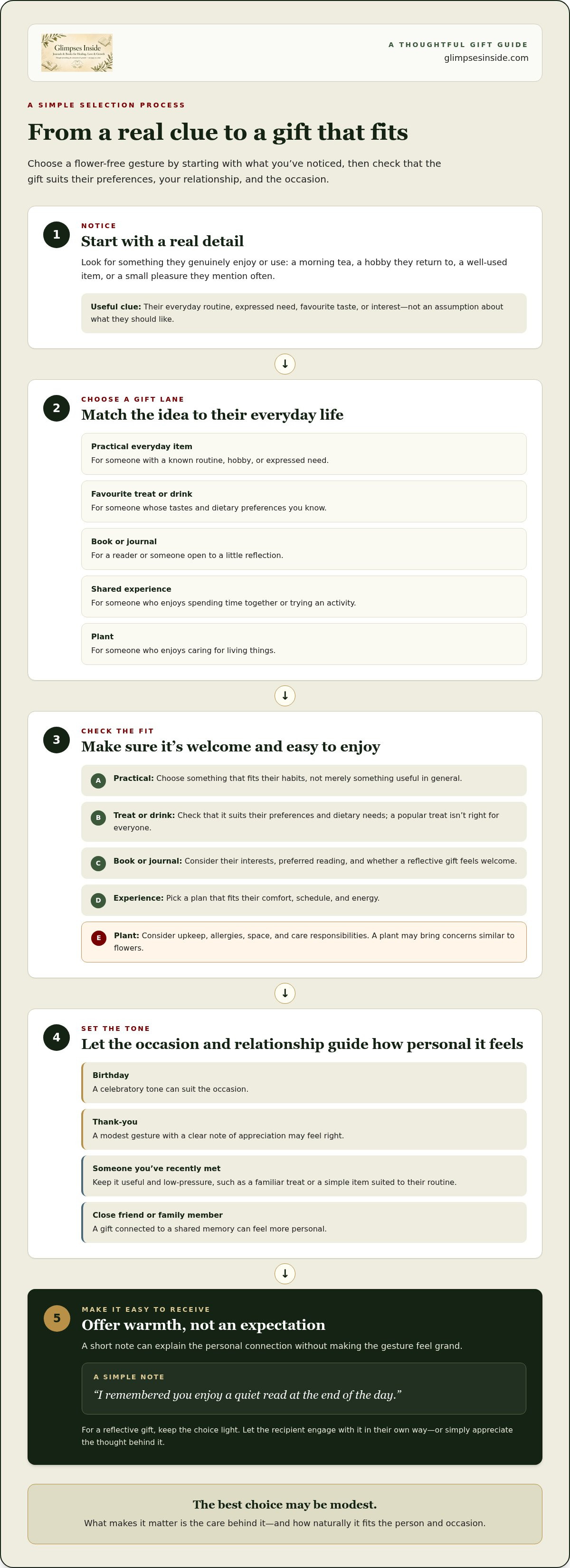
Try this four-step approach:
- Recall their preferences. Note a hobby, routine, favourite kind of reading, or small pleasure they’ve mentioned. Pay attention to expressed dislikes, too.
- Choose a gift type. Consider whether they’re more likely to enjoy something useful, time together, a book, or a sensory pleasure such as a treat they already like.
- Check the practical fit. Avoid gifts that create unwanted storage, maintenance, public attention, or a new commitment. If you’re unsure, choose something simple to accept and enjoy.
- Add a personal note. Briefly explain the detail that brought the gift to mind, without asking for a particular response.
One helpful rule: when uncertain, choose a gift connected to something the recipient has already enjoyed. That link makes your choice feel grounded rather than generic. For example, a book in a genre they’ve mentioned or a familiar treat they like can show attention without requiring you to guess at a whole new interest.
How can a personal note make a simple gift meaningful?
Name the reason simply. “You mentioned wanting to read more, and I thought of you when I saw this” feels warmer than a greeting that could accompany any gift. Keep the note brief and leave room for the recipient to receive the gesture in their own way. A thoughtful message doesn’t need to carry a hidden request or turn a small present into a big emotional moment.
If you’re drawn to a book-centered gesture, curated gift boxes offer a considered way to explore intentional and reflective giving. Glimpses Inside’s curated gift boxes are designed to complement its books and journals, offering a thoughtful option without requiring the recipient to follow a particular practice.
See curated gift boxes for a reflective gift as one book-centered option for someone who may appreciate a little time to read and reflect.
Give a reflective flower-free gift with Glimpses Inside
Some gifts offer more than a moment of unwrapping. A reflective book can leave space for quiet reading, writing, or simply pausing when the recipient feels like it. It’s a thoughtful flower-free possibility for someone who already enjoys these quieter moments, rather than a gift that assumes everyone wants to reflect.
When is a reflective book or journal a good gift?
Consider the recipient’s habits. Do they enjoy reading, keep a journal, or appreciate time to think without distraction? If so, Just 30 Days may make a meaningful gift. The series supports personal growth and reflection, but it isn’t a promise of a particular result. It’s better understood as an invitation to explore at the recipient’s own pace.
A book or journal may not suit someone who doesn’t enjoy reading or writing, or who would find a reflective gift too personal. Keep the gesture open. A note such as “I thought you might enjoy spending a little quiet time with this” shares your intention without telling them how to use it. For someone drawn to the Just 30 Days series, you can explore the reflective publications.
How can a curated gift box make the gesture feel complete?
A curated gift box can suit someone who would welcome a considered, book-centered gesture. Glimpses Inside’s gift boxes are designed to complement its books and journals. They offer a way to give a more complete-feeling reading or reflection gift without needing to assemble the gesture yourself. The appeal is in how the box accompanies the publications, not in assuming the recipient wants a particular practice or outcome.
Before choosing, ask yourself whether the recipient would enjoy a book-centered gift. If they’ve spoken about reading, writing, or making time for reflection, it may feel personal and encouraging. Keep the accompanying message light and make clear there’s no expectation attached. A gift can open a door, not push someone through it.
For the right person, reflective publications can become part of a quiet routine, returning to them whenever the moment feels right. If that sounds like a welcome kind of gesture, browse Glimpses Inside’s reflective books and gift boxes.
Choose a gesture that feels like them
The best gifts for someone who doesn't like flowers aren’t simply substitutes for a bouquet. They reflect what the recipient enjoys, what suits the occasion, and how close you are. A favourite everyday pleasure, a shared experience, or a thoughtful book can all feel meaningful when the choice is grounded in something you know about them.
If you’re still unsure, keep it simple: choose something connected to an interest they’ve already shared, make sure it fits their life, and add a brief note about why it made you think of them. Thoughtfulness doesn’t need to be grand. It needs to feel considered, with room for the recipient to enjoy the gift in their own way.
For someone who enjoys reading or reflection, Glimpses Inside offers reflective publications, including the Just 30 Days series. Its curated gift boxes are designed to complement the company’s books and journals, creating a considered option for a book-centered gesture. Explore thoughtful gifts from Glimpses Inside and choose a reflective gift that suits the person you have in mind.
Frequently Asked Questions
What is a good gift for someone who doesn't like flowers?
A good gift reflects something the recipient already enjoys, such as a favourite treat, a useful item connected to a hobby, a book in a genre they like, or time together. The best gifts for someone who doesn't like flowers don’t need to imitate a bouquet. Think about what suits their daily life and the occasion, then add a brief note explaining why you chose it.
What can I send instead of flowers to say thank you?
To say thank you, choose a modest gift that fits what you know about the person: a favourite snack, a useful item they’ve mentioned needing, or a book connected to an interest. Add a sincere note naming what you appreciate, such as their thoughtful advice or practical help. A specific message often makes the gesture feel personal without requiring an elaborate gift or placing pressure on the recipient.
Are plants a good gift for someone who doesn't like flowers?
Plants can be a good gift if the recipient enjoys caring for living things and has room for one. But they aren’t automatically a suitable substitute for flowers. A person may avoid floral gifts because of allergies, limited space, or the upkeep involved, and a plant may bring similar concerns. If you’re unsure, choose another option that won’t add care responsibilities or require a change to their home.
What is a thoughtful non-floral sympathy gift?
A thoughtful sympathy gift is gentle, practical, and free of expectations. Consider offering a meal, a small comfort the person already enjoys, or help with a specific everyday task. A brief note can express care without asking them to respond or explain how they feel. Avoid gifts that suggest grief should follow a timeline or that the person needs to feel better in a particular way.
Can a book or journal make a good gift for someone who doesn't like flowers?
Yes, if the person enjoys reading, writing, or quiet reflection. Choose a book that connects with their interests, or a journal if they already like putting thoughts on paper. Glimpses Inside offers reflective publications, including the Just 30 Days series, which supports personal growth and reflection. A book or journal is an invitation to explore, not a promise of a particular outcome, so consider whether it feels welcome to them.
How do I choose a gift if I don't know what the person likes?
Start with what you do know: their routine, a hobby they’ve mentioned, or something they’ve enjoyed before. Choose a low-pressure gift that won’t demand storage, upkeep, a public reaction, or a new commitment. A familiar treat or simple practical item may be safer than guessing at a personal interest. Include a short note explaining the thought behind your choice, while leaving the recipient free to enjoy it in their own way.
What can I give instead of flowers for an anniversary?
For an anniversary, consider a shared experience, a book connected to a common interest, or a gift that recalls a meaningful memory. Let the recipient’s preferences and your relationship guide how personal the gesture feels. A handwritten note can make even a simple choice more meaningful by naming what you value about your time together. Choose something you can both enjoy, without assuming the occasion needs a grand or highly sentimental gift.