What to Send a Friend in the Hospital Besides Flowers: Thoughtful Ideas
October 4, 2026 · 16 min read

The kindest hospital gift may be the one that takes up the least space. If you’re wondering what to send a friend in the hospital besides flowers, you want them to feel remembered, not handed another thing to manage. Hospital rules, limited room, and changing needs can make even a simple gesture feel uncertain.
A thoughtful gift can still bring comfort. Choose something that suits the moment, feels easy to receive, and lets your friend respond whenever they have the energy. This guide compares practical comforts, gentle distractions, personal notes, reflective reading, and curated gift boxes to help you find the right fit.
You’ll also find simple ways to make a gift easier to receive, from checking hospital policies to considering delivery timing. A small, considerate gesture can say, “I’m thinking of you,” without asking for anything in return.
Key Takeaways
- To choose what to send a friend in the hospital besides flowers, consider their preferences, energy, room space, and hospital rules.
- Compare practical comforts, reading, simple entertainment, and treats, keeping suitability and potential restrictions in mind.
- A personal note or useful item can mean more than an elaborate gift; let your friend’s needs guide the choice.
- Make sending easier with a low-effort gift, a gentle message, and a little flexibility around delivery and changing plans.
- Reflective reading or a curated gift box can feel personal when it suits your friend’s interests and is easy to keep.
What to send a friend in the hospital besides flowers: start with their needs
Flowers can feel like the obvious way to brighten a hospital room, but they don’t suit every stay. Some units restrict flowers, plants, or balloons, and even a welcome gift can become one more thing to manage. If you’re deciding what to send a friend in the hospital besides flowers, start with the person, not the present.
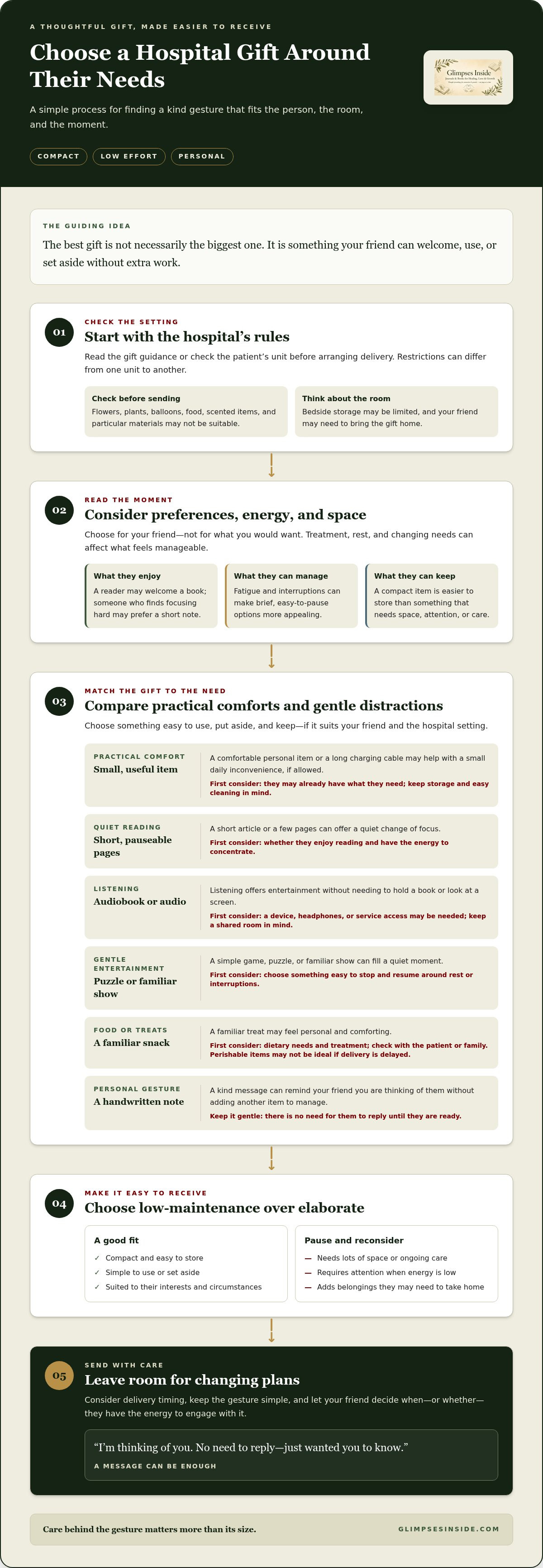
Consider hospital rules, how much room your friend has, and whether treatment or rest may leave them with little energy. Their usual preferences matter, too. Someone who loves reading may welcome a book; someone who finds it hard to focus may prefer a short note they can return to when they’re ready. Gifts are part of the tradition of gift-giving, but the care behind the gesture matters more than its size.
Look for something that’s easy to receive, use, store, or set aside. These categories can help you narrow the options:
- Practical: a small comfort item that addresses a specific need.
- Comforting: something familiar or soothing, if it suits the person and the setting.
- Entertaining: reading or simple activities they can pick up and put down.
- Personal: a handwritten message or a small reminder of your friendship.
What makes a hospital gift genuinely thoughtful?
A thoughtful gift takes your friend’s comfort, preferences, and available energy into account. A small, low-maintenance item may be easier to keep nearby than an elaborate present that needs space, attention, or care. Choose based on what your friend enjoys, rather than what you’d like to receive. And remember, you don’t need a gift to prove your friendship. A kind message with no pressure to reply can be enough.
What should you check before sending a gift?
Before arranging delivery, read the hospital’s gift guidance or check the rules for the patient’s unit. Restrictions can differ, and an item that’s welcome in one room may not be suitable in another. Consider whether your friend has space to store the gift or bring it home. Don’t assume that food, scented items, plants, or particular materials will be suitable.
If you’re unsure what fits, keep the gesture simple and give your friend room to decide. The best choice offers warmth without creating another obligation.
Hospital gift ideas beyond flowers: practical comforts, treats, and entertainment
Once you have a sense of what might suit your friend, compare gifts by how easily they fit into a hospital day. A useful present doesn’t need to be elaborate. Look for something compact, simple to use, easy to put aside, and suited to your friend’s preferences and the unit’s rules.
| Gift type | Why it may help | What to consider first |
|---|---|---|
| Small practical comfort | A familiar personal item may make a room feel a little more comfortable. | They may already have what they need, and bedside storage may be limited. Choose something compact and easy to clean, such as a comfortable personal item or a long charging cable, if allowed. |
| Short reading | A few pages can offer a quiet change of focus. | Consider whether your friend enjoys reading and has the energy to concentrate. Short, easy-to-pause reading may be more manageable than a long book. |
| Audiobook or other listening | Listening can offer entertainment without needing to hold a book or look at a screen. | They may need a device, headphones, or access to a service. Keep comfort and the shared-room setting in mind. |
| Puzzle or digital entertainment | A simple game, puzzle, or familiar show can fill a quiet moment. | Activities vary in effort and attention. Choose something easy to stop and resume around rest or interruptions. |
| Food or treats | A familiar snack may feel like a personal comfort. | Dietary needs and treatment can affect what’s suitable. Check with the patient or family before sending food, and consider that perishable items may not be ideal if delivery is delayed. |
Useful comforts and small practical gifts
A long charging cable might help if an outlet is awkward to reach, while a comfortable personal item could bring a touch of home. But your friend may already have the essentials, and extra belongings can crowd a small bedside area. Keep the gift easy to store and care for. Practical should mean helpful, not simply another item to keep track of.
Reading, listening, and gentle entertainment
Match the activity to the attention it requires. A short article or a few pages may suit someone who likes to read; an audiobook may be easier to enjoy while resting. Puzzles offer a hands-on distraction, while digital entertainment is flexible if the patient has a device. Fatigue and interruptions can make brief, easy-to-pause options more appealing. Reflective books or journals may suit a friend who already enjoys them, though writing can take more energy than listening.
If reflective reading feels like a good fit, explore reflective publications and curated gift boxes from Glimpses Inside, and consider your friend’s interests and circumstances.
Personal gifts versus practical gifts: which hospital option fits your friend?
A practical gift and a personal one can both say, “I’m here.” The difference is what your friend may need most right now. A useful item might ease a small daily inconvenience; a sentimental gift might offer connection or a familiar reminder of life beyond the hospital. Neither is automatically better. Choose according to the recipient’s needs, not a gifting rule.
More isn’t always more meaningful. An expensive or elaborate present can take up space, require attention, or leave your friend feeling they need to respond in a certain way. A small, carefully chosen gesture may feel more comforting because it asks less of them.
Use four questions to find your direction:
- Closeness: Would a personal keepsake feel natural in your friendship, or would a simple practical gesture fit better?
- Known preferences: What do they genuinely enjoy or use, rather than what seems like a typical get-well gift?
- Timing: Could their needs or circumstances change before the gift arrives?
- Ease of use: Can they enjoy it without setup, upkeep, or an immediate reply?
When a practical gift may be the kinder choice
Choose a practical gift when you know of a small, specific inconvenience your friend would welcome help with. A compact item can be useful without taking much room or attention. Keep it simple: avoid gifts that need assembly, charging instructions, regular care, or a lengthy thank-you. If your friend’s situation is changing, choose something flexible or wait until you know what would be helpful.
When a personal or reflective gift may feel meaningful
A book, journal, or keepsake can feel intimate when it reflects your friend’s actual interests. It may be less fitting if they’re tired, don’t enjoy reading, or have little room for belongings. Let the message carry the warmth: “Thinking of you. No need to reply, just wanted you to know I’m here.” Short and gentle, with no obligation attached.
If you’re considering a more personal gesture, these ideas for curated gift boxes offer a broader perspective on intentional giving. For a hospital stay, the gift still needs to fit the recipient and the moment.
If you’re weighing what to send a friend in the hospital besides flowers, let what you know about them guide you. A considerate practical choice, a personal token, or simply a kind note can each be enough.
How to send a hospital gift without adding pressure or extra work
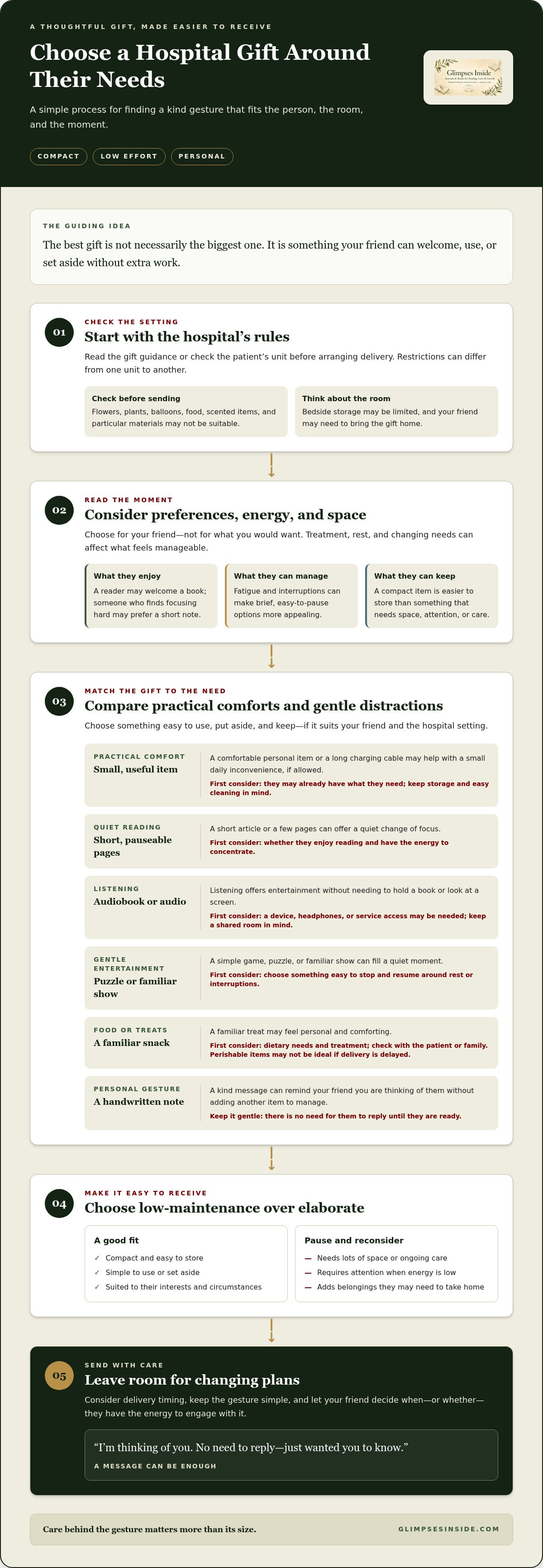
A little care around the details can make a kind gesture easier to receive. If you’re deciding what to send a friend in the hospital besides flowers, keep the process simple: check what’s suitable, choose something low-effort, add a warm note, and follow up without expecting an immediate response.
Delivery timing and access can vary. Gifts may go to a hospital mailroom or reception desk before reaching a patient, and your friend’s plans may change. Follow the hospital’s delivery instructions, including the patient’s name and department or room details if requested. Consider whether your friend may be discharged before the gift arrives, and avoid promising it will reach their room at a particular time.
A simple checklist before placing an order
- Check suitability: Consider your friend’s current preferences and the hospital or unit’s delivery restrictions.
- Keep the practical details in mind: Think about packaging, bedside storage, portability, and whether the gift can go home with them.
- Make it easy to receive: Choose something that doesn’t require setup or care, and don’t assume they’ll have energy to respond.
- Write with care: Avoid assuming how your friend feels or how recovery is progressing.
A low-pressure message matters. Someone who is unwell may be tired, interrupted, or unsure what comes next. Wording that asks for no reply lets them receive your care without taking on another task.
What to write in the card or message
Keep your words warm, brief, and open-ended. You might write, “Thinking of you. No need to reply,” or, “I’m here, and I can drop off dinner for your family this week if that would help.” A specific offer is easier to consider than “Let me know if you need anything,” but leave room for them to say no or not respond.
Skip forced positivity, unsolicited advice, and questions that ask your friend to reassure you. “You’ll be back to normal soon” may not reflect what they’re facing, while “How are you? Please update me” can ask for energy they may not have. A gentle note can simply say you care. It doesn’t need to fix anything.
For more ideas on expressing care thoughtfully, explore gifts for emotional healing. If a reflective gift feels right for your friend, explore reflective publications and gift boxes from Glimpses Inside, guided by what they enjoy and can comfortably receive.
A reflective book or curated gift box: a personal alternative to flowers
A reflective book or curated gift box can be a personal alternative to flowers, but neither is right for every hospital stay. The best fit depends on what your friend enjoys, how much energy they have, what their unit allows, and whether they have room to keep the gift. Think of it as an invitation, not an expectation: something they can open now, save for later, or simply appreciate from a distance.
Glimpses Inside offers reflective publications, including the Just 30 Days series, as well as curated gift boxes. These can suit someone who already enjoys thoughtful reading or receiving a considered collection of gifts. A patient who is tired, has limited bedside space, or is facing changing plans may prefer a kind message on its own.
Who might appreciate a reflective gift?
Picture a friend who already turns to books or journaling for quiet moments. Reflective reading may feel familiar and welcome to them, while someone else may not have the focus or desire for it during a hospital stay. For related context, explore a 30-day journal for clarity. Whatever you choose, make it easy to set aside and return to only if and when your friend feels ready.
How to make the gesture feel personal and unhurried
A short note can make a simple gift feel close without adding pressure. Try, “I thought you might enjoy this whenever you feel up to it. No need to open it or reply now.” That small permission matters. A book or journal is not a cure, treatment, or task to complete; it’s simply one possible source of company in a quiet moment.
If a gift box feels more fitting, consider whether its size and contents suit the patient’s preferences, available space, and hospital rules. Choose based on what you know about them, rather than assuming a curated gift will suit every need. The thoughtfulness is in the fit, not the number of items.
If you’re still considering what to send a friend in the hospital besides flowers, reflective reading or a curated gift box can be one personal option among many. Explore Glimpses Inside’s reflective publications and curated gift boxes, and choose at your own pace, guided by what your friend would genuinely welcome.
Choose a gesture that feels gentle and welcome
The most thoughtful hospital gift isn’t necessarily the biggest. It’s the one that fits your friend’s preferences, energy, available space, and hospital rules. Practical comforts, flexible entertainment, a personal keepsake, or simply a kind note can all show care. Choose something easy to receive, and let your friend respond in their own time.
If you’re still wondering what to send a friend in the hospital besides flowers, remember that you don’t need to find a perfect gift. A gentle message can be enough. For someone who already enjoys reflective reading, Glimpses Inside offers the Just 30 Days series and curated gift boxes.
Explore reflective books and curated gift boxes from Glimpses Inside and choose a thoughtful gift at your own pace. A small gesture, offered without pressure, can remind your friend they’re not alone.
Frequently Asked Questions
Can I send food to a friend in the hospital?
Sometimes, but don’t assume food is permitted or suitable. Dietary needs, treatment plans, allergies, and unit policies can all affect what a patient may eat. Check with your friend or their family, or read the hospital’s guidance, before sending anything, especially perishable food that could be delayed. If you’re unsure, choose a non-food gift or send a warm message that doesn’t require a reply.
What is a good gift for someone in the hospital who has everything?
A brief, warm note may be the most welcome gift. If you know what your friend enjoys, consider a compact entertainment option, a useful personal item, or reading they already like. Keep it easy to store and use, so it doesn’t become another task. You don’t need to find something impressive. The point is to offer care in a way that suits your friend and asks little of them.
Can I send a book or journal to someone in the hospital?
Yes, if your friend enjoys reading or writing and has the energy and space for it. Choose something they can put down and return to whenever they wish, rather than a gift that implies they should finish it. A book or journal isn’t a solution to illness or an assignment. Add a short note that makes clear there’s no need to open it or respond right away.
What should I write in a card to a friend in the hospital?
Keep the message warm, brief, and free of pressure. You might write, “Thinking of you. No need to reply,” or offer one specific kind of help, such as dropping off a meal for their family if they’d like. Avoid demanding updates, giving unsolicited medical advice, or insisting they stay positive. A gentle message can show you care without asking your friend to reassure you.
Should I send a gift to the hospital or to my friend’s home?
Choose the destination based on your friend’s preference, hospital delivery rules, and whether they can keep or carry the item. Hospital gifts may pass through reception or a mailroom before reaching the patient, and plans can change. Home delivery may be easier to manage during recovery. Before arranging either option, consider timing, discharge plans, and whether the gift will be easy to store.
What can I send instead of flowers that takes up very little space?
A thoughtful card, a small entertainment item, or reading suited to your friend’s interests can take up little room. Digital entertainment may avoid adding belongings if your friend can comfortably access it. If you’re deciding what to send a friend in the hospital besides flowers, think about what they can use without setup or extra effort. A kind message on its own can also be meaningful.
Are gift boxes suitable for someone staying in the hospital?
They can be, if the contents suit your friend and the hospital allows them. Think about the box’s size, packaging, storage, and whether your friend will need to carry everything home. Glimpses Inside offers curated gift boxes and the Just 30 Days series, but a gift box isn’t automatically right for every stay. Let your friend’s preferences and circumstances guide the choice.
What should I avoid sending to a friend in the hospital?
Avoid assuming that food, scented items, plants, or bulky belongings will be welcome. Hospital rules, sensitivities, treatment needs, and available space can vary. Gifts that need care or setup may also add effort, while a message that expects an immediate reply can feel like another demand. If you’re unsure what your friend would appreciate, ask gently or send a simple note without expecting anything back.