What to Send Instead of Flowers for Sympathy: Thoughtful Alternatives
October 2, 2026 · 16 min read

What if the kindest sympathy gift isn’t something beautiful to look at, but something that quietly makes the next few days easier? If you’re wondering what to send instead of flowers for sympathy, you may be trying to show you care without adding clutter, pressure, or another task to someone’s plate.
Flowers are a familiar gesture, but grief is deeply personal. It’s natural to wonder whether a gift will feel comforting, useful, or simply right for this person. A small, thoughtful gesture can matter more than choosing something elaborate.
This guide explores meaningful and practical alternatives, from a meal or a specific offer of help to a keepsake, a donation, or reflective reading when it feels welcome. You’ll also find guidance on choosing a gift, writing a note, and deciding when to send it. Above all, you can offer care without asking for a reply. The kindest substitute is the one that meets grief where it is.
Key Takeaways
- Choosing what to send instead of flowers for sympathy starts with the recipient’s wishes, preferences, and practical needs.
- Consider whether practical help, a personal note, a donation, or a keepsake would feel most fitting for this person.
- Weigh the comfort a gift might offer against possible drawbacks, such as extra tasks, limited space, or personal preference.
- Check any funeral or family requests, make delivery easy to manage, and include a brief note without expecting a response.
- Reflective reading or a curated gift box may suit someone who enjoys quiet time, but neither is right for everyone.
Why send something other than flowers for sympathy?
Flowers are a familiar way to express condolence, but they aren’t right for every household or every person. A home may already be receiving deliveries, have little room for arrangements, or include someone with sensitivities to pollen or fragrance. The family’s obituary or personal message may also ask for donations or another gesture instead. Considering the recipient’s circumstances helps make your care feel personal rather than automatic.
Grief and its expressions vary. The period of mourning can be shaped by personal, cultural, and family traditions, so it’s best not to assume that everyone wants a public tribute or a lasting memorial object. If you’re deciding what to send instead of flowers for sympathy, begin with what the person has asked for, what might make daily life gentler, and what they would actually welcome.
A gift can communicate love, but it can’t fix grief. Presence, listening, and continued support matter in ways no object can replace. Sometimes that means sitting quietly with someone. Sometimes it means checking in later, after the first wave of messages and funeral activity has eased. There’s no single gesture or timeline that fits everyone.
When might a non-floral sympathy gesture feel more helpful?
A non-floral gesture may suit someone with limited space, a household already managing several deliveries, or sensitivities that make flowers difficult. A practical offer may be kinder than another item to arrange or store. If the obituary or family has specified a preferred gesture, follow it rather than choosing what seems most meaningful to you. And if you’re unsure whether the person wants a keepsake, don’t assume a memorial gift is automatically comforting.
What makes a condolence gift feel considerate?
Consider usefulness, personal meaning, and ease of receiving. A thoughtful gesture shouldn’t require the recipient to host you, assemble something, make extra decisions, or send a thank-you. If you’re offering help, name a specific task and make it easy to accept or decline. If you’re sending a gift, keep the note simple and sincere. “I’m thinking of you. There’s no need to reply” leaves room for their feelings without adding pressure.
The most considerate alternative is the one that responds to the grieving person’s circumstances. It may be a gift, a practical kindness, or simply your steady presence. A sincere message can be enough. Care doesn’t have to arrive in a package.
What to send instead of flowers: meaningful sympathy gift ideas
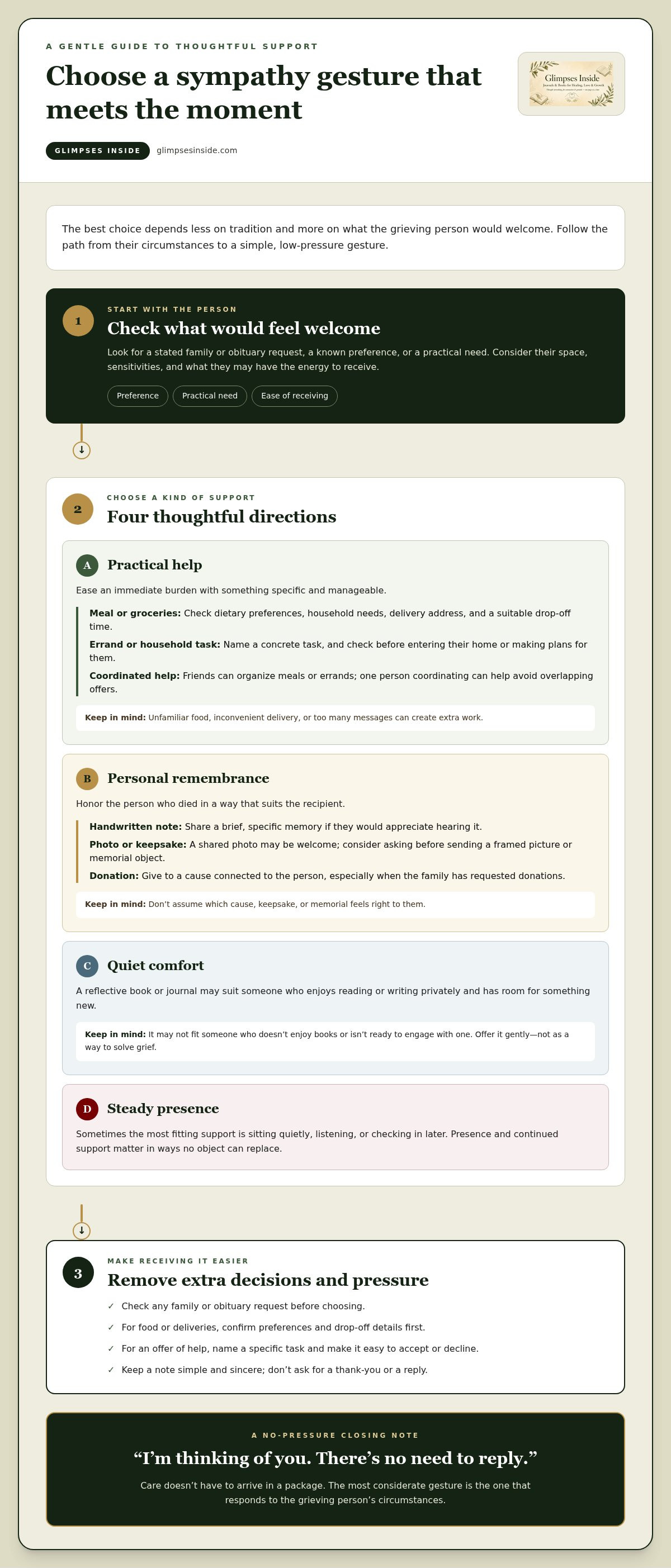
The best choice depends less on what’s traditional and more on what would feel welcome to this person. As you consider what to send instead of flowers for sympathy, think in four directions: practical help, personal remembrance, shared support, or quiet comfort. Each can be meaningful, and each can miss the mark if it doesn’t suit the recipient.
Practical help that eases an immediate burden
- A meal or grocery delivery: This may help someone who has little time or energy to shop or cook. Check dietary preferences, household needs, delivery address, and a suitable drop-off time first. Unfamiliar food or an inconvenient delivery can become another task.
- A specific errand or household task: Offer something concrete, such as picking up groceries or handling a particular chore. A clear offer can be easier to accept than being asked to delegate. Check before entering their home or making plans on their behalf.
- Coordinated help from friends: A small group can organize meals or errands so support is spread out. This may suit someone with a close circle, but too many messages or overlapping offers can feel overwhelming. One person coordinating can keep the arrangements simple.
Harvard Health Publishing shares expert advice on supporting someone grieving, including the value of practical, thoughtful support.
Personal and memorial gifts that honour a loved one
- A handwritten note with a memory: This can comfort someone who would appreciate hearing a specific story about the person who died. Keep it sincere and brief. A long message may be hard to take in, and there’s no need to ask for a reply.
- A photograph or memory keepsake: A shared photo may suit someone who enjoys remembering together. A framed picture or other memorial object may not fit their style, space, or way of grieving, so consider asking before sending one.
- A charitable donation: Giving to a cause connected to the person can be meaningful, especially if the family has requested donations. If no cause has been named, don’t assume which organization or tribute they would prefer.
Quiet comfort for someone who enjoys reflective time
A reflective book or journal may suit someone who likes reading or writing privately and has room for something new. It may feel misplaced to someone who doesn’t enjoy books or isn’t ready to engage with one, so offer it as a gentle option, never as a way to solve grief. Glimpses Inside offers reflective publications, including the Just 30 Days series, and curated gift boxes. Explore its reflective books and gift boxes only if that kind of quiet comfort seems right for the recipient. Consider whether the box’s contents and delivery would suit them.
Whatever you choose, the gesture doesn’t need to be grand. A note, a useful task, or a welcome keepsake can say, “I remember, and I’m here,” without asking the recipient to do anything in return.
How to choose the right sympathy gift for this person
There isn’t one right answer to what to send instead of flowers for sympathy. Let what you know about the person guide you: Have they shared a preference? Would this gesture ease something or create work? Is now a suitable time, or might it be more welcome later? Use the comparison below as a starting point, not a ranking.
| Gift type | Best-fit situation | Practical consideration | Possible drawback |
|---|---|---|---|
| Practical help | You know of a specific need, such as a grocery run or meal. | Offer a clear task and check what would be useful. | An unwanted service or unplanned visit may feel intrusive. |
| Donation | The family has requested charitable giving or named a cause. | Follow their instructions and share the donation simply. | A cause chosen without guidance may not reflect the family’s wishes. |
| Personal note | You want to express care without asking the recipient to manage an item. | Keep it sincere, brief, and free of pressure to reply. | It may not address a practical need on its own. |
| Memory item | You share a meaningful memory, or the recipient has welcomed a keepsake. | Consider their taste, space, and whether they want a tangible tribute. | It may bring attention to a memory they aren’t ready to revisit. |
| Reflective reading | The person enjoys books or journaling and has room for one. | Choose only if reading feels welcome, not as advice or a remedy. | It may feel like an obligation or simply not suit them. |
Should you choose practical help, a donation, or a keepsake?
Start with what the person has actually expressed. Match practical help to a known need rather than guessing which service, meal, or supply they want. If considering a donation, check whether one was requested and whether the family named a particular cause or fund. A keepsake is most fitting when it reflects a shared memory or a preference the recipient has voiced.
How can you avoid a well-meant gift feeling intrusive?
Consider the person’s faith, culture, family customs, and home life, as well as their own wishes. A gift that needs displaying, watering, assembling, discussing, or acknowledging may bring an extra obligation. If you’re uncertain, a thoughtful note is a gentle choice. You can also ask a trusted family contact what would be welcome, while respecting the recipient’s privacy.
Choose the option that offers comfort without adding an obligation. That may mean practical help, a donation, or a personal gesture. The right choice is the one that fits this person, not a universal rule.
How and when to send a sympathy gift with care
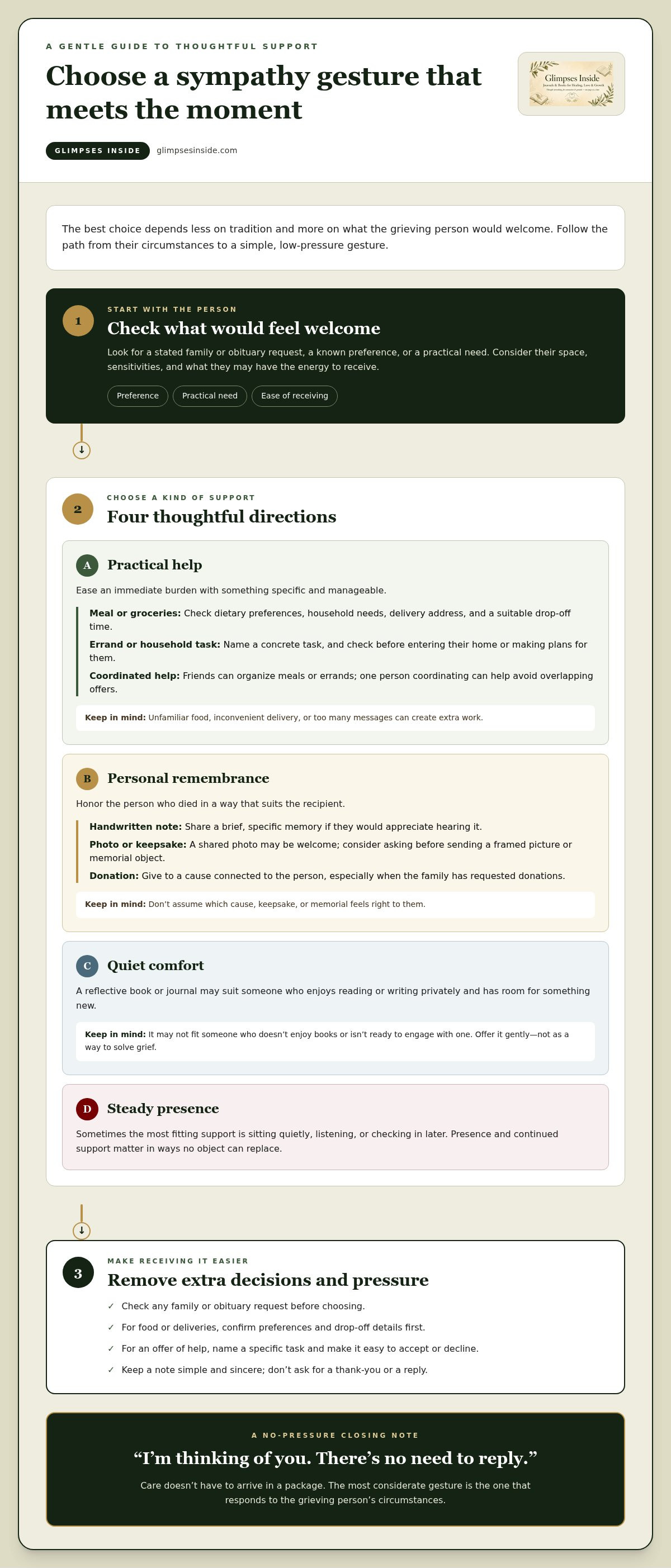
A thoughtful gift can lose some of its comfort if it arrives at a difficult moment or asks the recipient to manage extra details. This simple sequence can help you send care with less pressure:
- Check for requests. Read the obituary or family message for preferences, such as donations in lieu of flowers.
- Choose a low-effort gesture. Consider what the recipient is likely to welcome, and avoid gifts that require assembly, hosting, or a quick response.
- Confirm delivery. For food, services, or anything that needs coordination, check with the family or a trusted contact about timing, address, and practical needs.
- Add a brief note. Let them know you care, and make clear they don’t need to reply.
If you’re still considering what to send instead of flowers for sympathy, remember that timing is personal. A meal or message may be helpful during the first days. A check-in or small gesture may feel meaningful after funeral activity has eased and the stream of visitors has slowed. Neither timing is automatically better. Consider what you know about the person’s circumstances, and coordinate before sending anything that requires someone to be home, make a choice, or accept a service.
What should you write in a sympathy card?
Use plain, sincere words. Acknowledge the loss without trying to explain it or make it seem smaller. If it feels welcome, share one gentle memory that belongs to you and the person who died. You might write: “I’m so sorry about [Name]. I’ll always remember [brief memory]. I’m thinking of you, and I can drop off dinner on Thursday if that would help. There’s no need to reply.” Offer support you can genuinely provide, without turning the note into a request for conversation.
Is it thoughtful to send something after the funeral?
Yes, if it suits the recipient. A later note or practical gesture can remind someone that care continues after the funeral, but don’t treat delay as a rule. The person may appreciate a check-in sooner, or need quiet for a while. Let what you know guide you, and make any offer easy to accept or decline. For another perspective on gentle gestures, see this guide to gifts for emotional healing. If reflective reading feels right for them, you can also explore reflective books and gift boxes as optional gestures, not substitutes for personal support.
When a reflective book or gift box may be a thoughtful alternative
A book or curated gift box can be a gentle sympathy gesture when it fits the person receiving it. It isn’t a prescription for grief, a promise of emotional recovery, or a replacement for listening and staying present. Before choosing one, ask yourself whether this person enjoys reflective reading, has welcomed books or journals before, and would appreciate having a new item at home.
For someone who finds comfort in quiet, private time, reading may offer a thoughtful moment at their own pace. For someone who doesn’t enjoy books, feels overwhelmed by new things, or has little room, a different gesture may feel more natural. Let their preferences lead. The question of what to send instead of flowers for sympathy has no universal answer, and reflective gifts are only one possibility.
Could a reflective book be right for someone who is grieving?
Consider what you know about their habits, not what you hope a book might do. Have they mentioned enjoying journaling or reflective reading? If so, a book may feel personal without requiring conversation. Glimpses Inside offers reflective publications, including the Just 30 Days series. It isn’t presented as grief-specific, and reading it should never be framed as treatment or a way to move someone through loss.
If you’re uncertain, there’s no need to make the book the whole gesture. A brief note can give the recipient permission to read it whenever they wish, or not at all. “I thought you might enjoy this when the moment feels right. No need to respond” keeps the gift gentle and free of expectation.
How to give a curated gift without adding pressure
First, consider whether a physical gift would be welcome. Then consider the gift box’s contents alongside the recipient’s tastes and practical needs. Think about whether delivery timing is suitable, whether someone will need to be home, and whether unpacking or storing the gift could add effort. If those details could create a burden, ask a trusted contact or choose a simpler gesture.
A curated box should feel like an offer, not an assignment. Keep the note warm and brief. Don’t expect the recipient to use, display, or discuss what’s inside. For more context on selecting a thoughtful box, explore this guide to curated gift boxes.
If reflective reading or a carefully chosen box seems right for the person you have in mind, you’re welcome to explore Glimpses Inside. Choose only what feels suited to them. Your care matters more than the gift itself.
Let your care take the shape they need
Choosing what to send instead of flowers for sympathy doesn’t require finding a perfect gift. Start with the person’s wishes and circumstances. Practical help may ease a known burden; a note or keepsake may feel more personal; reflective reading may suit someone who enjoys quiet time with books. Whatever you choose, consider timing, make receiving it simple, and don’t expect a reply.
A gift can express care, but it doesn’t replace listening or staying present. A gentle message now, followed by a thoughtful check-in later, can mean a great deal. Small gestures, offered without pressure, leave room for grief to be what it is.
If a reflective book or curated gift box feels right for someone you know, explore thoughtful books and curated gifts at Glimpses Inside. Glimpses Inside offers the Just 30 Days series and curated gift boxes. These are optional gestures, not a substitute for personal support. Trust what you know about the recipient, and let your kindness be enough.
Frequently Asked Questions
What can I send instead of flowers for sympathy?
Consider a meal, grocery delivery, a specific offer to run an errand, a charitable donation, or a handwritten note. A photo or keepsake may suit someone who welcomes personal reminders, while reflective reading may be thoughtful for a person who enjoys books. The best choice depends on their wishes and circumstances. Check practical details, such as dietary needs or delivery timing, and choose something that won’t create extra work or require a response.
Is it appropriate to send a gift instead of sympathy flowers?
Yes, a gift can be an appropriate way to express sympathy, especially if it reflects the recipient’s preferences or meets a practical need. Check the obituary or family message first for a request, such as donations in lieu of flowers. If there’s no stated preference, consider whether the person would welcome a physical item. A sincere note or quiet offer of help can also express care without sending a gift.
What is a practical sympathy gift for someone grieving?
A practical gift is one that meets a known need without adding decisions or tasks. You might offer to pick up groceries, arrange a meal after checking dietary preferences, or take care of a specific errand. Be clear about what you can do and when, rather than asking the person to organize your help. If delivery or access needs coordinating, check with the recipient or a trusted family contact first.
Can I send a sympathy gift weeks after the funeral?
Yes. A thoughtful message or suitable gift weeks after a funeral can remind someone that they’re still cared for. There’s no single correct time to reach out, though. Consider what you know about the person and whether the gesture would be welcome now. A brief note, a practical offer, or a check-in can keep the connection open without asking them to respond or explain how they’re feeling.
How much should I spend on a sympathy gift?
There’s no required amount to spend on a sympathy gift. Choose something that feels comfortable for your budget and appropriate to your relationship with the recipient. A handwritten card, a specific offer of help, or a requested donation can be meaningful without being elaborate. Avoid treating the price as a measure of care. Thoughtfulness, fit, and ease of receiving matter more than choosing an expensive gesture.
What should I write in a sympathy card with a gift?
Write simply and sincerely. Acknowledge the loss, share a gentle memory if it feels appropriate, and offer support you can genuinely provide. For example: “I’m so sorry about Alex. I’ll always remember their kindness. I can bring dinner on Thursday if that would help. There’s no need to reply.” Avoid trying to explain the loss or insisting that everything will be all right. Let your words leave space for grief.
What happens if the family says “in lieu of flowers”?
Respect the family’s request and don’t send flowers. If they name a charity, fund, or other preferred gesture, follow those instructions if you’re able. You can also send a condolence note or offer personal support, as long as it doesn’t conflict with what the family has asked. If the request is unclear, check with a trusted family contact rather than guessing at a substitute.