A Thoughtful Gift for a Healing Heart: How to Offer Care Without Pressure
September 30, 2026 · 15 min read

What if the most thoughtful gift for healing heart moments isn’t the one that tries to make everything better, but one that asks nothing in return? When someone you love is facing grief, change, or another difficult season, it’s natural to worry that the wrong gift or message might feel dismissive. You want them to feel remembered, not rushed, and seen without being expected to respond.
A gentle gesture can show care while leaving room for your loved one’s own needs and pace. This guide explains how to choose a gift that reflects who they are, how to write a pressure-free note, and when a reflective book or curated gift box might be welcome. A gift cannot fix what someone is facing, but it can offer a quiet invitation to pause. Sometimes, companionship is enough.
Key Takeaways
- Choose a thoughtful gift for healing heart moments by considering what the recipient enjoys and how much attention they may welcome.
- If you’re unsure what they need, start with a familiar, low-pressure gesture.
- Compare a personal note, practical gesture, reflective publication, or curated gift box by how easily the recipient can engage on their own terms.
- Keep your message simple: express care, avoid assumptions about their feelings, and make clear that no reply is needed.
- Reflective publications such as Just 30 Days can be optional companions for someone who welcomes a quiet moment of reflection.
What Makes a Thoughtful Gift for a Healing Heart Feel Supportive?
Choosing a gift during someone’s difficult season can feel tender and uncertain. You may want to reach out, yet worry that a cheerful message will sound dismissive or that a personal gift might ask too much. A thoughtful gift for a healing heart is not a way to fix what someone is feeling. It is a gesture that offers connection while leaving the recipient free to welcome it, use it later, or set it aside.
A thoughtful gift pairs personal relevance with low pressure and respect for the recipient’s choices. It shows care without creating an obligation to feel better, share more, or respond on your timeline. Grief and other difficult experiences can affect people in different ways, and the grieving process varies from one person to another. A gift may accompany someone through a hard season, but it cannot promise or produce recovery.
What does a healing-heart gift communicate?
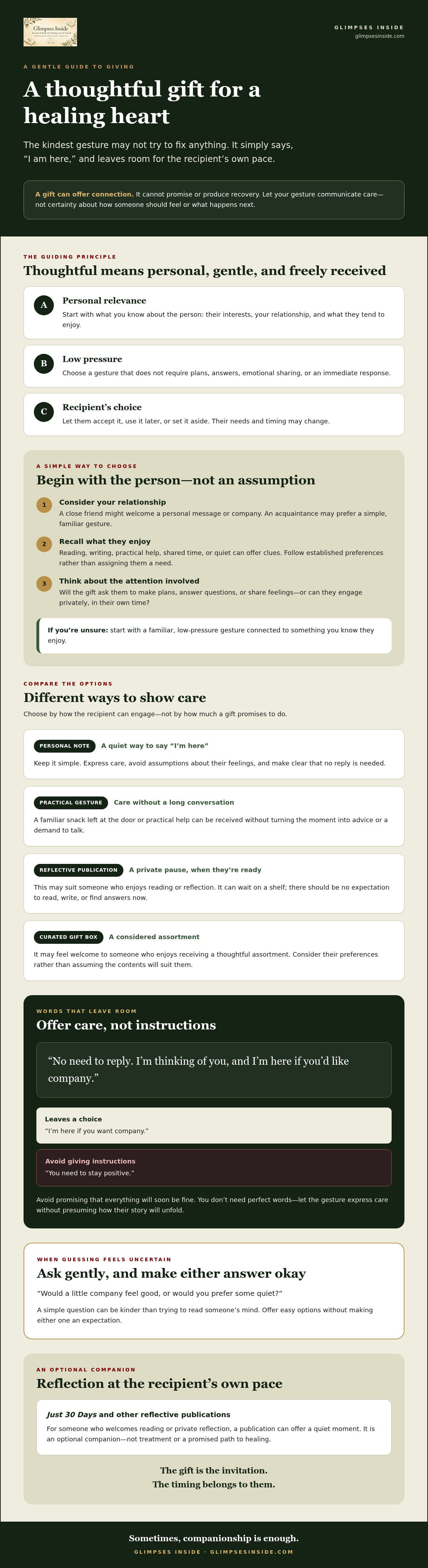
At its gentlest, a gift says, “I am here,” without asking the recipient to explain or talk. A familiar snack left at the door, a small item connected to a shared interest, or a note saying you’re thinking of them can offer care without turning the moment into advice.
That distinction matters. “I’m here if you want company” leaves a choice; “You need to stay positive” gives an instruction. Promising that everything will soon be fine can also presume too much. You don’t have to diagnose what they need or find perfect words. Let your gesture communicate care, not certainty about how their story will unfold.
Why does the recipient’s timing matter?
Someone may welcome conversation one day and want quiet the next. Even a comforting gift can feel like one more thing to respond to if it comes with an expectation. Give it without asking when they’ll use it, what they thought of it, or whether it helped.
Let them decide when, or whether, to engage. A reflective book can wait on a shelf until the moment feels right. A practical gesture can be accepted without a long conversation. You might write, “No need to reply. I’m thinking of you, and I’m here if you’d like company.”
There is no deadline for feeling ready. A respectful gift doesn’t turn healing into a task or measure what happens next. It makes room for changing needs and trusts the recipient to choose their own pace.
How to Choose a Thoughtful Gift Without Rushing Someone’s Healing
Start with what you know about the person, not what you imagine they ought to need. A thoughtful gift for healing heart moments should fit your relationship and the recipient’s preferences, while asking for as little or as much attention as they’re comfortable giving.
- Consider your relationship. A close friend might welcome a personal message or an offer of company. An acquaintance may feel more comfortable receiving a simple, familiar gesture.
- Recall what they enjoy. Do they like reading, writing, practical help, shared time, or quiet? Let their established preferences guide you rather than assigning them a need or identity.
- Think about the attention involved. A gift that asks them to make plans, answer questions, or share feelings may require more effort than one they can enjoy privately, in their own time.
If you’re unsure, choose something familiar and low-pressure. A small gesture connected to a known interest can feel more personal than a dramatic surprise. Avoid assuming what someone is experiencing or naming a loss or relationship change they haven’t chosen to share. The best gift is one the recipient can accept, use, or set aside freely.
Ask gently when guessing feels uncertain
If your relationship allows, a simple question can be kinder than trying to read someone’s mind. Try, “Would a little company feel good, or would you prefer some quiet?” You could also offer two easy options and make clear that neither is expected. Guidance on support after a loss similarly emphasizes listening and offering practical help without imposing your idea of what’s needed.
When a reflective book or gift box may fit
A reflective publication may suit someone who already enjoys reading or private reflection. It can offer a moment to pause, but it shouldn’t come with an expectation that they’ll read it now, write about their feelings, or find answers in its pages. Glimpses Inside offers reflective publications, including the Just 30 Days series, as optional companions, not as treatment or a promised path to healing.
A curated gift box can be a tangible way to show care, especially if the recipient enjoys receiving a thoughtful assortment. Consider whether a box feels welcome rather than assuming its contents will suit them. For more ideas about choosing with intention, see this guide to curated gift boxes. Glimpses Inside’s reflective publications are another possibility, with the recipient’s preferences kept at the center.
Personal Gesture, Reflective Book, or Gift Box: Compare the Options
A thoughtful gift for healing heart moments doesn’t have to be elaborate. The right choice depends on what feels familiar and welcome to the person receiving it. Compare the options by how personal they feel, how much effort they ask for, and whether the recipient can engage privately and at their own pace.
| Option | Personalisation | Recipient effort | Privacy and pace |
|---|---|---|---|
| Personal note | High when it uses sincere, specific words | Low; no gift to use | Private, and easy to read later |
| Practical gesture | High when matched to a stated need | Low to moderate, depending on coordination | Can be discreet and accepted when convenient |
| Reflective publication | Best when it fits the recipient’s interests | Optional reading or writing | Private; can be set aside and revisited |
| Curated gift box | Varies with how well the choice suits the person | Usually little effort to receive | Can be opened and explored in their own time |
This comparison isn’t a ranking. A gift box may feel warm to one person and overwhelming to another. A brief note may be exactly right for someone who doesn’t want more belongings or conversation. Think about what you already know of the recipient, rather than choosing the format that seems most impressive.
A low-pressure gift opens a door; an assignment tells someone they’re expected to walk through it. A publication that invites reflection can be left unread until the recipient feels like opening it. Presenting it as something they must read, complete, or learn from can add pressure, even when it is given with love.
When a simple note or practical gesture is enough
Specific, sincere words can carry care on their own. You might mention a quality you value in the person or say you’re thinking of them, without asking for an update. Offer practical help, such as handling a particular errand, when they’ve said it would be useful. Make the offer easy to decline, with no requirement to meet, reply, or explain.
What can a reflective publication offer?
Reading or writing can create a private moment for thought, but it isn’t a prescribed healing method. Glimpses Inside offers the Just 30 Days series. Check current product details before choosing a specific format. For related inspiration, explore these gifts for emotional healing, while letting the recipient decide if and when reflection feels right.
What to Write With a Gift for Someone Whose Heart Is Healing
A few sincere words can make a gift feel personal. Keep the message simple: express care, avoid guessing how the recipient feels, and leave space for no reply. A thoughtful gift for healing heart moments should never carry a hidden instruction to feel better faster. Your note can offer presence, not a timetable.
What can you say without trying to fix the pain?
You don’t need to explain the situation or find a perfect phrase. Focus on what you can honestly offer, whether that’s a listening ear, quiet company, or simply letting them know they’re on your mind. Avoid unsolicited advice, comparisons to someone else’s experience, silver linings, and promises about when things will improve. Even kind words can feel heavy if they presume too much.
Try wording that can fit different circumstances:
- “I’m thinking of you. There’s no need to reply.”
- “I care about you, and I’m here if you’d like company or someone to listen.”
- “I wasn’t sure what would feel helpful, but I wanted you to know I’m thinking of you.”
These messages don’t claim to know exactly what the other person is feeling. They offer care, then let the recipient decide what to do with it. For another recipient-first perspective on choosing a gentle gesture, explore these gifts for mindful living.
How can you leave room for boundaries?
Let your note release the recipient from any expectation to open, use, or respond to the gift right away. A line such as “There’s no rush to look at this” can make a reflective item feel like an invitation rather than homework. If you’re uncertain whether a personal gift would be welcome, ask gently before sending it. “Would this feel okay to receive?” gives them an easy chance to say what suits them.
One gift can express care, but it doesn’t need to carry the whole relationship. Keep showing up in small, respectful ways, and let the person’s responses guide how you offer support over time. The message is not “I know how to fix this.” It’s “I care, and I’ll respect your pace.”
If a reflective publication feels suited to someone who enjoys private reading or writing, reflective publications and gift boxes are options to consider. Let your note make one thing clear: there’s no expectation attached.
A Gentle Glimpses Inside Gift: Reflection at the Recipient’s Own Pace
Once you’ve considered what the recipient enjoys and how much attention they may welcome, a reflective publication or curated gift box could be one option. It won’t be the right fit for everyone, and it doesn’t need to be. The gesture matters most when it respects the person’s preferences and leaves them free to engage when, or if, they choose.
Glimpses Inside offers reflective publications and curated gift boxes. These can be tangible ways to express care, but they aren’t therapy or a promise of healing. Think of them as possible companions for a quiet moment, not instructions for what the recipient should feel or do. A thoughtful gift for healing heart moments makes room for the person’s own pace, even when the gift is intended to invite reflection.
How can Just 30 Days fit a thoughtful gift?
Just 30 Days is a Glimpses Inside series for reflective reading. It may suit someone who already enjoys reading or making private space for thought, but it shouldn’t be presented as a required practice or a route to a particular outcome. Check the current product information rather than assuming a format, structure, or content. For related context, read about a 30-day journal for clarity. That article offers a related perspective; it doesn’t establish that the journal described is the same as Just 30 Days.
How can you explore the gift with care?
Start with the recipient, not the product. If they value private reading, a reflective publication may feel more natural than a gift that invites conversation. If they enjoy receiving a tangible gesture, a curated gift box may be worth considering. If you’re unsure, check whether they’d welcome a gift of this kind before selecting one.
Review current product details before making a choice, especially if a particular format or gift box content matters to the recipient. Let the product information clarify what’s offered, then consider whether it feels like something they might genuinely welcome. The answer doesn’t need to be yes. A different gesture, or simply a kind note, may fit better.
If a reflective gift seems right for this person, explore Glimpses Inside and choose at your own pace. Keep the recipient’s preferences at the center, and let the gift remain an invitation, never an expectation.
Let Your Gesture Leave Room for Their Own Pace
A thoughtful gift for healing heart moments doesn’t need to solve anything. It can reflect what you know about the person, offer care without asking for a response, and leave them free to engage when it feels right. A sincere note or practical gesture may be enough; a reflective publication or gift box may suit someone who already welcomes that kind of pause.
Glimpses Inside offers the Just 30 Days series and curated gift boxes. Owned and operated by author Ianthe Writes, the business offers these as optional companions for reflection, not as therapy or a promise of healing. Check current product details and let the recipient’s preferences guide your choice.
When you’re ready, explore Glimpses Inside for reflective publications and gift boxes. Whatever you choose, your gentle presence matters more than getting every word or gesture exactly right. Offer care, leave room, and trust the relationship to unfold one small moment at a time.
Frequently Asked Questions
Is a book a thoughtful gift for someone who is grieving?
A book can be a thoughtful gift if the person enjoys reading and seems open to reflection. Choose something that suits their interests, and avoid presenting it as a way to fix their pain. You might add a note saying there’s no rush to read it or reply. A book can be one gentle gesture, not a substitute for listening, practical support, or professional care when needed.
Can a gift help someone heal from heartbreak?
A gift can communicate care, but it can’t guarantee or cause emotional healing. The right choice depends on what the person welcomes, whether that’s a familiar comfort, practical help, or space. A thoughtful gift for healing heart moments should come without advice, a recovery deadline, or an expectation of gratitude. If the person prefers quiet or practical support, respect that rather than assuming a reflective gift is the best fit.
What should I write in a card for someone going through a hard time?
Write something sincere, brief, and free of assumptions. For example: “I’m thinking of you. There’s no need to reply, but I’m here if you’d like company or practical help.” Avoid comparing their experience with someone else’s or promising everything will soon be fine. You don’t have to name what they’re feeling. Let your words express care while leaving room for their own experience.
How do I choose a thoughtful gift for someone who does not talk about their feelings?
Start with what you know about their interests and usual preferences, not with an assumption about what their silence means. A familiar book, a simple note, or practical help they’ve said they would welcome may feel more comfortable than a deeply personal gift. Keep the offer easy to accept or decline. If you’re unsure, ask gently, and let them decide whether or when to engage.
Is a journal a good gift for emotional healing?
A journal may suit someone who already enjoys writing or private reflection, but it won’t feel right for everyone. Avoid describing it as treatment or suggesting they need to write to improve. If you give a reflective publication, frame it as an optional companion, not an assignment. Make clear there’s no expectation to open it, write in it, or tell you what they thought.
What should I avoid giving someone whose heart is healing?
Avoid gifts or messages that suggest the person should feel better quickly, that you know exactly what they need, or that they owe you a response. Be cautious with highly personal or prescriptive items if you don’t know their preferences. Instead, ask what might feel supportive or offer a modest gesture with no strings attached. Care should feel like an invitation, not a demand.
How can I support someone without making them feel pressured?
Offer choices and let the other person set the pace. Ask before giving advice, and don’t require a conversation, thank-you, or immediate use of a gift. You might offer company, practical help, or space, then follow their lead. A gift can be one expression of care, not a solution or a measure of progress. Continue to show respectful interest without insisting they share more than they want.