Journals for Reconnecting with Your Partner: A Gentle Guide
September 27, 2026 · 16 min read

What if a journal didn’t help you fix your partner, but helped you hear each other more clearly? When conversations feel routine or hard to begin, journals for reconnecting with partner can offer a gentle place to pause, reflect, and find words without needing to solve everything at once.
You may be wondering whether to write side by side, take turns, or keep separate pages. There’s no single right format. Choose one that feels comfortable for both of you, with room for honesty and no pressure to share more than you’re ready to.
This guide explores journal styles and approachable ways to begin, whether you prefer prompts, open-ended writing, or a simple shared routine. You’ll also find ways to make listening feel calmer, set expectations so journaling doesn’t become a chore, and recognize when a journal may not be enough. Small moments of attention can open a door. You can take them at your own pace.
Key Takeaways
- A relationship journal can create a gentle opening for reflection and conversation, even when everyday life has left you feeling distant.
- Agree on a small, flexible process together, and let each person choose how much they want to share.
- Compare shared, separate, and prompt-led journals to find the format that suits your privacy needs and comfort with structure.
- Use journals for reconnecting with partner as an invitation to listen, not proof that the relationship is repaired.
- Choose a first step that feels emotionally manageable, and slow down if silence or reluctance signals a need for more space.
How Journals for Reconnecting with Your Partner Can Open a Conversation
You can care deeply about each other and still feel far apart in the small rhythms of everyday life. Conversations may stay focused on schedules, errands, and what needs doing, while more tender thoughts remain unspoken. A journal offers another way in: not a dramatic relationship reset, but a quieter place to notice what you feel and decide what you might want to share.
A relationship journal is a shared or individual writing prompt for reflection and conversation. It’s a place to explore thoughts, not a test, a scorecard, or a promise of reconciliation.
A prompt gives a conversation a beginning. Instead of searching for the perfect words in the moment, each partner can pause, write, and consider what matters. Reflective writing, sometimes discussed as Journal therapy, can help people explore thoughts and life experiences. In a relationship, that exploration may create an opening for connection, but it can’t guarantee that either person will change or that the relationship will be repaired.
What does a relationship journal help couples make room for?
A thoughtful question can feel calmer than an open-ended “We need to talk.” It gives you somewhere specific to begin, such as reflecting on a moment you felt supported or something you’d like your partner to understand.
The aim isn’t to prove who’s right or build a case against each other. It’s to name a feeling without turning it into blame, then meet the other person’s answer with curiosity. You can listen without agreeing and share only what feels comfortable. A pause or skipped prompt is allowed.
Is journaling together different from writing separately?
Yes, though neither approach is inherently better. Writing in a shared journal can invite a joint conversation and help you respond to the same prompt. Separate writing offers more privacy and time to find your own words before deciding what, if anything, to share.
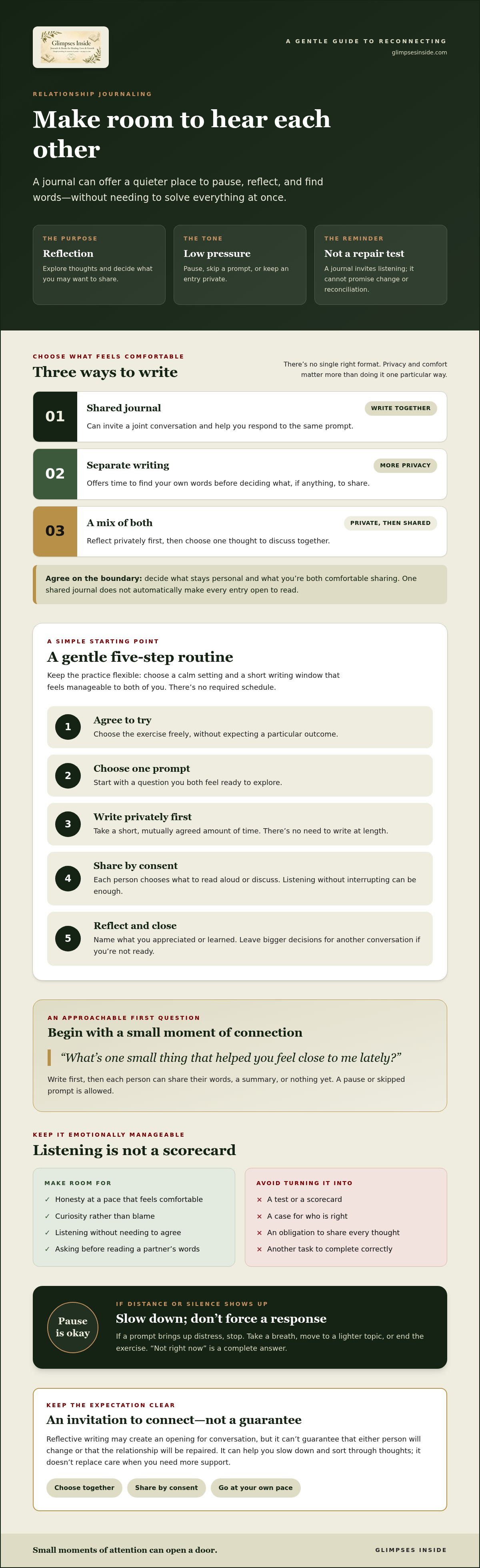
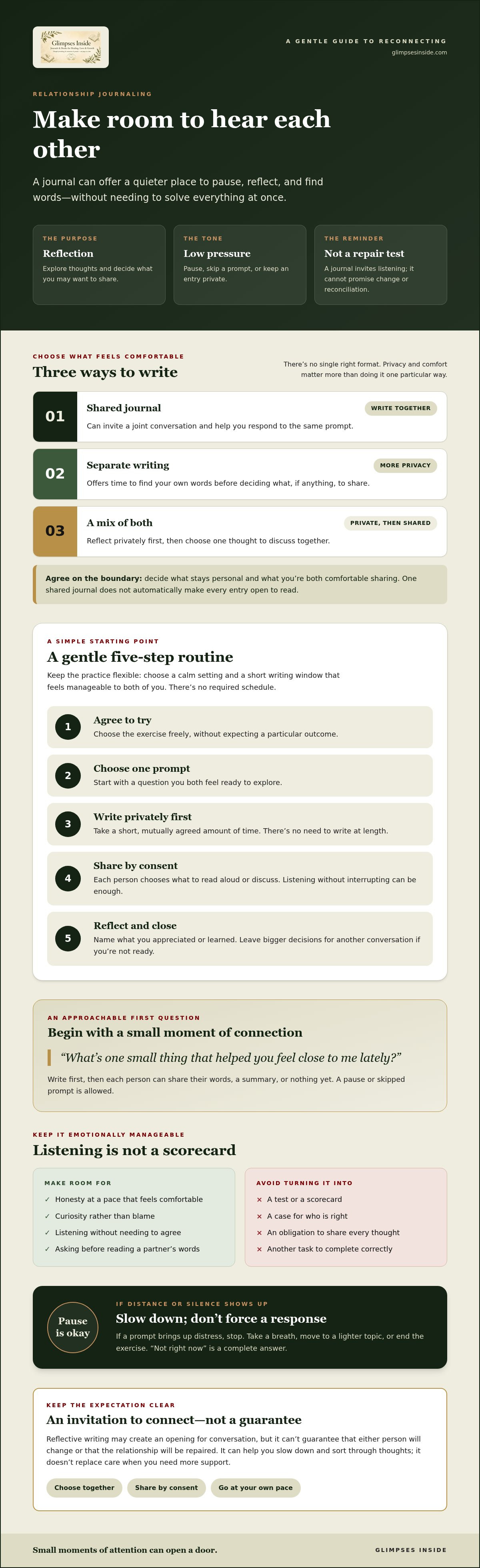
You can also combine the two: reflect privately, then choose one thought to discuss together. Before starting, agree on what stays personal and what you’re both comfortable sharing. That understanding can help the practice feel like an invitation, not an obligation. Choose a format that feels mutual and low-pressure, then adjust it as you learn what supports honest listening.
How to Use a Relationship Journal Without Making It Feel Like Homework
A journal practice should feel like a small invitation, not another task to complete correctly. Before you begin, agree that either person can pause, skip a question, or keep an entry private. Choose a calm setting and a short writing window that feels manageable to both of you. There’s no required schedule. The point is to make room for attention, not add pressure to your day.
How can couples begin a shared journaling practice?
Start with one open-ended prompt you both feel ready to explore. Write quietly first, then let each person choose whether to share their words, a summary, or nothing yet. Close by noticing what felt meaningful rather than trying to resolve every concern. Journaling can help you slow down and sort through thoughts; the University of Rochester Medical Center describes writing as one way to control your symptoms and improve your mood. Personal reflection may support a calmer conversation, but it doesn’t replace care when you need more support.
A gentle starter routine:
1. Agree to try. Make sure you’re both choosing the exercise freely, without expecting a particular outcome.
2. Choose one prompt. Pick a question that feels approachable, such as, “What’s one small thing that helped you feel close to me lately?”
3. Write privately first. Take a short, mutually agreed amount of time to reflect. There’s no need to write at length.
4. Share by consent. Each person decides what they want to read aloud or discuss. Listening without interrupting can be enough.
5. Reflect and close. Name what you appreciated or learned. Leave bigger decisions for another conversation if you’re not ready.
What boundaries make reflective writing feel safer?
Decide together whether the writing is private, shared, or a mix. Using one journal doesn’t automatically mean every entry is open for the other person to read. Ask before looking at your partner’s words, and treat “not right now” as a complete answer. These boundaries help keep writing a choice rather than an obligation.
If a prompt brings up distress, stop. You can take a breath, move to a lighter topic, or end the exercise without explaining everything in the moment. If difficult feelings or conflict persist, consider reaching out to a qualified mental health professional for support. A reflective publication, such as Just 30 Days reflective reading, may also offer a quiet space for personal insight, though it isn’t designed specifically for couples. The most helpful routine is one you can approach with care, honesty, and room to change course.
Choosing Journals for Reconnecting with Partner: Shared, Separate, or Prompt-Led
The right format is one that feels workable for both of you. Before choosing journals for reconnecting with partner, talk about what you hope to make room for: appreciation, curiosity about each other’s inner worlds, or a calmer check-in. A shared aim can guide your choice without requiring you to feel or think the same way.
Consider how much privacy, structure, and conversation each person wants. A prompt can offer a starting point, but it shouldn’t demand disclosure or agreement. You can answer differently, pass on a question, or keep your reflections to yourself.
| Format | May suit partners who… | Possible trade-off |
|---|---|---|
| Shared journal | Welcome a common place for thoughts and reflections | Needs clear agreement about who can read entries |
| Separate journals | Prefer private space to gather their thoughts first | Sharing later depends on each person choosing to do so |
| Prompt-led writing | Find a blank page difficult to begin | A question may not feel relevant or comfortable to both |
| Open-ended writing | Like choosing their own direction and pace | May feel less clear if either person wants more structure |
When might a shared journal suit both partners?
A shared journal can be a good fit if both of you want one place to return to. Decide whether you’ll write together or add reflections separately, and clarify whether every entry is open for both to read. A common notebook doesn’t automatically mean unlimited access. Clear agreements about privacy can prevent different expectations from becoming a new source of tension.
When might separate journals or guided prompts feel easier?
Separate writing can give each person room to find their words before talking. Prompt-led formats offer more direction if beginning with a blank page feels daunting. The Gottman Institute’s research-backed journaling tools provide one example of guided relationship exercises. Treat any prompt as an invitation, not an instruction to reveal something private or reach the same conclusion.
You can also blend approaches: write privately, then choose one thought to share. Try asking, “Would we rather focus on appreciation, curiosity, or a simple check-in?” Choose what feels mutual today. Your preference may change with time, and that’s okay. The format is there to support your conversation, not dictate it.
Handling Distance or Silence During Journaling
Completing a set of prompts together doesn’t mean a relationship is repaired. Journaling can help you notice what’s present, but connection also grows through how you treat each other beyond the page. Silence, different interpretations, or reluctance to answer may simply mean someone needs more time. Treat them as cues to slow down, not reasons to push for a response.
Journaling is reflective support, not therapy or crisis care. Some discomfort can come with sharing something new. But if either person feels unsafe, intimidated, or pressured to write or disclose, stop the exercise. A journal should never become a way to demand private thoughts, monitor a partner, or force a difficult conversation.
What if one partner does not want to write?
Let reluctance be information to understand, not resistance to overcome. Ask gently whether writing feels uncomfortable, another format would feel easier, or they’d rather revisit the idea later. They might prefer to talk, listen while you reflect, or take no part at all. Participation and sharing need to remain voluntary for both partners.
Even if one person is willing, the other doesn’t owe an explanation or a promise to try later. You might say, “We can leave this for now.” That response protects choice and can keep journaling from becoming another source of strain. Journals for reconnecting with partner work best as invitations, not tests of commitment or affection.
When may a journal not be enough?
If distress continues, conflict feels harmful, or either partner is afraid, consider seeking help from a qualified mental health professional. A journal can support reflection, but it can’t diagnose what’s happening or resolve serious relationship problems on its own. If there’s imminent danger, prioritize safety and contact local emergency services or crisis support. Don’t use a shared journaling exercise as a substitute for urgent help.
After a difficult moment, it may help to pause and ask what feels safe now: quiet, space, a simple check-in, or support from someone qualified. There’s no need to turn a painful entry into an immediate discussion or decision. Choosing not to continue is a valid boundary.
If personal reflection feels supportive outside a shared exercise, you can explore reflective publications as one gentle way to make space for your own thoughts. They aren’t a replacement for professional or crisis support when that’s what you need.
Choosing a Reflective Journal for Your Next Step Together
Choosing a journal isn’t about finding a perfect tool or creating an immediate relationship reset. It’s about finding a gentle next step that feels possible for both of you. Before choosing journals for reconnecting with partner, consider whether you’re both willing to try, what you expect to remain private, whether prompts or open writing feel more comfortable, and whether you have the emotional space for reflection right now.
A simple checklist before choosing a journal
- Choose the shape together. Would you rather reflect in one shared place, write separately, or begin with a conversation?
- Check the level of structure. Decide whether open-ended writing feels freeing or whether a prompt would make it easier to start.
- Set privacy expectations. Agree what may be read or shared, and make sure either person can skip a prompt, pause, or stop.
- Notice your readiness. If one of you feels pressured or overwhelmed, start smaller or wait until the timing feels more comfortable.
You don’t need to settle every question before beginning. A brief conversation about what feels safe and manageable can help you choose with care.
How can reflective reading support a slower next step?
Reading and writing can help you notice what’s on your mind before deciding whether to share it. They may offer words for a feeling or a new question to bring into a conversation. They aren’t a substitute for dialogue, and they don’t guarantee that you’ll agree. Let reflection create a little more room to listen, at each person’s pace.
Glimpses Inside offers Just 30 Days as a reflective publication. It isn’t a couples journal, so check its current product details to see whether it suits your individual interest in reflection. For another perspective on thoughtful reading and connection, explore Deepen Emotional Intimacy: How a Reflective Book Can Bridge the Heart’s Distance.
Your first step can be modest: read a little, write a few lines, or ask each other what kind of conversation would feel welcome. No grand promise. Just a chance to notice, share, and listen without rushing what comes next. If a reflective resource feels right for you, explore Just 30 Days at Glimpses Inside.
Take One Gentle Step Toward More Attentive Conversations
Reconnection doesn’t have to begin with a perfect conversation. Journals for reconnecting with partner can offer a thoughtful starting point, especially when you choose a format that feels comfortable to both of you. Agree on privacy, share only by choice, and let a prompt open the door rather than carry the weight of fixing everything.
A small moment of reflection can be enough for now: a few words on paper, a question asked with care, or the willingness to listen without rushing to respond. If writing brings up distress or conflict feels harmful, pause and seek appropriate support. A journal can make room for insight, but it isn’t a substitute for help when you need more.
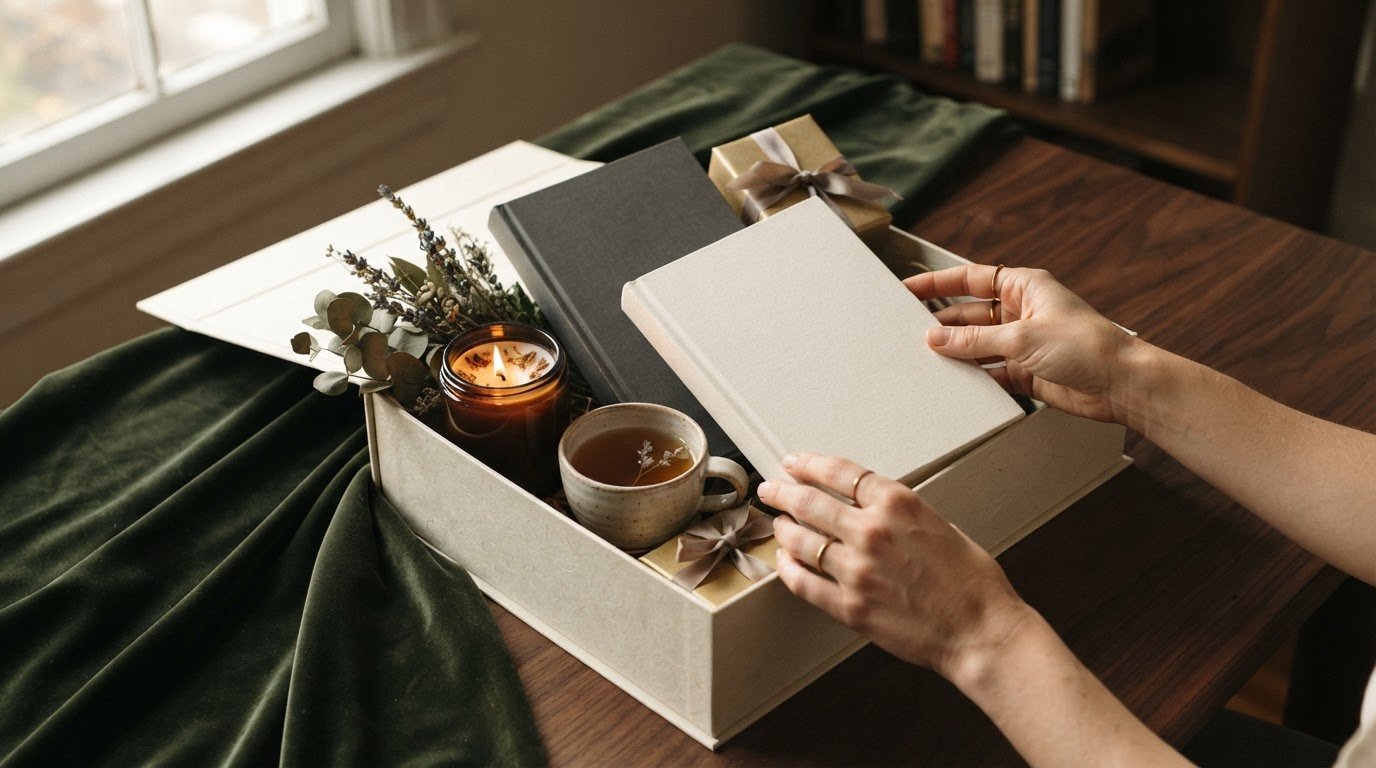
Glimpses Inside, owned and operated by author Ianthe Writes, offers the Just 30 Days series and curated gift boxes designed to complement its books and journals. If a reflective publication feels like a welcome companion for your own next step, explore Just 30 Days. Move at a pace that feels kind to you both. One honest moment can be a beginning.
Frequently Asked Questions
Can a journal help you reconnect with your partner?
Yes, a journal can offer a gentle starting point for reflection and more attentive conversation. A prompt may help you put feelings into words before sharing them, while listening to each other can reveal what you’ve been missing. It can’t guarantee reconciliation or change. Think of journals for reconnecting with partner as a way to make room for connection, not a tool to fix your partner or settle every concern.
What should couples write about in a relationship journal?
Write about subjects that feel safe and relevant to both of you, such as a moment you appreciated, something you’d like your partner to understand, or what helps you feel supported. Keep the focus on sharing your experience rather than proving who’s right. For example, “I felt close to you when we made time to talk” opens a different conversation than a list of what your partner did wrong. Either person can pass on a prompt.
Should couples use one journal or keep separate journals?
Choose one journal if you both want a shared place for reflections and agree about who can read each entry. Separate journals may feel more comfortable if either person wants privacy or time to gather their thoughts before speaking. You can combine the approaches by writing privately and choosing what to share later. Neither format is best for every couple. Agree on boundaries first, so a shared practice doesn’t create an expectation of access to private writing.
How often should couples use a relationship journal?
There’s no required schedule. Choose a pace that feels manageable to both of you, whether that means trying a prompt once or returning to writing when you want a quieter way to check in. Agree on a short amount of time and a calm setting, then notice whether the practice feels useful or burdensome. If it starts to feel like homework, pause or change the approach rather than forcing a routine.
What if my partner does not want to journal with me?
Respect their choice. Reluctance may mean writing feels uncomfortable, the timing isn’t right, or they’d prefer another way to connect. You could ask whether they’d rather talk, listen while you share a reflection, or revisit the idea another time. They don’t have to participate or explain their decision. A journal is most helpful as an invitation, not a test of commitment or a way to pressure someone into disclosure.
Can a relationship journal replace couples therapy?
No. A journal can support personal reflection and everyday conversations, but it isn’t a substitute for qualified professional help, especially when distress continues, conflict feels harmful, or either partner feels unsafe. Writing also can’t guarantee that serious relationship problems will be resolved. If there’s imminent danger, prioritize safety and contact local emergency services or crisis support. You can pause journaling and seek appropriate help without waiting to finish a set of prompts.
How do we choose a journal for reconnecting with a partner?
Start by checking that both of you are willing to try, then consider privacy, prompt style, and emotional readiness. Decide whether a shared journal, separate writing, or guided questions feels more comfortable, and agree that either person can skip a prompt or stop. Keep the first step small, such as reflecting on one positive moment. Choose a resource that supports curiosity and listening, without expecting an immediate relationship reset.