Gift Boxes for Quiet Moments: Choosing a Thoughtful Pause
September 26, 2026 · 16 min read
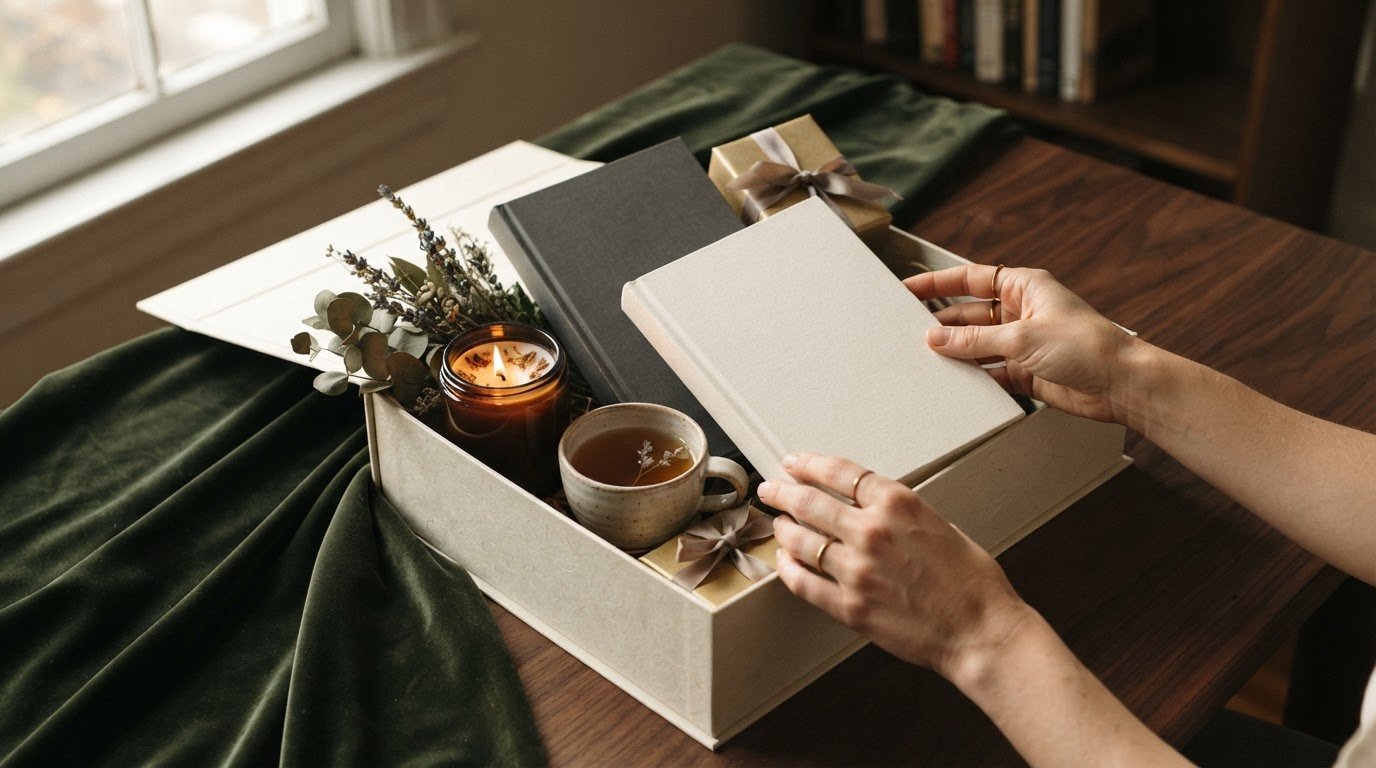
What if a thoughtful gift didn’t ask someone to change their mood, start a new routine, or make time they don’t have? Gift boxes for quiet moments can offer something gentler: an invitation to pause, with no particular way to accept it.
It makes sense to want that invitation to feel personal. A box can look beautiful and still feel generic if its details don’t reflect the person receiving it. And when an item is unfamiliar, you may wonder whether it will be enjoyed or simply set aside. The heart of a reflective gift isn’t how much it asks someone to do. It’s the care behind the choice, and the freedom to enjoy it in their own time.
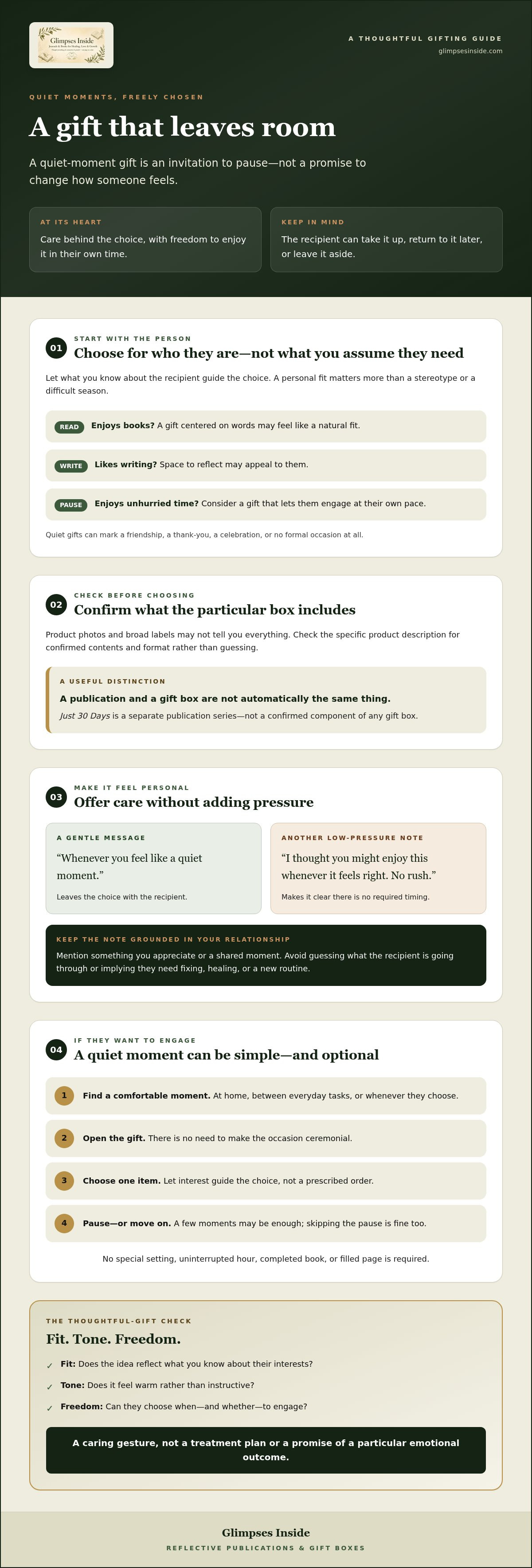
This guide will help you choose a gift box that feels considered without putting pressure on the recipient. You’ll find practical ways to match the format and tone to their interests, check what a particular box includes, and add a personal note. We’ll also look at how reflective reading might suit some people, without assuming it belongs in every box or appeals to every recipient.
Key Takeaways
- Choose gift boxes for quiet moments as an invitation to pause, not a promise of how the recipient will feel.
- Start with what you know about the person’s interests, including whether they enjoy reflective reading, writing, or unhurried time.
- Check the specific product description for confirmed contents and format rather than guessing from photos or broad labels.
- Use a personal message that offers care without implying the recipient needs fixing or must follow a routine.
- Explore Glimpses Inside’s reflective publications and gift boxes. Just 30 Days is a separate publication series, not a confirmed component of any gift box.
What Makes Gift Boxes for Quiet Moments Feel Thoughtful?
Some occasions call for a gentle, personal gesture rather than a grand surprise. A friend starting a new chapter, a family member celebrating an ordinary birthday, or someone you simply want to remember may appreciate a gift that leaves space instead of making a spectacle.
A quiet-moment gift box is a collection of thoughtful items offered as an invitation to pause, reflect, or enjoy a little stillness, without promising a particular emotional outcome.
Its thoughtfulness comes down to fit, tone, and freedom. Does the idea suit what you know about the recipient? Does it feel warm rather than instructive? Can they choose when and whether to engage with it? Reflective gifting isn’t clinical wellbeing advice, and it shouldn’t promise healing or a changed outlook. It’s a caring gesture, not a treatment plan. The cozy ease associated with the concept of hygge offers one cultural lens for appreciating calm, comfortable moments, though a gift doesn’t need to recreate a particular tradition to feel meaningful.
What does a quiet-moment gift communicate?
At its best, it says, “I thought of you,” rather than, “I know what you need.” That difference matters. A reflective item can offer a small pause without assuming the recipient is stressed, sad, or seeking change. For example, someone who enjoys reading might set a thoughtful book beside their chair and open it for a few minutes on a quiet evening, or leave it for another day. Both are valid ways to receive the gift.
An optional invitation feels gentle because it preserves choice. Instructions and expectations can turn a kind gesture into another task. A simple note such as “Whenever you feel like a quiet moment” leaves the door open without asking the person to walk through it.
Who might appreciate a reflective gift box?
Think of people who already enjoy books, journaling, or unhurried personal rituals, but let what you know about them guide you. Someone who likes writing may welcome space to reflect, while a devoted reader may prefer a gift centered on words. Don’t rely on stereotypes about age, personality, or life circumstances. Quiet gifts can mark a friendship, a thank-you, a celebration, or no formal occasion at all. The personal connection matters more than matching the gift to a difficult season.
How Can a Gift Box Create Space for a Quiet Moment?
An object can become a gentle cue simply because it’s there: a book on a bedside table, a journal within reach, or a small box waiting to be opened when the room grows quiet. It doesn’t create a particular feeling on demand. It can, however, remind the recipient that a pause is available if and when they want one.
That pause can be brief or occasional. Someone might open a gift after dinner, choose one item to spend a few minutes with, then put it away until another day. There’s no need to finish a book, fill every page, or repeat a routine. A gift works best when its use can shift with the recipient’s time, energy, and preferences. GoodTherapy’s discussion of the power of pausing offers context for making a little room to stop, without turning the gift into a promise of a specific result.
For gift boxes for quiet moments, the gesture can be as simple as offering a few unhurried steps, with no special setting required:
- Find a comfortable moment. It could be at home, between everyday tasks, or whenever the recipient chooses.
- Open the gift. There’s no need to make the occasion ceremonial.
- Choose one item. Let interest guide the choice, rather than a prescribed order.
- Pause, or move on. A few moments may be enough, and skipping the pause is fine too.
This is an invitation, not a ritual the recipient must complete. They can adapt it, return to it later, or ignore it entirely. Reflection, journaling, and mindfulness may feel welcome to some people, but they aren’t obligations or substitutes for professional care when someone needs it.
What can a simple gift-giving ritual look like?
Keep the opening easy. The recipient might unwrap the box at the kitchen table, look through it, and set it aside until they feel drawn to something. No candles, quiet room, or uninterrupted hour are required. A short note can make that freedom clear: “I thought you might enjoy this whenever it feels right. No rush.”
They can follow the suggestion, change it, or skip it. The point is to make space, not another task.
Why does a personal note matter?
A note can make the gesture feel rooted in your relationship. Mention something specific you appreciate or a shared moment, rather than guessing what the recipient is going through. Avoid language that assumes stress, grief, or a need to heal. For example: “I remembered how much you enjoy a quiet read. I hope this brings a small moment of pleasure, whenever you get to it.” No response is required.
If you’re considering a reflective gift, you can explore reflective gift boxes as one possible way to offer that unhurried invitation.
How to Choose a Gift Box for Quiet Moments That Fits the Recipient
A thoughtful choice starts with the person, not a picture of what a reflective gift is supposed to look like. Some people love writing things down. Others would rather read a few pages or enjoy a quiet moment without a set activity. Use what you’ve noticed about their everyday preferences, then check the details of the specific gift box before deciding.
Try this simple selection framework:
- Start with what they enjoy. Think about whether they reach for reflective books, keep a journal, or value unhurried time. If you’re unsure, choose a direction that feels familiar rather than assuming they’ll welcome a new routine.
- Match the format to their habits. Guided reflection may suit someone who likes prompts, while open-ended reading may feel more natural to a regular reader. A person who prefers simplicity may appreciate a thoughtful note more than an activity.
- Read the exact description. Confirm what the box includes, its format, and how any items are intended to be used. Don’t infer contents from a photo, broad label, or the word “curated.” If something important isn’t stated, check with the seller before relying on it.
- Confirm practical details. Review packaging, delivery timing, and gift-message options for that specific offer. Only make promises about arrival dates or included messages when the available information confirms them.
Which details should you check before choosing?
Look for clear descriptions rather than relying on a general impression. Ask yourself: Can I tell what’s included and what the recipient might do with it? Does the format fit their preferences for guided reflection, open-ended reading, or simply receiving a kind gesture? If packaging or a gift message matters, verify that option on the specific listing. Checking these details helps you choose based on what’s actually offered, not what you imagine a box might contain.
For more help thinking through intentional selection, explore this curated gift boxes guide.
How can you avoid a gift that feels too personal or prescriptive?
Keep the message grounded in your connection. “I thought you might enjoy this” offers companionship; “You need to slow down” assigns a problem and a solution. Avoid suggesting that the recipient should change, share private feelings, or follow a daily routine. If you’re uncertain, choose something flexible and let them decide whether to engage with it, and when.
The best fit isn’t necessarily the box with the most elaborate contents. It’s the one whose described contents, intended use, and tone align with what you genuinely know. That care makes gift boxes for quiet moments feel personal while leaving the recipient room to make the moment their own.
How to Make a Quiet Gift Feel Personal Without Adding Pressure
A reflective gift can feel tender, but it can also be misread as a hint that someone needs fixing. The difference often lies in the context and the words around it. A book or journal offered after a casual conversation about someone’s love of reading may feel attentive. The same gift, presented as a solution to a problem they haven’t shared, may feel like an unsolicited judgment.
Consider your relationship, what the recipient has told you, and the timing. A quiet gift may be welcome for a birthday, a thank-you, or a simple gesture between friends. If someone is already feeling exposed or under pressure, a message that assigns meaning to the gift could make it harder to receive. Let the item be an expression of care, not a statement about what they should do next.
What should you write in a note for a quiet gift?
Keep it brief, warm, and free of expectations. Name a genuine point of connection, then leave the recipient room to respond, or not respond. Avoid promises that a book or gift box will heal, solve a difficulty, or transform how someone feels. A few adaptable principles can help:
- Speak from your perspective: “I thought of you when I saw this.”
- Offer, don’t direct: “I hope you enjoy it whenever you feel like opening it.”
- Make care clear without requesting anything: “Sending a little care your way. No need to reply.”
For example: “I remembered how much you enjoy a quiet read. I thought you might like this, whenever it feels right.” It’s personal because it reflects something you know, and gentle because it doesn’t ask the recipient to use the gift or explain how it makes them feel.
When might a different kind of gift be a better fit?
Trust what you know about the person. If they’ve never enjoyed journals or reflective books, a quiet-themed gift may feel less personal than something aligned with their established interests. A practical item they’ve mentioned needing, or a shared experience they would genuinely enjoy, may suit them better. The aim isn’t to choose a gift that signals depth. It’s to offer something they can receive comfortably.
No gift has to carry the whole weight of a relationship. A small gesture can simply say, “I’m thinking of you.” If reflective reading or a quiet pause feels like a natural fit, you can explore Glimpses Inside gift boxes as one possible way to express that care.
Explore Reflective Gift Boxes and Publications from Glimpses Inside
Once you have a sense of what the recipient might enjoy, you can explore options with that preference in mind. Glimpses Inside is an online retailer focused on reflective publications and curated gift boxes. That gives you two starting points: a publication for someone who enjoys spending time with words, or a gift box that may suit someone who appreciates a considered gesture.
What can readers explore at Glimpses Inside?
The offerings include reflective publications and gift boxes. Just 30 Days is a publication series available from the business. It’s a separate option to explore, not a confirmed component of any gift box. If you’re considering a particular box, rely on its current product description for the exact contents, format, and availability. Don’t assume a publication or other item is included unless the description says so.
You can also read more about gifts for mindful living for ideas about choosing a present that leaves room for rest, or explore this guide to a 30-day journal for clarity if you’re considering reflective reading or writing as a possible fit. Let the recipient’s interests lead. A journal may appeal to someone who enjoys putting thoughts on a page, while another person may prefer reading, or a gift that asks nothing of them.
What is a gentle next step when you are ready to choose?
Take your time with the listings. Check each current description for what’s included and whether the format feels appropriate for the person you have in mind. If practical details such as delivery timing or gift-message options matter, verify them for that specific offer before making plans. This keeps your choice rooted in confirmed information rather than assumptions.
Thoughtfulness doesn’t depend on finding a perfect gift or knowing exactly how someone will use it. A reflective publication can be read a little at a time, and a gift box can simply be received without a set routine. The meaning is in the care behind the choice, with the recipient free to decide what suits them.
If you’d like to browse further, you’re welcome to explore Glimpses Inside at your own pace and see whether its reflective publications or gift boxes feel like a natural fit. A quiet gift is an opening, not an expectation.
Choose a Gift That Leaves Room to Breathe
A thoughtful gift doesn’t need to create a particular feeling or start a new routine. It can simply show that you’ve paid attention. Choose with the recipient’s interests in mind, check what a gift box actually includes, and use a note that offers care without expectation. That’s what helps gift boxes for quiet moments feel personal while leaving the recipient free to enjoy them in their own way.
If reflective reading feels like a natural fit, Glimpses Inside offers reflective publications and curated gift boxes. Its Just 30 Days series is a publication offering, separate from any gift-box contents unless a specific description says otherwise. Review the current details and see what aligns with the person you have in mind.
Explore reflective publications and gift boxes at Glimpses Inside. A small gesture, chosen with care, can be enough. Trust what you know about the person, and let your gift offer a gentle invitation, not a demand.
Frequently Asked Questions
What is a gift box for quiet moments?
A gift box for quiet moments is a thoughtful selection offered as an invitation to slow down, read, reflect, or simply enjoy a little unhurried time. It doesn’t guarantee a particular feeling or require the recipient to follow a routine. The best choice reflects what you know about the person and gives them room to decide whether, when, and how they want to engage with it.
How do I choose a gift box for someone who enjoys quiet time?
Start with how they already spend their quiet time. Do they read before bed, enjoy writing by hand, or prefer calm activities without prompts? Then compare those preferences with the specific product description, checking confirmed contents and intended use. If they like choosing their own pace, avoid gifts that appear to require a schedule. A suitable box should feel connected to their interests, not to an assumption about their personality.
Can a reflective gift box be suitable for someone going through a difficult time?
It can be, if the gift reflects the person’s preferences and doesn’t imply that they should feel better or work through something in a particular way. Consider whether they’ve shown interest in reflective reading or similar gifts before. A gentle note can communicate that you care without framing the box as a solution. A gift is a personal gesture, not professional support or a promise of healing.
What should I write in a note with a quiet-moment gift?
Write a few sincere words that express care without asking for a response or suggesting how the recipient should use the gift. For example: “I saw this and thought of you. I hope it’s enjoyable whenever you have a moment.” A specific detail about your connection can make the message feel personal, such as recalling their love of a good book. Avoid promising that the gift will solve a problem or change how they feel.
Are books and journals always included in quiet-moment gift boxes?
No. Contents vary, so check the current description for the particular box you’re considering rather than assuming it includes a book, journal, or any other item. Glimpses Inside offers reflective publications and curated gift boxes, and its Just 30 Days series is a publication offering. That doesn’t confirm the series is included in a gift box. Review the listing’s stated contents and availability before choosing.
Can I give a quiet-moment gift to someone who does not journal?
Yes. Journaling is only one possible way to enjoy a reflective gift, and it may not suit the recipient. Think about what they do like: perhaps they enjoy reading, a peaceful routine, or a simple keepsake. If books and writing aren’t their style, choose another kind of present that better matches their interests. The aim is to show consideration, not to introduce an activity they may feel expected to try.
How can I make a gift feel thoughtful without putting pressure on the recipient?
Choose something that fits what you know about them, and present it without instructions or expectations. A brief message such as “No rush to open or use this, I just wanted you to have it” leaves the choice with them. Avoid language that suggests they need fixing, should start a routine, or owe you a reply. Thoughtfulness can be quiet: care in the choice, and freedom in how it’s received.