Guided Self-Discovery Books: A Gentle Path to Your Inner Landscape in 2026
September 25, 2026 · 16 min read

What if understanding yourself didn’t require a dramatic breakthrough, just a few quiet minutes and the right question? The best guided self-discovery books don’t turn reflection into another task to perfect. They offer a gentle place to begin when your own desires feel distant and high-pressure self-help feels like too much.
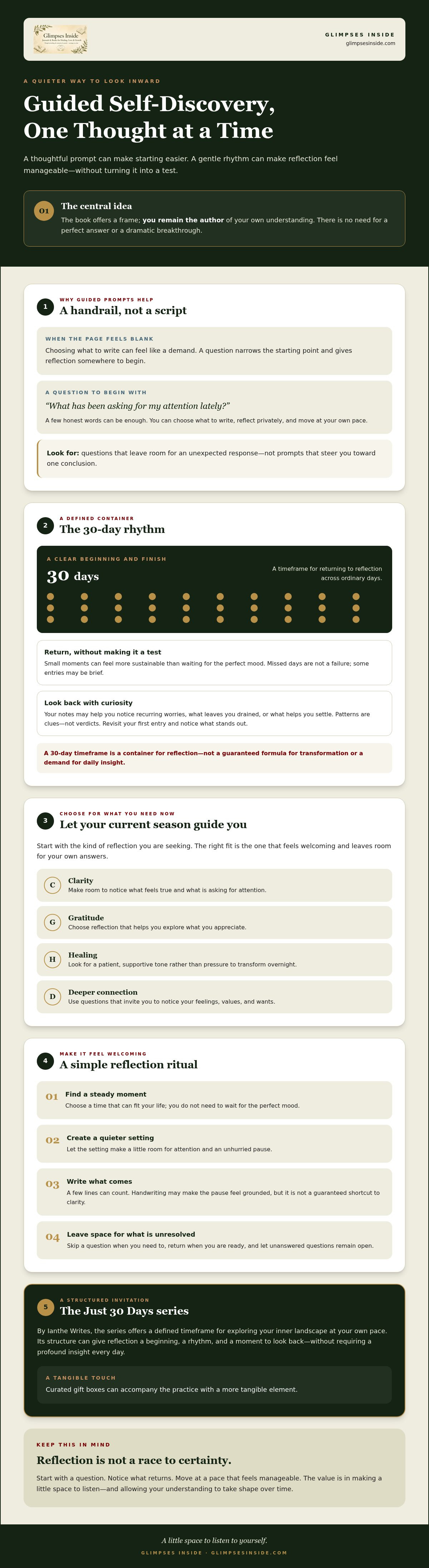
If you’ve wondered which book might help you understand yourself without becoming a chore, you’re not alone. A steady, manageable ritual can make room for honest noticing, one day at a time. A defined period of reflection, such as 30 days, can give the practice a beginning and a shape, with insights you can revisit beyond the final page.
This guide explores what to look for in a reflective book, how to choose a format that feels welcoming, and how to build a daily rhythm that fits your life. We’ll also look at the Just 30 Days series by Ianthe Writes, a structured invitation to explore your inner landscape at your own pace.
Key Takeaways
- Learn how guided self-discovery books can offer thoughtful prompts when a blank page feels difficult to face.
- Explore how a defined 30-day timeframe can give reflection a manageable shape without making consistency a test.
- Discover how to choose a book that fits what you’re seeking now, whether that’s clarity, gratitude, healing, or deeper connection.
- Find simple ways to create a quieter setting and make daily reflection feel like a welcoming ritual.
- See how the Just 30 Days series and curated gift boxes can offer structure and a tangible touch to your self-discovery practice.
What Are Guided Self-Discovery Books and Why Do They Matter?
Guided self-discovery books offer structure for turning inward. Instead of asking you to write whatever comes to mind, they use questions, prompts, or reflective exercises to help you notice what you feel, value, and want. Self-discovery is often understood as a journey of self-discovery, a gradual effort to understand your personal feelings and priorities. A guided book gives that journey a place to begin.
That beginning matters. A blank page can feel like a demand: find the right words, uncover something important, make sense of it all. A prompt narrows the starting point. You might ask yourself, “What has been asking for my attention lately?” You don’t need a perfect answer. Even a few honest words can help you look at a tangled thought with greater gentleness.
A guided book also makes reading active. Rather than taking in advice and hoping it fits, you pause, respond, and create a record of what feels true for you. The book doesn’t decide what your answers mean. It offers a frame, while you remain the author of your own understanding. You can reflect privately, move at your own pace, and choose what to write.
The Practice of Reflective Inquiry
Putting an emotion into words may help you separate the feeling from the thoughts around it. You might notice that “I feel stuck” holds several smaller truths: uncertainty about a choice, tiredness, or a wish for change. Handwriting adds a physical rhythm to this pause. The movement of pen across paper can make reflection feel grounded, though it isn’t a guaranteed shortcut to clarity.
For beginners, guided prompts can ease the strain of deciding what to write about. A useful question provides a starting point without dictating the answer. It’s a handrail, not a script. When comparing books, look for prompts that leave room for a response you might not expect, rather than steering you toward a single conclusion.
Moving Beyond Surface-Level Self-Help
Some motivational writing leans on urgency and sweeping promises. Guided reflection can offer a quieter alternative: less pressure to transform overnight, more room to notice what unfolds. Look for books that treat growth as a process, not a race or a flaw to fix. A supportive guide can help you return to your own voice with patience and care.
That distinction matters if high-pressure self-help has left you feeling behind. You can move at a pace that feels manageable, skip a question when you need to, and return when you’re ready. The value isn’t in producing profound answers every day. It’s in making a little space to listen, then letting what you hear take shape over time.
The Power of the 30-Day Rhythm in Personal Evolution
Thirty days isn’t a guaranteed formula for transformation. It is a defined container: long enough to return to reflection across changing moods and ordinary days, yet clear enough to feel possible to begin. A starting point and finish can soften the pressure to “figure yourself out” all at once. You’re simply making room to notice, one day at a time.
Returning to reflection can reveal what a single entry might miss. Perhaps the same worry surfaces after certain conversations, or you feel more at ease when you make room for rest. Patterns aren’t verdicts. They’re clues you can meet with curiosity. Looking back at your own words can also help you notice how your perspective changes, even if no single entry feels like a breakthrough.
Building a Habit of Reflection
Small, regular moments of reflection can feel more sustainable than waiting for the perfect mood or setting aside a demanding stretch of time. This is gentle discipline: showing up when you can, without turning missed days into failure. The University of Rochester Medical Center discusses journaling for emotional wellness as one way to manage difficult feelings. A guided structure can help you begin, while your own pace stays yours.
A 30-day journal for clarity can give your practice a beginning, a rhythm, and a moment to look back. The Just 30 Days series offers a structured timeframe for reflection, not a demand to produce an insight every day. Some entries may be brief. That still counts.
Tracking Your Inner Landscape
Across a month, your notes can become a quiet map of what brings closeness, what leaves you feeling drained, and what helps you settle. At the end, revisit your first entry. You may see a shift in how you describe a concern, or simply notice that you’ve kept listening. Either way, the record gives you something tangible to reflect on.
Let the rhythm stay thoughtful rather than hurried. Choose a steady moment, write a few lines, and allow unanswered questions to remain open. Guided self-discovery books aren’t about instant certainty. They can offer a companionable practice that helps you pay closer attention to yourself. If a defined month feels like a kind place to begin, explore the Just 30 Days series as one option for your reflections.
How to Choose the Right Guided Book for Your Current Season
The right book is less about popularity and more about what you need today. Are you seeking room to reflect on a difficult period, a clearer view of a decision, a practice of gratitude, or a way to feel closer to someone? Let that need guide your search. It can change over time, and your choice doesn’t have to define your whole journey.
As you browse guided self-discovery books, pay attention to the language. Does it feel inviting and human, or clinical and prescriptive? A prompt such as “What would help you feel more at ease today?” leaves room for your experience. A question that assumes what you should feel may not. Look for flexibility, too: space to write, skip a prompt, or follow an unexpected thought. If you can preview a book, read a sample prompt and consider whether you could answer it in your own words.
The physical experience can matter as well. A journal that feels comfortable to hold and write in may make it easier to return to the page. Consider the paper, layout, and whether the format suits your habits. The mental health benefits of journaling are discussed by WebMD, but a book is a reflective tool, not a substitute for professional support when you need it.
Books for Emotional Healing and Restoration
If you’re moving through a tender season, choose prompts that emphasize kindness, choice, and space to reflect. Look for questions that help you name what you feel without rushing you toward a solution. A personal growth guide for women may offer a perspective that resonates with your experience. Let the prompts meet you gently, with attention to your feelings and the small signs of restoration.
Books for Deepening Intimacy and Connection
If your focus is a relationship, seek questions that invite listening and curiosity rather than assigning blame. Conversation starters can move beyond daily logistics: “When do you feel most understood?” or “What’s something you wish we made more time for?” A reflective book about deepening emotional intimacy can offer a starting point for shared reflection, while each person remains free to respond in their own way.
Before choosing, imagine using the book on an ordinary day, not an ideal one. If its tone feels steady, its questions relevant, and its pages welcoming, it may be a companion that fits this season of your life.
Creating a Sacred Ritual for Your Daily Reflection
A reflective practice doesn’t need a perfect room or a long stretch of quiet. It needs a small, welcoming pause that helps you step out of the day’s noise and meet the page. A familiar place, a comfortable seat, and a little care for your surroundings can make guided self-discovery books feel less like another task and more like a moment that belongs to you.
Try a simple transition: set your phone aside, take a slow breath, and notice what’s around you before opening the book. You might make tea, soften the lighting, or choose a scent you find calming. These details aren’t requirements. They’re optional signals that it’s time to turn your attention inward.
Setting the Physical and Emotional Space
Comfort matters more than an elaborate setup. Choose a spot where your body can settle and your writing materials are easy to reach. A consistent time can help the ritual find a place in your day, but let it be a supportive anchor, not a rule you use to judge yourself.
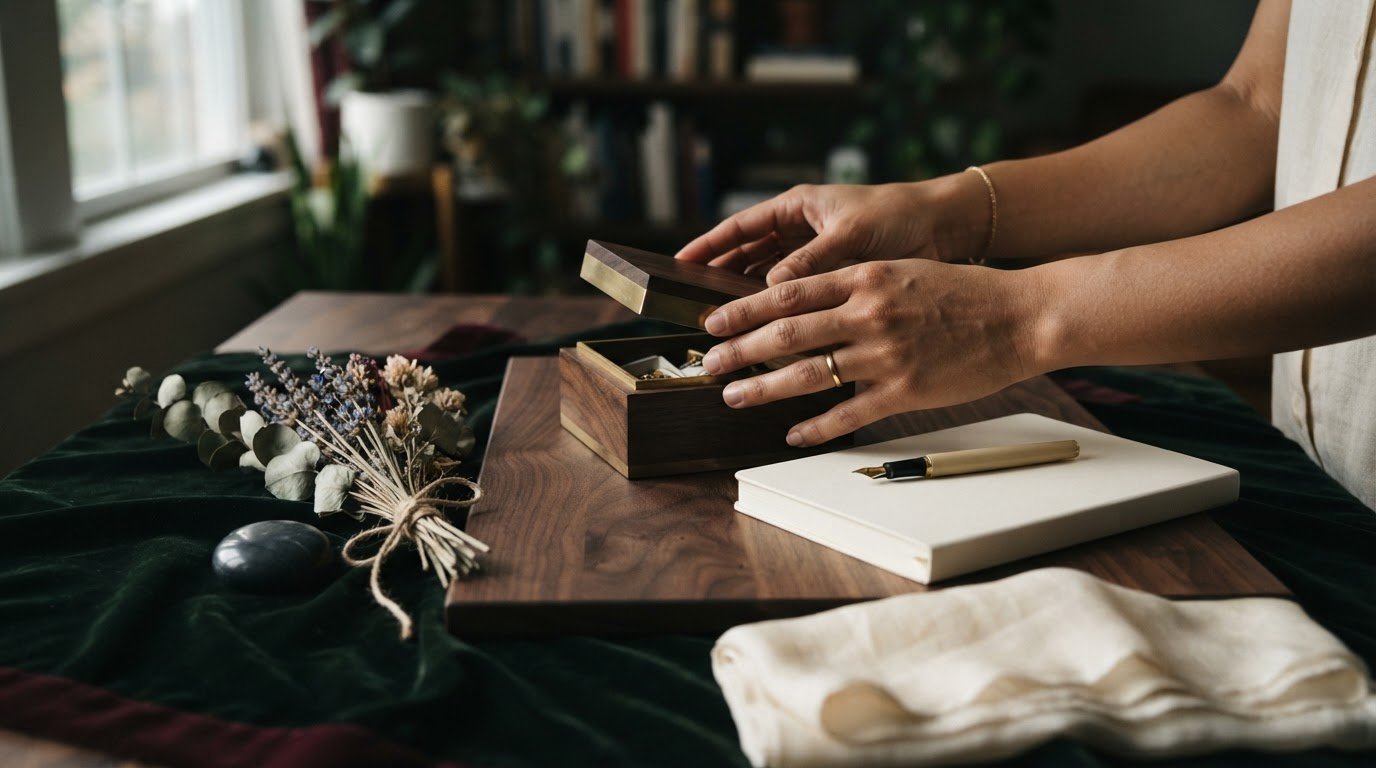
For some, a meaningful object can make the moment feel more intentional. Curated gift boxes can add a sensory touch to reflection and help mark your commitment to making space for yourself. A favorite pen or a warm drink can do the same. The point is not to make the setting impressive. It’s to make it feel inviting.
Writing with Vulnerability and Hope
A ritual can bridge ordinary moments and the meaning you make when you pause to listen inward. As you answer a prompt, let your first words arrive without polishing them. Try writing in short fragments: “Tired. A little relieved. I miss having time to myself.” Brief notes can hold a raw truth without asking you to explain everything at once.
If perfectionism appears, remind yourself that this page isn’t an assignment. You can write one line, leave a prompt unanswered, or begin with “I’m not sure, but…” You don’t need to sound wise or reach a neat conclusion. The value is in making room for what’s present, even if it feels unfinished.
Let the physical act be part of the pause: feel the pen in your hand, notice its movement, and let the page hold your thoughts. If you’d like a sensory way to mark that practice, explore curated gift boxes for reflection.
The Just 30 Days Series: A Companion for Your Journey
Some seasons call for a little structure, not another demand to change yourself. The Just 30 Days series offers a defined timeframe for reflection, giving you a place to return to each day. It’s an invitation to notice what’s happening within, without expecting every page to hold a breakthrough or every answer to arrive at once.
Among guided self-discovery books, a thoughtful voice and questions that leave room for your own perspective can make the experience feel less like instruction and more like companionship. The Just 30 Days series by Ianthe Writes is part of Glimpses Inside’s reflective publications. A physical book can also become a tangible place to record your thoughts and revisit them as your perspective unfolds.
Guided Discovery by Ianthe Writes
A gentle approach offers a counterpoint to self-help that asks you to hurry toward a new version of yourself. Ianthe Writes’ work invites a quieter kind of attention, making room for uncertainty and vulnerability alongside hope. A prompt can open a door, but you choose whether to step through, what to explore, and when to pause.
You don’t need to finish a journey of self-awareness with a perfect answer. You can begin with a small truth, return to it later, and let understanding gather at its own pace. Glimpses Inside also features upcoming literary works by Ianthe Writes. You can begin with the Just 30 Days series and choose whether to explore other titles as they become available.
Gifting the Journey of Self-Awareness
A reflective gift can say, “There’s room for you to listen to yourself.” For someone moving through a tender season, a thoughtful gift can acknowledge their need for care without prescribing what their experience should be. Glimpses Inside’s curated gift boxes are designed to complement books and journals, adding a tangible element to the practice of reflection.
You might choose a reflective book for yourself or offer a gift box to someone you care about. Either way, the gesture is not about fixing or rushing anyone. It’s about making space for a quieter conversation with the self. Explore the Just 30 Days series, curated gift boxes, and upcoming books by Ianthe Writes at Glimpses Inside to find a companion for the season you’re in.
Make Room for Your Next Small Discovery
Self-discovery doesn’t ask you to arrive at a final answer. It asks you to keep listening. The right guided self-discovery books can offer a manageable rhythm for reflection, helping you notice recurring feelings, make space for your own words, and build a practice that feels supportive rather than demanding.
Choose a book that meets your current needs, then give yourself permission to begin imperfectly. A few honest lines can be enough. The Just 30 Days series by Ianthe Writes offers a defined timeframe for reflection. Curated gift boxes can add a tactile touch to your practice or make a thoughtful gift for someone who enjoys reflective reading.
You don’t need to change everything today. You only need a quiet place to start. Explore the Just 30 Days series at Glimpses Inside and choose a reflective companion for your next small discovery.
Frequently Asked Questions
How is a guided self-discovery book different from a regular journal?
A guided self-discovery book gives you prompts or a sequence of questions, while a regular journal usually leaves the subject and structure up to you. That guidance can help if you’re unsure how to begin or what to reflect on. You can still follow your thoughts wherever they lead, skip a prompt, or write in your own way. The structure is an invitation, not a set of rules.
Do I need to be a “good writer” to use these books?
No, you don’t need writing experience or polished sentences. The purpose is to notice what you’re feeling, not to create something for an audience. A few words, a list, or an unfinished thought can be enough. If a prompt feels difficult, try starting with “Right now, I feel…” and continue without editing. Your words only need to make sense to you.
What happens if I miss a day in my 30-day journey?
You can simply begin again with the next prompt. Missing a day doesn’t erase what you’ve already noticed, and you don’t have to catch up unless that feels useful to you. A 30-day structure offers a container for reflection, not a test of perfect consistency. Return when you’re ready, even if your next entry is only a sentence or two.
Can these books help with emotional healing after a hard season?
They can offer a way to name feelings, reflect on what you need, and notice moments of care or change. A prompt such as “What would feel supportive today?” may help you put a thought into words without demanding an immediate answer. A book can support personal reflection, but it isn’t a substitute for professional help if you’re struggling or need more support.
Are these books suitable as gifts for someone else?
Yes, a reflective book can be a thoughtful gift for someone who enjoys writing or is open to quiet self-reflection. Consider their preferences and current season, and choose something that feels inviting rather than prescriptive. Glimpses Inside offers the Just 30 Days series and curated gift boxes designed to complement books and journals. A gentle note can make the gift personal while leaving the recipient free to use it in their own way.
How much time do I need to set aside each day for reflection?
There’s no fixed amount of time required. You might begin with a few quiet minutes and one honest response, then linger longer if you want to explore the prompt. Choose a time that fits your day, such as a pause before bed or a calm moment in the morning. Keeping the practice manageable can make it easier to return without turning reflection into another obligation.
Is it better to use a physical book or a digital version for self-discovery?
The best format is the one you’ll feel comfortable returning to. A physical journal offers the tactile experience of holding a book and writing by hand, while a digital option may suit someone who prefers typing or keeping notes on a device. Consider what helps you focus and feel at ease. Glimpses Inside specializes in reflective publications and gift boxes, so check the format details before choosing.