Journals for Healing: Reclaim Your Inner Landscape in 2026
September 22, 2026 · 14 min read

What if healing doesn't require tearing open every old wound, but simply offering your heart a quiet place to land? When you carry deep heartbreak, grief, or sudden transition, the pressure to unpack everything at once is exhausting. You sit with pen in hand, paralyzed by blank-page anxiety and the fear of getting it wrong. Clinical workbooks feel cold and detached. Rigid daily trackers turn into quiet guilt the moment life interrupts. Searching for journals to help with healing shouldn't feel like an overwhelming task, yet so few feel gentle enough for fragile days.
You don't need another relentless self-improvement project. You deserve a patient, compassionate companion. Discover how intentional reflection through guided journals can gently nurture healing, release emotional weight, and restore inner peace. Ahead, we explore structured frameworks designed for containment, quiet rituals that soothe the nervous system, and manageable daily rhythms that help you rebuild steady trust in yourself.
Key Takeaways
- Discover how expressive writing calms the brain's alarm center, gently transforming chaotic distress into grounded emotional integration.
- Learn how to choose journals to help with healing by honoring your current emotional bandwidth instead of chasing unrealistic routines.
- Build a guilt-free daily sanctuary with sensory comforts that dissolve blank-page anxiety and make writing feel like an embrace.
- Explore why bounded 30-day containers offer the structured safety you need to experience quiet, lasting renewal without burnout.
Understanding How Journals Help with Emotional Healing
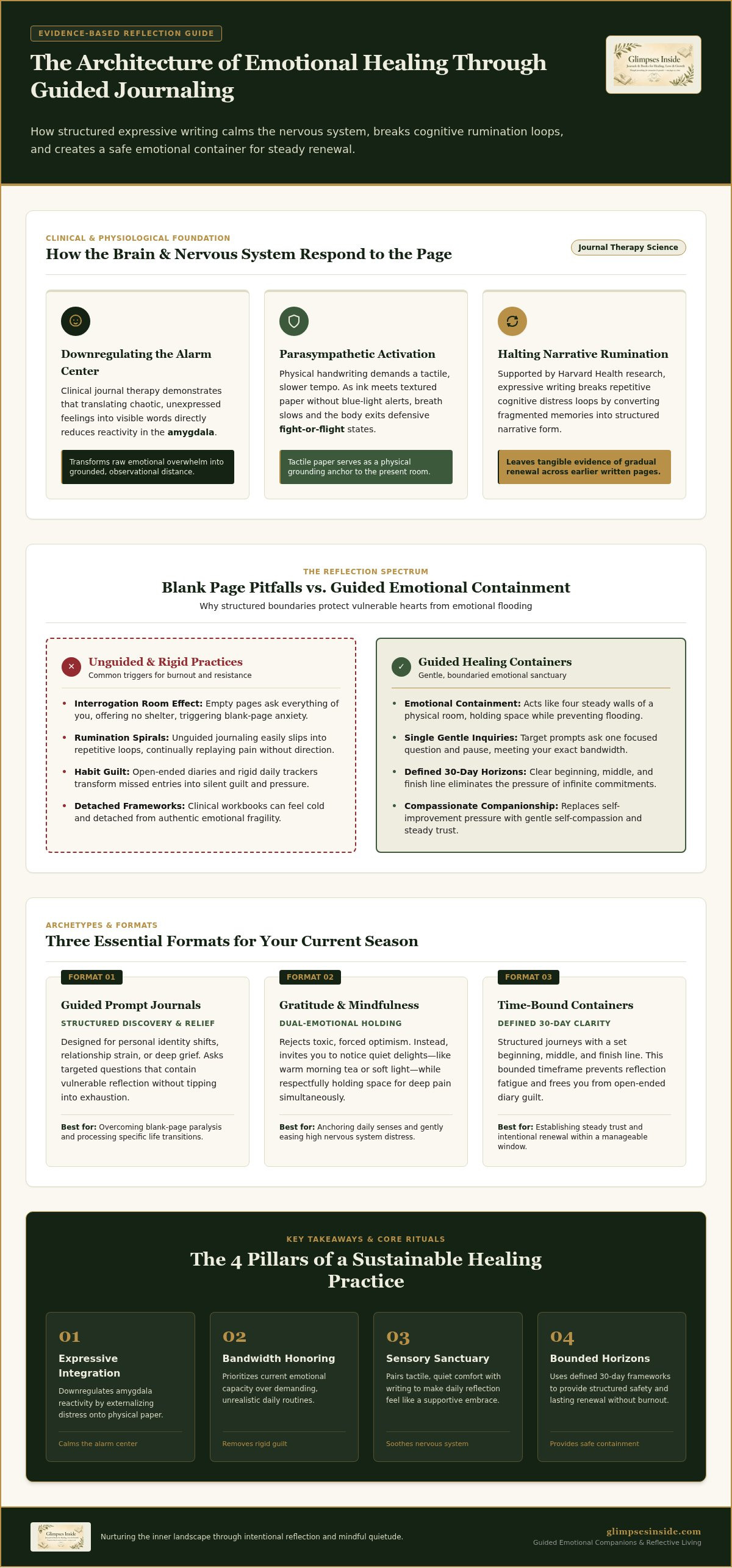
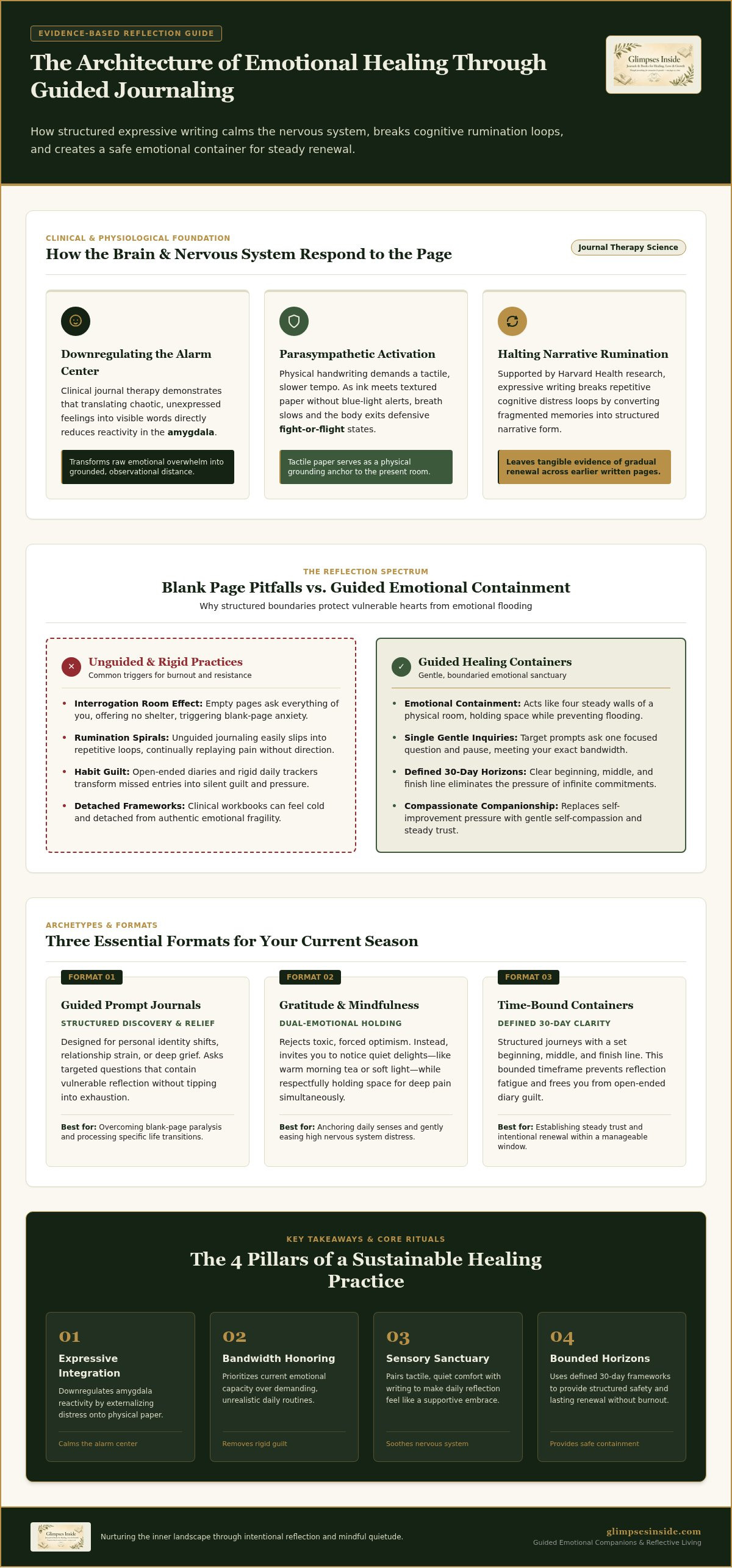
A healing journal is not a ledger of daily tasks or an unfiltered grievance log. It is a dedicated, quiet sanctuary for guided emotional integration. When intense sorrow, burnout, or personal transition clouds your days, unexpressed feelings often lodge themselves in physical tension. Translating those internal aches into language transforms how the mind processes distress. Longstanding research in the clinical practice of journal therapy reveals that putting feelings into words downregulates reactivity in the amygdala, the brain's alarm system. By turning chaotic impulses into visible sentences, you create healthy emotional distance. You stop drowning in the emotion and start observing it with tender detachment.
The most thoughtful journals to help with healing do not ask you to endlessly relive old wounds. Instead, they provide emotional containment. Just as a physical room offers four steady walls for shelter, gentle boundaries on the page protect a vulnerable heart from flooding. Structure holds space for grief while preventing raw overwhelm from taking over.
The Nervous System and the Written Word
Paper asks for nothing. No alerts, no glowing blue light, no cognitive overload. Physical handwriting forces your tempo to align with your hand rather than your racing mind. Ink meets paper. Breath slows down. This tactile rhythm naturally engages the parasympathetic nervous system, shifting your body out of defensive fight-or-flight states. In moments of heavy stress, touching a textured page becomes a quiet anchor, grounding your senses in the safety of the present room.
Moving from Emotional Ruminating to Gentle Resolution
Blank pages can sometimes turn into an unintentional echo chamber. Without direction, unguided journaling easily slips into repetitive loops, replaying pain rather than easing it. Thoughtful prompts offer a gentle hand out of the spiral. They softly redirect your gaze toward self-compassion, resilience, and personal discovery. Over time, documenting this inner shift leaves tangible evidence of your gradual healing. When you flip through earlier pages, you can clearly trace how the heaviest storm softened into steady renewal.
Types of Healing Journals: Finding Your Emotional Companion
Blank pages can feel like an interrogation room when you are hurting. An empty notebook asks everything of you, offering no shelter in return. Finding intentional journals to help with healing means choosing a format that honors your exact emotional bandwidth. As highlighted by Harvard Health research on expressive writing, translating emotional upheavals into narrative form helps break cognitive rumination loops. The container you choose determines whether that reflection feels safe or exhausting.
Guided Prompt Journals for Structured Discovery
Targeted prompts meet you where you are. They ask one gentle question, then pause. This emotional containment allows vulnerable hearts to process grief, personal identity shifts, or relationship strain without tipping into overwhelm. Pairing your written reflections with thoughtful gifts for emotional healing transforms a solitary writing session into an immersive, sensory ritual of comfort.
Gratitude and Mindfulness Trackers
Gratitude should never mean bypassing grief. True mindfulness holds space for sorrow and quiet delight at the exact same moment. These trackers do not force optimism; they simply invite you to notice a warm cup of tea or gentle morning light while holding space for your pain. Weaving this practice with grounded gifts for mindful living nurtures the senses, keeping you anchored in the present.
Time-Bound Reflection Journals
Open-ended diaries often spark guilt the moment an entry is missed. Time-bound formats remove that burden entirely. Committing to a 30-day journal for clarity offers a defined horizon with a clear beginning, middle, and finish line. This manageable window prevents burnout, helping you build gentle consistency without pressure.
When you are ready to invite quiet restoration into your days, exploring curated reflection tools at Glimpses Inside provides a comforting companion for your path forward.
How to Choose the Right Healing Journal for Your Current Season
Algorithms and bestseller lists cannot measure the tenderness of your heart. When you evaluate journals to help with healing, popularity matters far less than alignment. The best companion meets your current season with quiet understanding. A person navigating sudden grief requires an entirely different sanctuary than someone gently untangling career burnout or shifting dynamics in a partnership. Clinical guidance on the mental health benefits of journaling emphasizes that processing overwhelming emotions works best when practices feel safe, realistic, and unhurried.
Consider the physical touch of the object. Look for substantial paper weight that prevents ink bleed-through. Choose flat-lay bindings that stay open effortlessly without fighting your hands. Physical ease translates directly into mental ease. When a notebook invites your touch, opening it feels like a welcome exhale rather than a chore.
Assessing Your Emotional Energy and Daily Bandwidth
Be honest about your current stamina. Exhaustion requires gentle reassurance, not rigorous self-interrogation. If getting through the day takes all your strength, choose short prompts that ask for just five quiet minutes. Deeper psychological excavation can wait. Matching the depth of your journal to your genuine capacity protects you from quiet self-criticism, letting you show up without feeling inadequate.
Interior Layout: Prompts, Blank Lines, and Emotional Tone
The words on the page should sound like a trusted friend, not a clinical textbook. Look for warm, poetic language that honors emotional safety. Wide line spacing leaves ample room for raw thoughts and hurried, messy handwriting. You don't need clean calligraphy to find your way back to yourself. Deepening your personal journey through resources centered on women’s personal growth can offer steady guidance as you reconnect with your inner truth.
Consider whether your current season calls for solitary self-discovery or relational healing. While solitary journals rebuild self-trust, relationship frameworks provide shared vulnerability for two people seeking connection. Clarifying this intention ensures your chosen pages support where your life is headed next.
Cultivating a Gentle Daily Practice Without Guilt or Pressure
Most journaling routines collapse under the weight of unspoken rules. We tell ourselves we must write every morning at dawn, fill every single line, and maintain an unbroken streak. The moment an entry is missed, self-reproach settles in. The notebook stays closed on the nightstand, gathering dust and quiet shame. But the most restorative journals to help with healing are never meant to be rigid chores. They exist to hold your spirit, not measure your discipline.
A sustainable practice flourishes when rooted in five compassionate steps:
- Carve out an unforced pocket of time: Five minutes curled on the sofa is plenty. Do not tie your practice to an unforgiving schedule.
- Create a sensory sanctuary: Light a candle, wrap your hands around hot tea, and dim overhead lighting.
- Release perfectionism: Welcome sentence fragments, messy scribbles, and unedited thoughts. Coherence is never required.
- Honor missed days with acceptance: A pause is not a failure. Reopen the book without apologies or catching up.
- End with a grounding affirmation: Close your session by resting a hand on your heart and thanking yourself for showing up.
Creating a Tactile Sanctuary for Inner Work
Sensory cues signal immediate physical safety to an overstimulated nervous system. Setting your phone in another room instantly silences digital urgency. Warm lighting and the comforting weight of a heavy blanket invite your shoulders to drop. When paired with soothing tactile elements, such as the intentional pairings found in curated gift boxes, opening your notebook becomes an immersive sanctuary for your spirit.
Overcoming the Blank Page and the Fear of Doing It Wrong
The page holds no expectations. It does not grade your vocabulary, judge your contradictions, or critique your pain. Your journal is simply an unjudged witness to your unfolding life. When you feel emotionally frozen or completely numb, write a single truth: "I am exhausted today," or "I don't know what to say." Tears on the paper do not ruin the book. They sanctify it. Messy ink is proof of honest presence.
Releasing the need to perform transforms reflection into profound relief. If you are seeking a comforting companion for this tender chapter, explore the thoughtful journals and gifts at Glimpses Inside to begin your gentle ritual today.
Embracing Intentional Renewal: The Just 30 Days Journey
Healing does not ask you to promise away the next ten years. It simply asks for your presence today. When faced with open-ended planners and multi-year workbooks, many people retreat before they even begin. The philosophy behind Just 30 Days offers an antidote to that quiet exhaustion. By creating a gentle, bounded container, it reframes personal restoration into a manageable rhythm. Rather than feeling like an endless self-improvement chore, structured reflection becomes a sheltered room where you can catch your breath.
Among the many journals to help with healing, bounded reflections honor the natural ebbs and flows of human emotion. Thirty days is not an arbitrary timeline. It is a focused window of emotional safety. Long enough to establish quiet trust in yourself; short enough to protect you from fatigue and habit guilt.
The Power of a One-Month Reflective Container
A thirty-day horizon changes how your spirit approaches the page. There is a clear finish line in sight, which dissolves the fear of failing yet another daily habit. Each day offers a single, incremental prompt designed to gently peel back layers of emotional fatigue without demanding painful excavation. You show up for a few quiet moments. You speak your truth. By the thirtieth day, you hold tangible proof of your resilience, marking the completion of a dedicated healing chapter.
Nurturing the Soul with Glimpses Inside
At the center of Glimpses Inside is the empathetic, heart-centered voice of author Ianthe Writes. Every reflective page and upcoming literary title is shaped to support you during quiet internal shifts. When paired with comforting, tactile keepsakes, these guided journals and curated gift boxes create an immersive sanctuary for fragile seasons. Whether you are seeking gentle clarity after heartbreak or walking through personal renewal, exploring the Glimpses Inside collection offers a tender, compassionate companion for your path forward.
Reclaiming Peace, One Gentle Page at a Time
Healing does not demand sudden transformation or rigid consistency. By choosing journals to help with healing that offer emotional containment rather than clinical pressure, you give your nervous system permission to soften. A tactile page, warm ambient lighting, and five quiet minutes are all it takes to shift away from exhausting rumination and step toward steady self-trust.
You don't have to carry your transitions alone. Thoughtfully written by author Ianthe Writes to nurture the heart, the Just 30 Days framework provides a manageable container designed to eliminate journal guilt. Available individually or nestled within lovingly curated gift boxes, each reflection honors your unfolding path. Begin your journey of gentle restoration with Just 30 Days and meet your inner landscape with quiet, unhurried grace.
Frequently Asked Questions
How does a guided healing journal differ from a traditional blank diary?
A guided healing journal provides structured containment, while a blank diary offers an open canvas that can sometimes feel intimidating. Blank diaries require you to decide what to write, often triggering blank-page paralysis. Guided journals to help with healing use intentional, gentle prompts to steer you away from unhelpful rumination and toward emotional integration. They act like a supportive hand, guiding vulnerable feelings into safe, manageable boundaries.
Can writing in a journal trigger difficult emotions, and how can I stay safe?
Yes, putting raw feelings into words can occasionally bring buried sorrow or discomfort to the surface. To stay grounded, pace yourself and step away whenever you feel flooded. You don't have to excavate everything at once. Close the notebook, place your feet flat on the floor, and take slow breaths. Focusing on grounding prompts or comforting sensory rituals helps keep your heart safe while processing deep grief or change.
How much time do I need each day for a healing journal practice?
You only need five to ten minutes each day to experience meaningful emotional shifts. Healing doesn't require hours of exhaustive writing. In fact, shorter sessions often prevent emotional fatigue and make consistency approachable. Answering one thoughtful question while sipping morning tea gives your nervous system a dedicated pause. Small, quiet moments repeated with care create far deeper lasting peace than rare, exhausting writing marathons.
What should I do if I miss several days of journaling?
Simply open your journal to today's prompt without apologizing or trying to catch up. Life ebbs and flows, and taking unexpected breaks is a natural part of being human. A healing journal is never a test of perfection or habit tracking. There is no guilt here, and missed entries don't erase your progress. Pick up your pen whenever you feel ready, greeting the page as a welcoming friend waiting to listen.
Is a 30-day reflection journal long enough to experience real healing?
A 30-day container is long enough to build emotional safety and reset inner patterns without causing burnout. While true healing is non-linear and unfolds across a lifetime, a month provides a structured sanctuary to process a specific chapter. Focused frameworks, like the Just 30 Days series, break restoration into gentle, bounded steps. Thirty deliberate days give you tangible proof that you can nurture self-trust and release emotional weight.
Can a healing journal help during relationship heartbreak or marital strain?
Yes, guided journals to help with healing provide immense clarity during relationship strain or deep heartbreak. Writing creates a quiet mirror for your emotions. It helps untangle intense personal heartache from reactive conflict, allowing you to identify your boundaries and tender needs. Whether you reflect privately to heal from loss or use structured prompts together to rebuild delicate bridges of communication, intentional journaling restores emotional safety when bonds feel fragile.
Are physical paper journals better for emotional healing than digital apps?
Physical paper journals offer distinct tactile benefits that digital screens cannot replicate. Gliding a pen across textured paper naturally slows your breathing and quiets cognitive overwhelm. Digital apps often bring notifications, blue light, and subconscious digital stress into your private reflections. Writing by hand engages sensory grounding, giving your nervous system a calm, screen-free threshold where your thoughts can rest without interruption, comparison, or urgency.