Curated Gifts for Reflection: Meaningful Giving Guide
September 29, 2026 · 15 min read
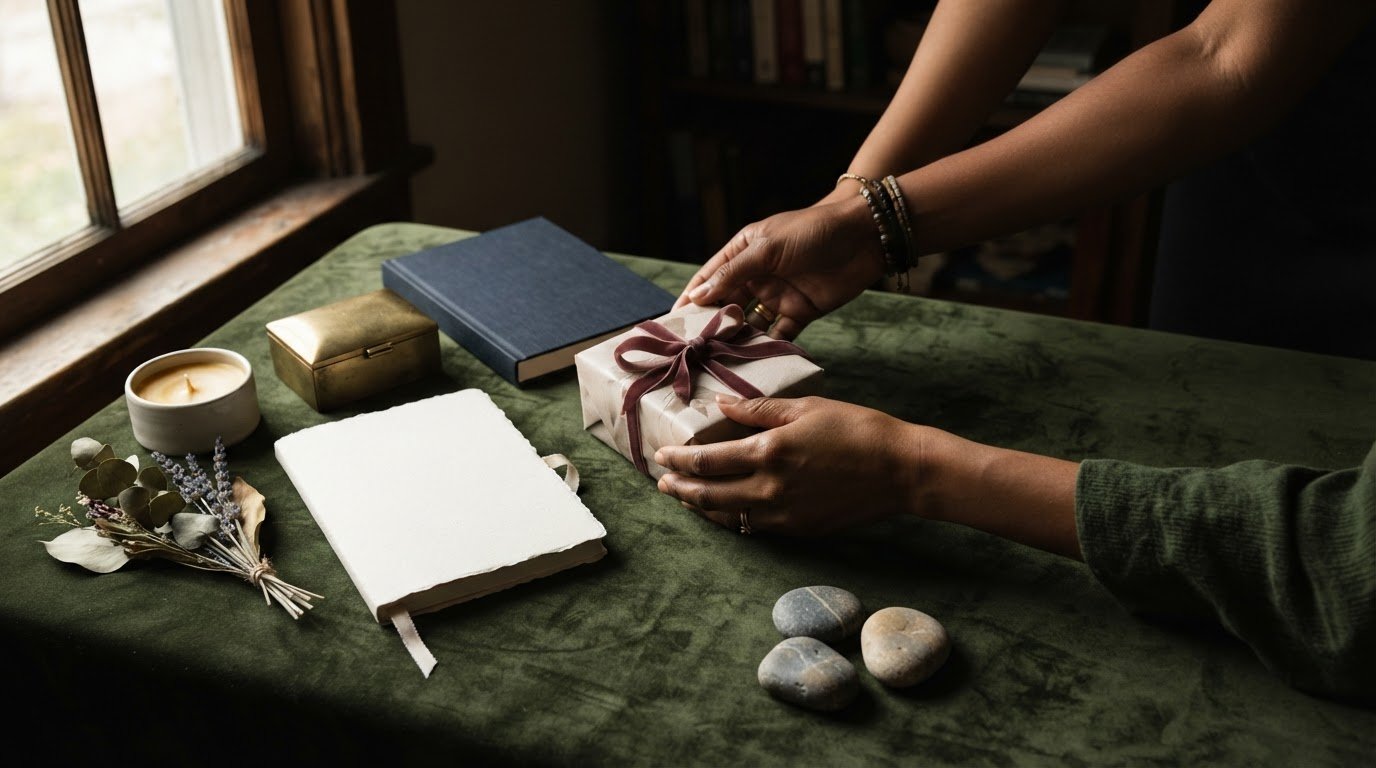
What if a reflective gift could make room for a quiet moment without asking someone to change? The best curated gifts for reflection feel like an invitation, not an assignment. A book or thoughtfully assembled box can offer a gentle place to pause, while leaving the meaning and timing in the recipient’s hands.
It makes sense to hesitate. A personal-growth gift can feel too pointed if it seems to assume what someone needs, and choosing between a book and a collection of thoughtful items isn’t always simple. The aim is to show care without pressure, with something the recipient can welcome in their own way.
This guide will help you match a reflective gift to someone’s interests and comfort level, compare books with curated gift boxes, and choose an option that feels personal without making assumptions. You’ll also find ways to consider a structured publication such as Just 30 Days for someone drawn to a month-long reflective practice, or a gift box when you’d rather give a considered physical present without assembling one yourself. A small, tangible invitation can leave room for whatever unfolds.
Key Takeaways
- Choose a reflective gift as an open invitation to pause or read, not as a suggestion that someone needs fixing.
- Compare books and curated gift boxes by how the recipient likes to spend quiet time and how much structure they prefer.
- Start with the person: consider whether they enjoy reading, thoughtful conversation, or simply having room to be still.
- Use curated gifts for reflection to offer a personal gesture while leaving the recipient free to engage with it in their own way.
- Consider whether Just 30 Days may suit someone drawn to a structured reflective publication, or whether a gift box is a better fit for a thoughtfully presented physical gift.
What makes a gift for reflection feel thoughtful rather than prescriptive?
A reflective gift offers space to pause, notice what’s on someone’s mind, read at an unhurried pace, or put thoughts on paper. It isn’t a lesson in how to live or a hint that the recipient should change. Reflection is personal attention. Wikipedia describes introspection as the examination of one's own conscious thoughts, but no one else needs to direct what that inward attention should uncover.
Wanting to give something meaningful is a caring impulse. It doesn’t mean you believe the recipient needs fixing. The difference lies in the pressure attached to the gift. Self-improvement can sound like a demand to become better; reflection can simply be an opportunity to notice, remember, or consider something in one’s own time. A thoughtful present leaves that choice open.
That’s what makes curated gifts for reflection different from a task disguised as a present. A book doesn’t need to produce a breakthrough, be finished by a certain date, or lead to a conversation. It can be opened once, returned to later, or appreciated as a quiet object. Its value is in the invitation, not a promised emotional or therapeutic result.
How can a reflective gift show care without making assumptions?
Begin with what you genuinely know about the recipient. Do they enjoy reading before bed, keeping notes, or finding a quiet moment after a busy day? Choose something that fits those preferences rather than guessing at a private struggle. A journal given as a “solution” to stress may feel like an expectation; the same journal, offered because they love writing, can feel personal. A brief note helps set the tone: “This made me think of you. Use it whenever it feels right, or simply enjoy it as it is.”
What experiences can reflective gifts invite?
Different gifts make room for different kinds of reflection. A reader might spend a few quiet minutes with a book. Someone who likes to write may prefer private pages and their own words. Others may enjoy a gentle conversation sparked by a shared idea, while some may simply welcome uninterrupted quiet. None of these ways is more meaningful than another.
Let the recipient set the pace. They can engage briefly, put the gift aside and revisit it later, or enjoy its presence without using it as intended. Reflection can remain entirely private. A giver shouldn’t expect to read journal entries or hear what a prompt brought up. A simple principle keeps the gesture generous: offer room for choice, not an obligation to participate.
Books, journals, or curated gift boxes: which reflective format fits?
The format shapes how a gift might be used. A book offers ideas to sit with, a journal gives thoughts somewhere private to land, and a gift box provides a considered physical presentation. To choose among them, think about what the recipient naturally reaches for and whether they prefer open-ended quiet or a little structure. A reflective gift should fit their habits, not add a new one.
| Format | Experience it invites | Best fit | Question to consider |
|---|---|---|---|
| Book | Reading, pausing over ideas, and revisiting passages | Someone who enjoys thoughtful reading | Would they welcome this subject or theme? |
| Journal | Private writing in their own words | Someone who likes to put thoughts on paper | Would prompts feel helpful, or would open pages suit them better? |
| Curated gift box | Receiving a thoughtfully assembled physical gift | Someone who appreciates a ready-to-give presentation | Have I checked what’s actually included? |
When might a reflective book be the most fitting choice?
A book may suit someone who enjoys reading in a quiet moment, gathering ideas, or returning to a passage when it feels relevant. There’s no need to finish it quickly. The recipient can read a page at a time or set it aside until they’re ready. If you’re choosing a specific title, consider whether its subject genuinely matches their interests rather than what you think they should work on.
When does a guided journal or gift box make sense?
A guided journal can offer a gentle starting point for someone who welcomes prompts, while leaving them free to skip a question or write only when they wish. It doesn’t need to become a daily practice. A curated gift box may be a better fit if you want the ease of a ready-to-give physical present. Check its listed contents before buying, and don’t assume it includes particular accessories or writing materials.
At Glimpses Inside, Just 30 Days is a structured publication for someone drawn to a month-long reflective practice. Gift boxes offer another format to consider. Explore the reflective publications and gift boxes to see which option feels most in tune with the recipient.
How to choose a reflective gift for the person receiving it
Begin with the person, not the product. The most fitting choice usually reflects something you already know about their tastes, routines, and comfort with guided activities. Use these steps to narrow the options without guessing at what they need.
- 1. Notice what they already enjoy. Do they read for pleasure, keep notebooks, or make time for a quiet ritual? Familiar habits are a gentler guide than assumptions about what might help them.
- 2. Choose the kind of experience they’d welcome. Consider whether they’d prefer reading, writing, a thoughtful conversation, or simply a peaceful moment. A gift doesn’t need to become an activity to feel meaningful.
- 3. Match the amount of structure. Some people like prompts and a clear starting point; others prefer room to follow their own thoughts. Don’t assume they want a month-long commitment just because a structured format is available.
- 4. Keep the subject comfortable. Let your relationship guide how personal the theme feels. If you’re unsure what’s happening in their life, choose a broadly welcoming topic rather than one that could seem to point to a private struggle.
- 5. Check the details, then leave the choice with them. If you’re considering a gift box, review its listed contents and presentation instead of assuming what it includes. For more ideas on choosing one, explore this guide to curated gift boxes.
Which questions help you understand the recipient’s preferences?
Think about the books or notebooks they’ve chosen for themselves. Do they enjoy guided activities, or prefer open-ended choices? Do they seek quiet time, or enjoy sharing ideas with someone they trust? You don’t need perfect answers. If you’re uncertain, a flexible gift and a low-pressure note let them decide how, or whether, to use it.
How personal should a gift for reflection be?
Closeness can help you decide how specific to be, but it doesn’t mean you need to name a sensitive subject. A gift can express affection without suggesting it diagnoses, treats, or resolves a difficulty. Curated gifts for reflection feel most considered when they reflect the recipient’s interests while leaving their inner life entirely their own.
How to Give Reflective Gifts with Warmth and Choice
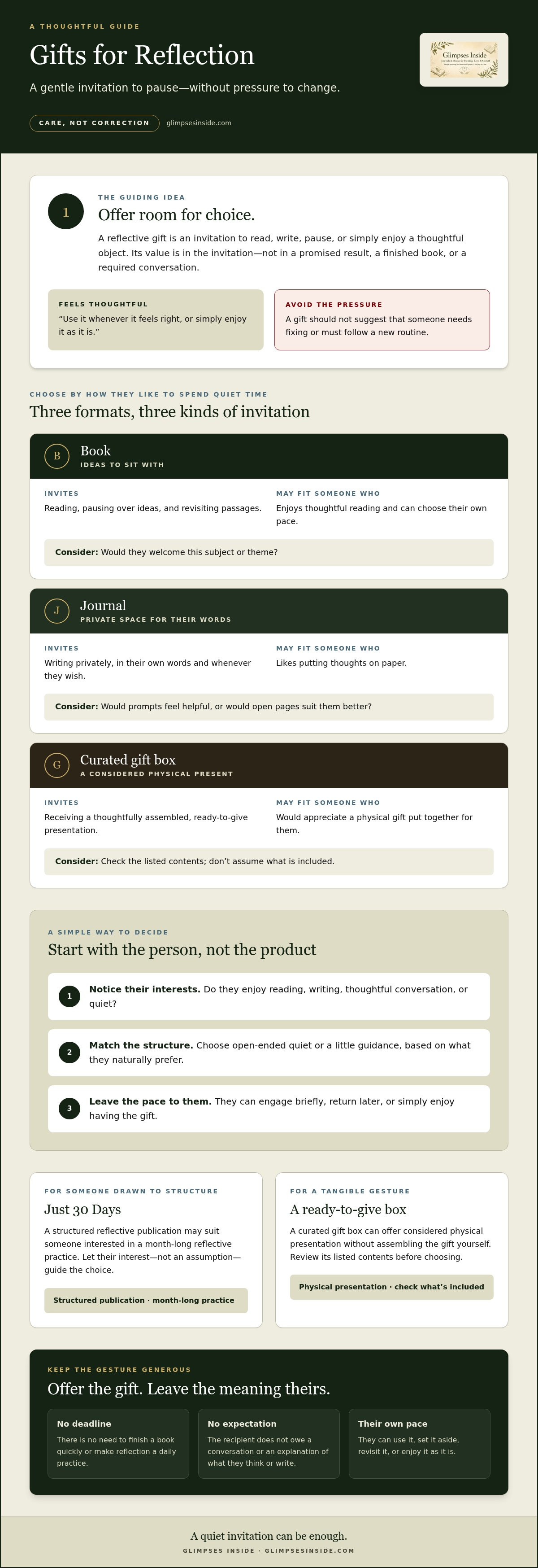
The way you introduce a reflective gift can shape how it feels. A personal note and simple presentation can make the gesture warm while leaving the recipient free to decide what the gift means to them. Keep the focus on why you thought of them, not on what you hope they’ll do with it.
What can you write in a note with a reflective gift?
Keep it brief, kind, and grounded in your connection. Mention a quality you appreciate, a shared interest, or a reason the gift brought them to mind. For example: “I thought you might enjoy this. I hope it offers a quiet moment whenever you feel like it.” That gives the recipient room to engage without suggesting they need to improve or work through something.
Avoid instructions such as “write in this every day,” deadlines to finish a book, or requests to tell you what they discover. Unless the recipient has welcomed a conversation about a sensitive event, don’t make that event the explanation for the present. Care can be clear without being overly specific.
How can you make the gift feel inviting, not demanding?
Present the item as an option, not an assignment. You might wrap it simply, add a handwritten card, or place it somewhere comfortable for the recipient to open. These are presentation ideas, not required accessories. If the gift includes writing, make it clear that any thoughts they record are theirs to keep. They never need to show or discuss them.
Curated gifts for reflection feel most welcoming when the experience remains in the recipient’s hands. Let them know there’s no schedule to follow and no particular response you’re waiting for. A quiet “I hope you enjoy it” can be enough.
For more inspiration on giving in a gentle, considered way, explore gifts for mindful living. If you’re considering a reflective publication or a gift box, explore reflective gifts from Glimpses Inside and check the current product details before choosing.
Choosing a Glimpses Inside gift for a reflective journey
Once you have a sense of the recipient’s preferred pace and format, you can look at the reflective publications and gift boxes offered by Glimpses Inside. The best fit depends less on what sounds impressive and more on what feels natural for them to pick up, explore, or keep nearby. Check the product descriptions before choosing so your gift matches what’s actually offered.
Is Just 30 Days right for someone who enjoys guided reflection?
Just 30 Days may suit someone drawn to a structured reflective publication and the idea of a month-long practice. It gives the gift a defined shape, which may feel welcoming to a recipient who likes having a clear starting point. Structure is still an invitation, not a deadline. Before gifting it, review the description for its format and themes, and confirm the current details. Don’t assume the recipient must complete it or expect a particular outcome.
How can a curated gift box support a thoughtful gesture?
A gift box can make a tangible present feel considered and ready to give, especially when you want to offer something more assembled than a single book or publication. Its appeal depends on whether the listed theme and contents fit the recipient’s preferences. Check the product details before purchasing; don’t rely on assumptions about accessories or other inclusions. The gesture can be meaningful without requiring the recipient to use everything in a certain way.
These options offer different kinds of welcome: a structured publication for someone who enjoys a guided shape, or a curated box for someone who appreciates a thoughtfully presented gift. Both can be given gently, without implying that reflection must lead to a specific change. That freedom is part of what makes curated gifts for reflection feel personal rather than prescriptive.
If themes of care and inner restoration feel relevant to the person you have in mind, you may also find inspiration in gifts for emotional healing. For details on reflective publications and gift boxes, take a quiet moment to explore Glimpses Inside and choose the option that best suits the recipient, without promising what the experience will bring.
Choose a Gift That Leaves Room to Reflect
A meaningful reflective gift doesn’t need to offer advice or ask for a response. It can simply make space for reading, writing, or a quiet pause, in whatever way feels right to the person receiving it. Let their interests guide your choice, and keep the message warm, personal, and free of expectations.
Books, journals, and curated gifts for reflection each invite a different experience. The right format depends on whether the recipient enjoys ideas, private writing, or a thoughtfully presented physical gift. Above all, offer choice: there’s no deadline to begin and nothing they need to share.
Glimpses Inside is owned and operated by author Ianthe Writes, with offerings including Just 30 Days and curated gift boxes. Review product descriptions and contents to find an option that suits the person you have in mind. Explore the reflective books and gift boxes from Glimpses Inside.
A small, considerate gesture can be enough. Let it be an invitation, and trust the recipient to make it their own.
Frequently Asked Questions
Is a journal a good gift for someone who enjoys reflection?
Yes, a journal can be a thoughtful gift when the recipient already enjoys writing or welcomes gentle prompts. Consider their habits first: do they keep notes, collect notebooks, or like putting ideas into words? If writing might feel like homework, choose another format. Present the journal as an option, not an expectation. They can use it in their own way, return to it later, or leave it unopened.
What is a good gift for someone who likes self-reflection?
Choose a format that fits how they already like to reflect. A thoughtful book may suit someone who enjoys reading, while a journal may feel natural to a person who likes writing. A curated gift box can also work if its listed contents match their tastes. The best curated gifts for reflection show attention to the recipient’s interests without suggesting they need advice, healing, or a new routine.
Can a reflective gift feel too personal?
Yes, especially if the gift seems to point to a problem or private struggle the recipient hasn’t chosen to discuss. Let what you know about their interests guide the theme, and keep your note warm rather than instructive. If you’re unsure about their circumstances, a broadly welcoming book or flexible gift may feel more comfortable. Avoid asking them to complete activities or share personal thoughts afterward.
How do I choose between a reflective book and a journal?
Think about what the recipient naturally enjoys. A book suits someone who likes reading and considering ideas at their own pace. A journal may fit someone who enjoys writing or welcomes prompts. Neither is automatically the better choice, and guided writing doesn’t need to become a regular commitment. Before buying, check the product description for confirmed themes and details so the gift aligns with the person’s interests.
Are curated gift boxes suitable for someone who values quiet time?
They can be, if the box’s listed theme and contents feel suited to the recipient. Read the product description rather than assuming what’s included, then consider whether they enjoy tangible gifts and reflective activities. A gift box doesn’t need to create a new ritual. A short note can explain that you thought they might enjoy it, with no expectation to use everything or respond in a particular way.
What should I write in a note with a reflective gift?
Keep it simple and personal. Say what made you think of them, then leave them free to decide how to use the gift. For example: “I thought you might enjoy this. Pick it up whenever it feels right.” Avoid diagnosing a problem or telling them what they need to do. Don’t ask them to report back, complete prompts, or share anything private. A caring note can be brief.
Does a reflective gift need to be part of a daily routine?
No. A book or journal can be used for a few minutes, revisited when the recipient feels like it, or set aside. There’s no need to suggest a schedule or imply that regular use guarantees a particular result. A gift is more welcoming when the recipient can choose when and whether to engage with it. Let their own pace shape the experience, without deadlines or check-ins.