The Most Restorative Books on Emotional Safety for Your Inner Journey
August 25, 2026 · 17 min read

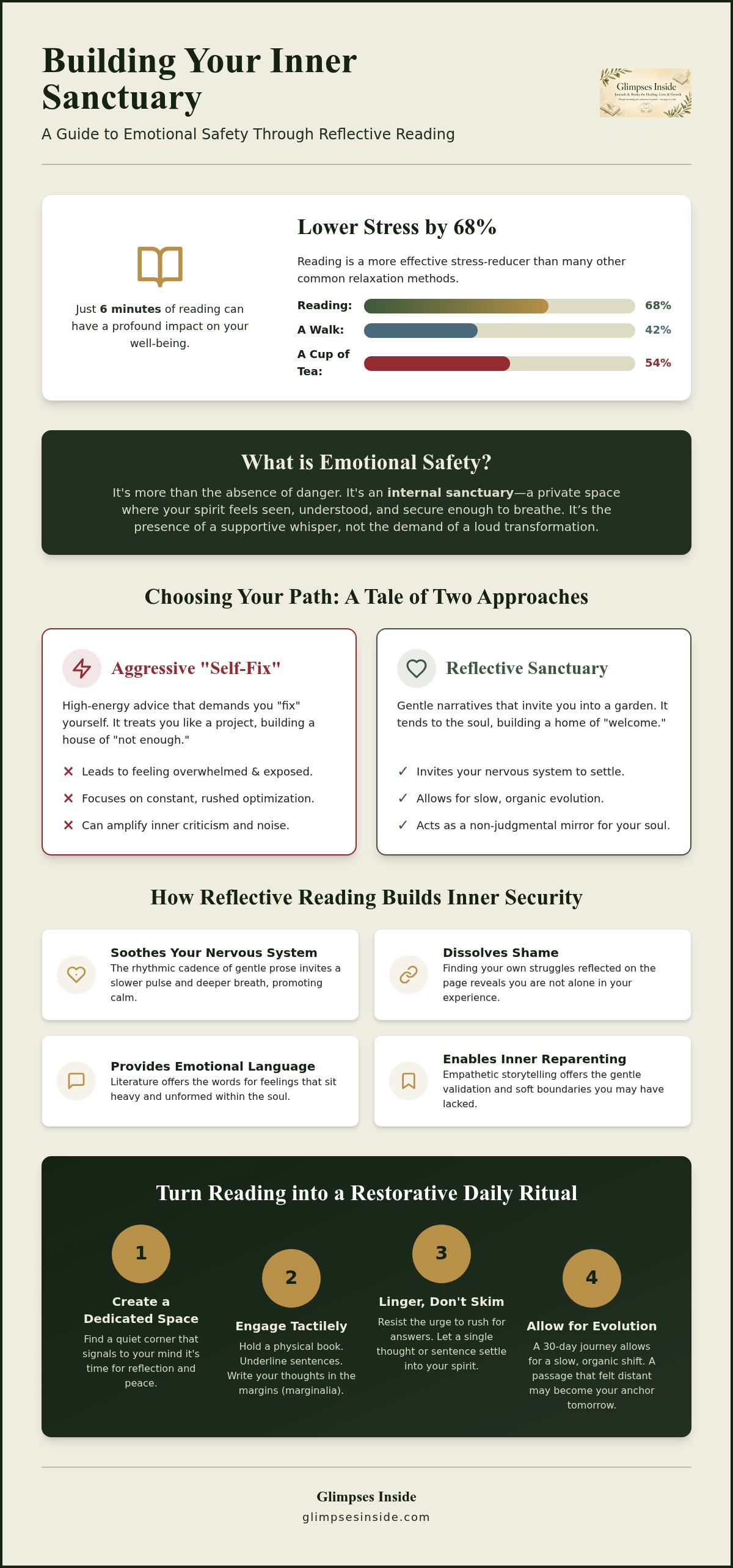
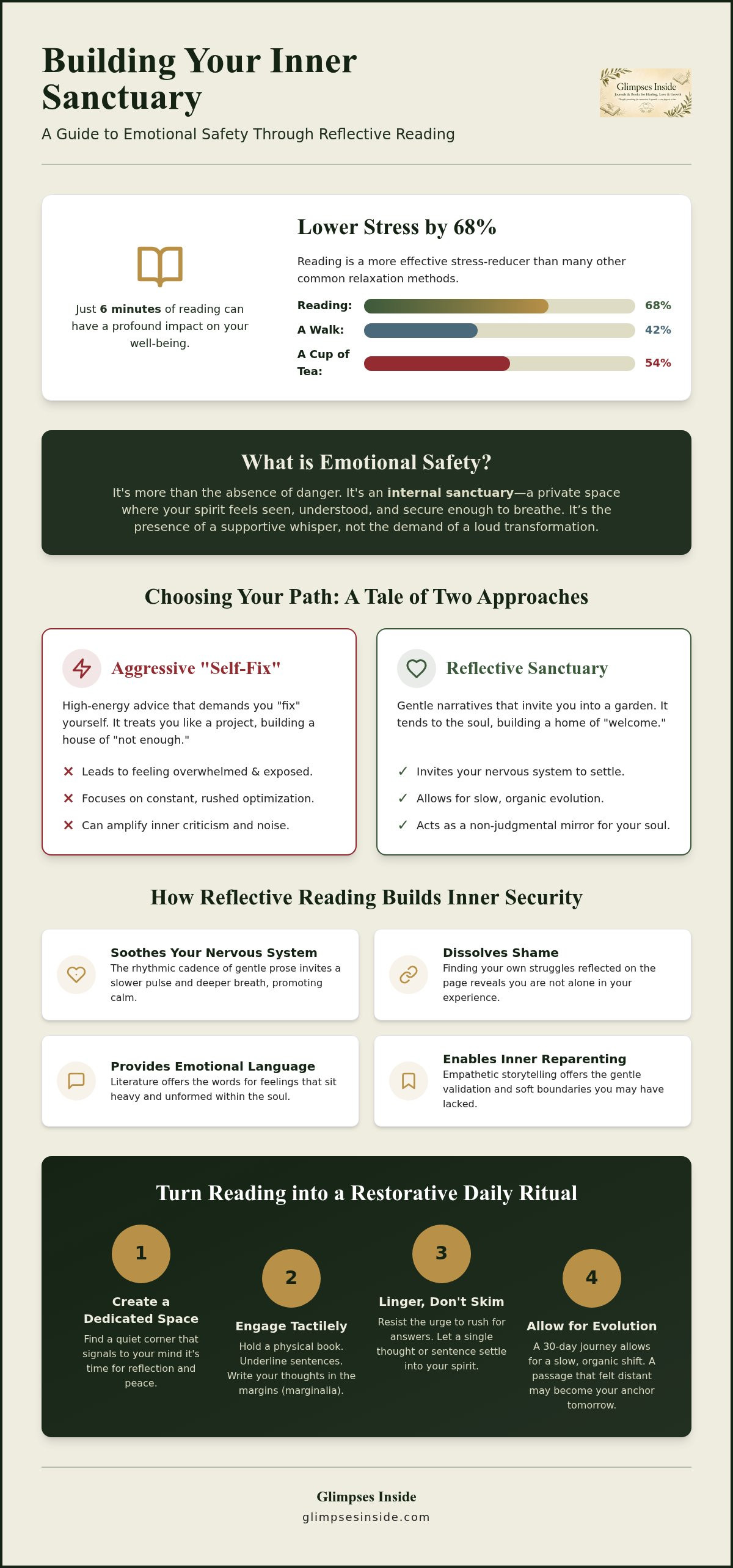
Did you know that just six minutes of reading can lower your stress levels by sixty-eight percent? It's more effective than a walk or a quiet cup of tea. For many, finding the right books on emotional safety is the first step toward reclaiming a sense of calm. You might feel emotionally exposed. Overwhelmed. You're likely tired of high-energy advice that demands you "fix" yourself. You want to feel seen, not shouted at. It's exhausting to move through the world when your own inner voice is drowned out by the noise.
This journey doesn't require a loud transformation. Instead, discover how reflective reading and intentional journaling can build a sanctuary of emotional safety within your soul. You can create a private space where your spirit finally feels secure enough to breathe. This article introduces a curated selection of literature that acts as a supportive whisper. We'll explore how these pages offer practical tools for daily reflection and the quiet confidence you've been seeking.
Key Takeaways
- Define emotional safety as an internal sanctuary where you feel seen, understood, and entirely at home within yourself.
- Discover how the rhythmic cadence of gentle prose can soothe your nervous system and offer a path to tender inner reparenting.
- Explore a curated collection of books on emotional safety that honor the body's memory and the quiet nuances of human connection.
- Learn to build a restorative daily ritual through the tactile practice of marginalia and the creation of a dedicated reflective space.
- Understand why a thirty-day window allows for a slow, organic evolution of your spirit and a lasting shift in perspective.
What is Emotional Safety and Why Does Your Choice of Reading Matter?
Emotional safety is the quiet, steady pulse of your own heart. While many technical resources define What is Emotional Safety as a state of feeling secure enough to express oneself without fear, it's often much more intimate. It's an internal sanctuary. It's the place where you feel seen, even when you're alone. Clinical security often focuses on the absence of danger. But true emotional safety feels like a supportive whisper. It's the presence of understanding. The books on emotional safety you choose to read act as the architecture of this inner landscape. They build the walls of your sanctuary and the windows through which you view your own spirit. They are the bricks and mortar of your peace.
The Internal Landscape of Safety
Emotional safety is the unwavering belief in your own capacity to return to peace. When your inner world feels unsafe, it's often crowded with noise, a sense of constant rush, and the sharp edges of self-criticism. You might feel like you're failing if you aren't constantly "optimizing" your life. This is why intentionality is your greatest tool. Choosing gentle, reflective narratives over aggressive, high-energy self-help books allows your nervous system to settle. It's the difference between being pushed toward a goal and being invited into a garden. You aren't a project to be fixed. You're a soul to be tended. If you read books that demand you change, you're building a house of "not enough." If you read books that invite you to stay, you're building a home of "welcome."
Reading as a Form of Personal Restoration
Sometimes, we carry feelings that have no names. They sit heavy in the chest, unformed and silent. Reflective reading provides the language for these hidden parts of the soul. It acts as a non-judgmental mirror, reflecting your private journey back to you with grace. When you find your own struggle on the page, the shame begins to dissolve. There's a profound, grounding power in the tactile experience of holding a physical book. Your fingers trace the edges of a page. You feel the weight of the paper in your hands. This grounding ritual shifts your focus from seeking external validation to finding internal stillness. It's a slow, deliberate movement. Upcoming books by Ianthe Writes are designed to be part of this reflective reading ecosystem, offering the quiet space your spirit needs. It's the quiet power of focused attention that leads to restoration.
The Role of Reflective Reading in Building Inner Security
Reading is a ritual of resonance. It's a way to speak back to the parts of ourselves that have long been silent. When we choose books on emotional safety, we aren't simply consuming content. We're building a relationship with our own interiority. Empathetic storytelling allows us to reparent the inner child. It offers the gentle validation and soft boundaries we might have lacked in the past. The rhythmic cadence of poetic, gentle prose serves as a direct tool for nervous system regulation. It invites a slower pulse. It encourages a deeper breath. By Building Inner Security through these narratives, we expand our vocabulary for human connection. We learn to name the subtle shades of our feelings. We find the courage to stay with ourselves.
Mirroring the Soul Through Literature
Finding your own struggle reflected on a page is a quiet, powerful revelation. It dissolves the heavy shame of feeling alone in your experience. This is the heart of bibliotherapy. It's a slow-paced, deliberate healing process that respects your timing. It doesn't demand a result. It offers a presence. When you see your vulnerability honored by an author, you learn to honor it in yourself. For a broader look at this journey, explore our Women’s Personal Growth: Guide to Your Inner Landscape. It provides a map for the deeper shifts that occur when you finally feel safe enough to grow. It's about moving from a place of exposure to a place of internal sanctuary.
Reflective Reading vs. Informational Consumption
Skimming for answers is a habit of the hurried mind. It treats the soul like a problem to be solved. But true emotional integration happens in the pauses. It lives in the "quiet wisdom" found between the lines. You must create space to linger on a single thought. Don't rush to the conclusion. Let the words settle into your spirit. Returning to the same passage as your perspective evolves is a vital part of the process. A sentence that felt distant last month might become your anchor today. If you're seeking a structured yet gentle way to begin this practice, the Just 30 Days series provides a companion for your daily documentation and discovery. It's a steady hand for your unfolding process.
Core Categories of Books on Emotional Safety
Finding the right companion for your spirit is a slow, sacred choice. Not every book speaks the same language. Some provide a map for the mind. Others offer a mirror for the heart. When you search for books on emotional safety, you'll find they often fall into four restorative categories. Attachment theory classics help you understand where you feel exposed in your bonds. Trauma-informed narratives honor what your body remembers, even when the mind forgets. Poetic works use beauty and cadence to soothe an anxious spirit. Finally, self-discovery journals act as the bridge. They take you from reading the words of others to documenting the truth of your own soul.
The architecture of your inner sanctuary requires different materials at different times. Sometimes you need the steady, grounded logic of a guide who explains why you feel a certain way. Other times, you need the fluid, rhythmic grace of a poem that asks for nothing but your presence. By exploring these diverse categories, you ensure that every corner of your internal landscape receives the attention it deserves. You aren't just reading. You're building a foundation of peace, one page at a time.
Understanding Your Attachment and Bonding
Many of us carry patterns we don't fully understand. We might pull away when someone gets close. We might cling when we feel a shift in the air. Books that explore attachment styles offer a way to view these patterns without the heavy weight of judgment. They explain anxious and avoidant tendencies as survival strategies rather than flaws. These reparenting narratives foster deep self-compassion. They teach you that your need for security is valid. Understanding the "why" behind your feelings is the first step toward safety. It's the moment you stop fighting yourself and start holding yourself with care.
The Power of the Prompted Journal
In a digital world, the tactile experience of a physical journal is a profound grounding ritual. It's an anchor. While reading others’ stories is vital, documenting your own journey is where true transformation takes root. Prompts act as a gentle guide through the noise of daily life. They pull you back to the present moment. They ask the questions your spirit is finally ready to answer. For those seeking a structured way to find this stillness, our A 30-Day Journal for Clarity offers a path through the internal static. The "Just 30 Days" series is designed to be a companion to your literary journey. It's a place where your thoughts can finally land safely. It's the quiet power of documentation in action.
Turning Reading into a Daily Ritual for Growth
Reading for emotional restoration is different from reading for information. It's a slow, rhythmic process. It requires a shift from passive consumption to active presence. When you open books on emotional safety, you aren't just looking for answers. You're looking for a mirror. To make this work, you must turn the act of reading into a sacred ritual. This isn't about finishing a chapter. It's about letting the words finish their work in you. A Yale University study found that book readers live, on average, 23 months longer than non-readers. This longevity isn't just about time. It's about the quality of the life you live within that time.
- Step 1: Curate your space. Find a quiet corner that belongs only to your spirit.
- Step 2: Practice marginalia. Write your reactions in the margins to make the book a conversation.
- Step 3: Embrace the "Slow Read." Focus on a single chapter for multiple days to allow for true emotional integration.
- Step 4: Layer your senses. Integrate sensory elements like those found in curated gift boxes to signal safety to your brain.
- Step 5: Document the shift. Move from the author's words to your own reflections to begin writing your own story.
Creating Your Reflective Sanctuary
Your environment signals your intention. If you try to do deep emotional work in a space of chaos, your nervous system remains on guard. You need quiet. You need intentionality. Tactile anchors like a warm cup of tea, a flickering candle, or a soft blanket act as physical cues. They tell your brain that the "rush" of the day is over. It's safe to let your guard down. You can enhance this ritual with curated gift boxes that provide these sensory supports. These items aren't just objects. They are tools for presence. They help you build the physical walls of your inner sanctuary.
Active Documentation as a Healing Tool
Writing down a thought grounds it in reality. It moves the emotion from the nebulous space of the mind to the tangible surface of the page. This is where reading becomes restoration. You aren't just absorbing another person's wisdom. You're discovering your own. The Just 30 Days series offers a low-pressure entry point for this daily practice. It's not a heavy commitment. It's a gentle nudge. Research shows that women are 10.6% more likely to seek support for stress or burnout than men, highlighting the vital need for these private spaces of recovery. By engaging in active discovery, you transition from being a witness to your life to being its author. If you're ready to start your own ritual of reflection, explore our Just 30 Days collection to find your perfect companion.
Beginning Your 30-Day Journey to Inner Safety
Thirty days is a heartbeat in the span of a life. It's a full cycle. A moon's turn. This timeframe offers enough space for the nervous system to truly settle without the pressure of a lifelong commitment. When you choose to engage with books on emotional safety over a month, you're giving your spirit permission to linger. You aren't rushing toward a finish line. You're walking a path. This unhurried pace is essential. It allows for the organic unfolding of your inner landscape. By the end of these four weeks, the goal isn't to be "fixed." It's to feel secure enough to stay with yourself. You're building a habit of presence that will serve you long after the month has passed.
The Just 30 Days Framework
The Just 30 Days series provides a structured yet gentle hand for this process. It focuses on one small discovery per day. This prevents the emotional overwhelm that often comes with deep reflective work. Each prompt is a supportive whisper. It balances the vulnerability of looking inward with steady encouragement. In a digital world, the tactile experience of a physical journal matters. It grounds you. Your pen on the paper is a sensory anchor. It signals to your brain that this moment is real. This is your private documentation of your own evolution. It's a physical testament to the time you've carved out for your own heart.
What should you expect from a month of soulful reflection? You'll likely find a sense of quiet confidence growing. The noise of self-criticism begins to fade. It's replaced by a steady, internal stillness. You'll start to trust your own inner voice again. This isn't a loud transformation. It's a soft restoration. It's the beauty of incremental progress. You'll notice that your reactions to the world around you become more measured and less reactive. You're creating a buffer of peace.
A Shared Path to Personal Evolution
We treat every reader as a peer on a shared path. We understand the complexities of healing and the effort required to maintain meaningful bonds. It takes patience. It takes presence. We believe that small, intentional acts lead to profound internal shifts. This is the philosophy behind our upcoming literary works by Ianthe Writes. These future publications will continue to build the ecosystem of reflective reading and emotional safety. They offer a glimpse into a future where your restoration is prioritized. Each new work is designed to be a steady, non-judgmental hand for those seeking to deepen their self-awareness.
Your journey is your own, but you don't have to walk it alone. We invite you to explore the curated world of Glimpses Inside. Whether through our Just 30 Days series or our sensory gift boxes, we're here to support your private evolution. Your internal sanctuary is waiting to be built. Let these books on emotional safety be the first stones you lay. It's time to find the stillness you deserve.
Embrace Your Private Evolution
Restoration isn't a race. It's a return. By choosing the right books on emotional safety, you've started to build the architecture of your inner sanctuary. You now understand that reflective reading is more than absorbing words. It's about the space you create between them. True security grows in those pauses. It takes root through the tactile ritual of documentation and the steady presence of sensory anchors. These small, intentional acts are the foundation of profound internal shifts.
Your journey deserves a companion that understands the nuances of the heart. Glimpses Inside offers reflective publications designed for quiet wisdom. Whether you're seeking the soulful discovery found in upcoming works by Ianthe Writes or the sensory support of our curated gift boxes, we're here to hold the light. You don't have to navigate this path alone. Your spirit is ready for the stillness it's been seeking. Trust the unfolding process. You're exactly where you need to be.
Begin your gentle journey with the Just 30 Days series today. Your sanctuary is waiting.
Frequently Asked Questions
What are the best books on emotional safety for beginners?
Beginners should start with books on emotional safety that focus on attachment and self-compassion. Look for authors who use soft, accessible language rather than clinical jargon. These texts act as a supportive whisper. They invite you to explore your inner landscape without judgment. You might pair these with a guided companion like the Just 30 Days series. This combination ensures you have both a map and a place to record your own discoveries.
How can reading books actually help me feel safer in my relationships?
Reading allows you to see your own struggles reflected in another person's story. This reduces the shame that often keeps us from feeling secure. When you find the language for a feeling you couldn't name, you gain a sense of control. You learn to communicate your needs with quiet confidence. This internal shift changes how you show up with others. It's about building a sanctuary within yourself first.
Is there a difference between emotional security and emotional safety?
Emotional security is often viewed as the absence of external threat or conflict. Emotional safety is the presence of connection and understanding. It's the feeling that your heart is truly seen. While security is a state of being, safety is a living rhythm. It's a sanctuary where you feel secure enough to be vulnerable. Understanding this nuance helps you choose reading material that nurtures your spirit rather than just solving a problem.
Can journaling be more effective than just reading about emotional safety?
Both tools serve a different purpose in your restoration. Reading allows you to receive new perspectives and empathy. Journaling allows you to integrate those insights into your own life. Writing grounds your thoughts in reality. It moves them from the mind to the page. Many find that the most profound shifts happen when they use both. The Just 30 Days series is designed to bridge this gap through daily, reflective documentation.
How do I choose between a clinical self-help book and a reflective journal?
Choose based on what your spirit needs right now. Clinical books provide logic and "why" for those seeking intellectual clarity. Reflective journals and poetic works focus on "being" and presence. If you feel overwhelmed, a clinical approach might feel too loud. A reflective work acts as a gentle guide. It invites you to linger on a feeling. Look for books on emotional safety that match the current pulse of your nervous system.
What should I do if a book on emotional safety feels too overwhelming?
It's vital to listen to your own inner voice. If a passage feels too heavy, put the book down. You don't need to rush. Use the "Slow Read" technique by focusing on just one sentence. Pair your reading with sensory anchors like those found in our curated gift boxes. A warm cup of tea or a soft blanket signals to your brain that you're safe. Healing is a gradual, unfolding process.
How long does it take to see progress when reading for emotional healing?
You may notice a subtle shift in your perspective within just a few days. However, a thirty day window is often ideal for a lasting internal change. This timeframe allows your nervous system to settle into a new rhythm. It's about small, consistent actions. By the end of a month, you'll likely feel a sense of quiet confidence. Your progress is measured by the stillness you find in your own private journey.
Why are physical books often recommended over digital ones for reflection?
Physical books offer a tactile experience that digital screens cannot match. The weight of the paper and the texture of the pages provide a sensory anchor. This grounds you in the present moment. Digital devices often come with the noise of notifications and blue light. Physical books allow your spirit to breathe. They encourage a slow, meditative pace. This focus is essential for documenting your personal evolution and finding true restoration.