Healing Through Writing Books: A 30-Day Path to Personal Restoration
August 15, 2026 · 17 min read

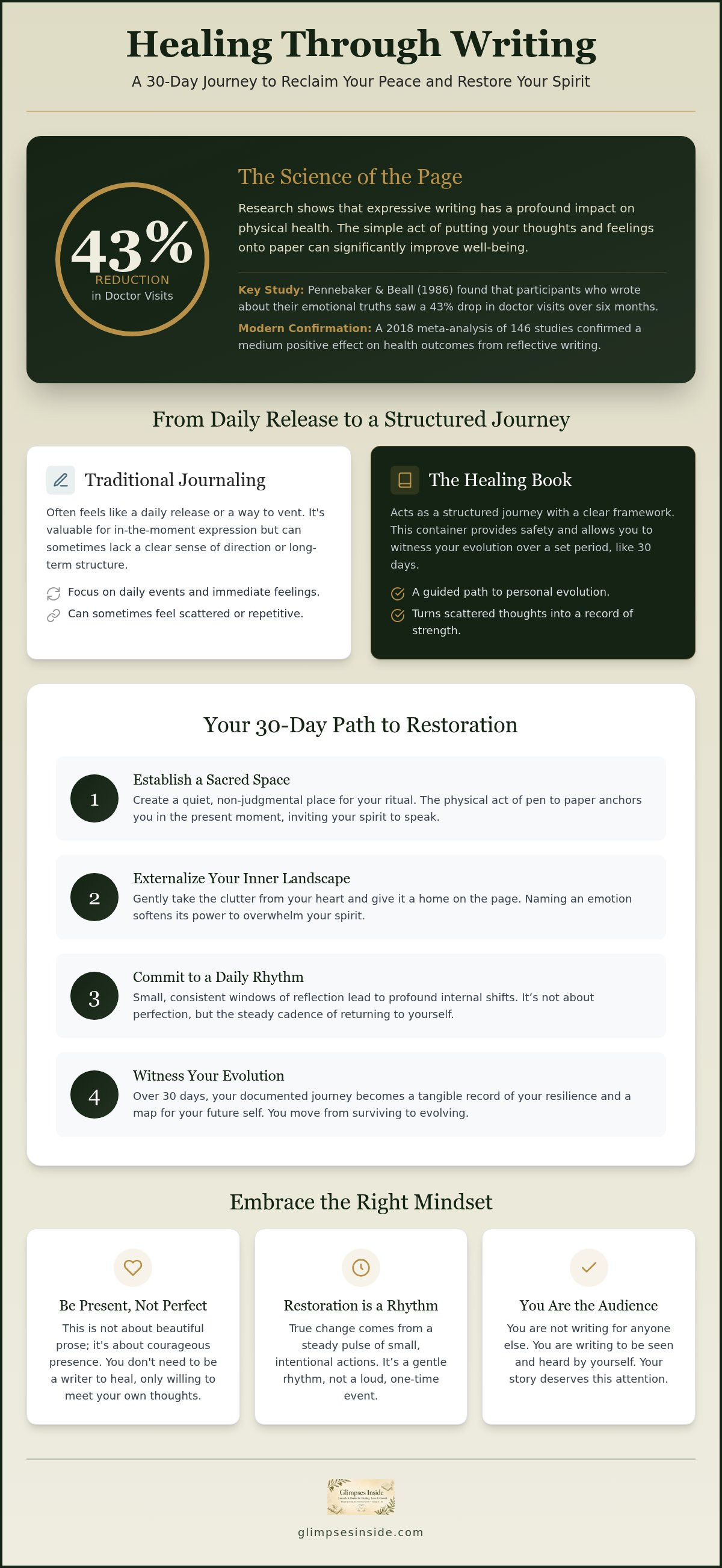
What if the simple act of putting pen to paper could reduce your physical doctor visits by 43%? Research by Pennebaker and Beall suggests that healing through writing books begins with this kind of expressive disclosure, offering a profound bridge between the heart and health. You likely know the weight of a cluttered mind. It feels like a tangled thread that's impossible to unravel. Perhaps you even feel the heavy pressure of doing self-care right, turning a moment of rest into another chore on your list.
True restoration isn't found in a finished manuscript, but in the intentional 30-day rhythm of returning to your own heart. In this guide, we'll explore how a structured path provides a sanctuary for your inner voice. You'll discover how daily rituals create a tangible record of your evolution, leading you toward a landscape of clarity and lasting peace. It's time to breathe again. Let's begin the journey of documentation and discovery together.
Key Takeaways
- Understand that restoration is a gentle act of externalizing your inner landscape. It is not about professional authorship, but personal evolution.
- Learn why healing through writing books helps you reclaim your peace. Naming an emotion on paper softens its ability to overwhelm your spirit.
- Release the pressure of perfection. You do not need to be a writer to heal; you only need the courage to be present with your own thoughts.
- Establish a sacred space for a daily ritual. Small, consistent windows of reflection lead to profound internal shifts over thirty days.
- Discover how the "Just 30 Days" series serves as a gentle companion. These structured tools provide the framework for your unique story to unfold.
What Does Healing Through Writing Books Actually Mean?
Healing is not a loud event. It is a soft, steady pulse. When we speak of healing through writing books, we aren't discussing the pursuit of a bestseller or the pressure of professional authorship. We are describing a gentle process of externalizing your internal landscape. It is the act of taking the heavy, wordless clutter of the heart and giving it a home on the page. This practice is a supportive whisper. It creates a sanctuary where vulnerability isn't just allowed; it's welcomed. You don't need a degree in literature. You only need a willingness to listen to your own breath.
For many, the idea of What is Writing Therapy? might sound like a clinical exercise. Here, it is a personal restoration. It's the belief that 30 days of small, intentional actions can lead to profound internal shifts. You aren't writing for an audience. You're writing to be seen by yourself. This isn't about prose. It's about presence. It's about the courage to name what hurts and what heals. By documenting your thoughts, you're building a bridge from where you are to where you wish to be.
The process of healing through writing books works because it offers a rhythmic cadence to your recovery. It transforms the chaotic noise of emotional clutter into a steady, manageable flow. By committing to this path, you acknowledge that your story deserves to be heard, even if only by you. You aren't just surviving; you're evolving. Each page becomes a testament to your resilience and a map for your future self.
The Difference Between Journaling and Writing a Healing Book
Journaling often feels like a daily release, a way to vent the day's frustrations. It's valuable, yet it can sometimes lack a sense of direction. A healing book acts as a structured journey. It's a container. By following a 30-day framework, you create a safe boundary for your emotions. This structure prevents you from feeling lost in the woods of your own thoughts. It allows you to see your evolution across a series of pages, turning scattered notes into a record of your growing strength.
Why Your Inner Landscape Needs a Sanctuary
Your inner landscape is a delicate map of connections, memories, and self-awareness. It needs a place to rest. The page acts as a non-judgmental observer, watching your growth without critique. There is a quiet power in the sensory experience of pen meeting paper. It serves as an anchor for stillness in a loud world. This tactile ritual helps you slow down, inviting the spirit to speak in its own time. In this space, you aren't "doing self-care right." You're simply being. It is a private world where you can finally exhale.
The Science of the Page: How Reflective Writing Restores the Spirit
The weight of unspoken words often feels like a heavy, internal fog. It clouds our vision and slows our spirit. However, the act of documenting these feelings does more than just clear the air. It changes our biology. According to The Science of the Page, expressive writing has a documented effect on physical health. A 1986 study by Pennebaker and Beall revealed that those who wrote about their emotional truths saw a 43% reduction in doctor visits over six months. This is the quiet power of healing through writing books. By naming an emotion, you strip it of its power to overwhelm. You move from being a victim of your feelings to a thoughtful observer of your own heart.
A 2018 meta-analysis of 146 studies confirmed these findings, showing a medium positive effect on health outcomes. This isn't magic. It is the result of focused attention and the gentle rhythm of the pen. When you move emotions from the heart to the page, you create distance. That distance provides the safety needed for true restoration. It allows you to breathe. It allows you to see the nuances of your own connection to the world without the pressure of immediate reaction.
Restoring the Hearts Rhythm Through Documentation
Writing is a rhythmic ritual. It mimics the steady beat of a heart at rest. When we engage in focused attention, we move from emotional clutter to a place of clarity. This isn't about a one-time "purging" of pain. It's about steady, incremental progress. A single session of venting might offer temporary relief, but a daily practice restores the spirit. It calms the nervous system. It teaches the brain that it's safe to explore the inner landscape. If you're looking for a place to begin, you might find comfort in the tactile grace of the Just 30 Days reflective publications.
From Chaos to Clarity: The Power of Narrative
Chaos is loud and disorganized. Narrative is quiet and structured. When you organize your thoughts into a 30-day story, you reclaim your agency. You're no longer lost in the middle of a storm. Instead, you're the author of your own restoration. This process allows ideas to breathe. It gives you the space to witness your own unfolding. Try this simple exercise today. Write a single sentence to define your current state: "My heart is a quiet room waiting for the light." This small act of documentation is the foundation of healing through writing books. It turns the messy reality of life into a meaningful record of personal evolution.
Common Misconceptions: Why You Do Not Need to Be a Writer to Heal
You are not an author in search of an audience. One of the most persistent hurdles to healing through writing books is the belief that you must be "good" at it. This isn't a creative writing workshop. There are no grades. No red pens. No critics waiting to dissect your grammar. Instead, think of the page as a peer on a shared path. It doesn't care about your vocabulary. It only cares about your honesty. When you write to heal, you are practicing presence. You are showing up for yourself in a way that few other rituals allow. It's about the heart, not the prose.
Many people stop before they begin because they feel they lack the "proper" tools. They think they need a class or a certificate to explore their own hearts. This is simply not true. By following Practical Steps for Emotional Restoration, you can begin exactly where you are. Your words don't need to be shared. They don't even need to make sense to anyone else. Their only job is to move the heavy weight of the internal landscape into the light of the page. You aren't performing. You're breathing.
The page is a non-judgmental observer. It receives your words without conditions. In the journey of healing through writing books, you'll find that the most profound shifts happen when you stop trying to sound like a writer. When you let go of the need for perfection, you create space for restoration. You allow your spirit to speak its own language. This language is often messy, fragmented, and raw. That is exactly where the healing lives.
Bypassing the Inner Critic
Silence the voice that says your words are too messy. Use short fragments. Staccato bursts of feeling. If the pressure feels too high, try the "Supportive Whisper" technique. Write as if you're speaking to a dear friend. Use "I" and "you" to create a dialogue with your own spirit. This lowers the stakes. It turns a daunting task into a gentle conversation. Don't censor the pain. Don't polish the joy. Let it be raw. Let it be real. Every unpolished word is a step toward clarity.
The Myth of the Finished Masterpiece
The process is the prize. The final product is secondary to the act of documentation. Focus on the tactile experience. The scratch of the pen. The texture of the paper. These sensory anchors keep you grounded in the present moment. Embrace the vulnerability of the unpolished word. A smudge of ink or a crossed-out line isn't a mistake. It is a record of your presence. It is proof that you were here, doing the hard work of personal restoration. You are creating a sanctuary, not a publication.
Your 30-Day Path: Practical Steps for Emotional Restoration
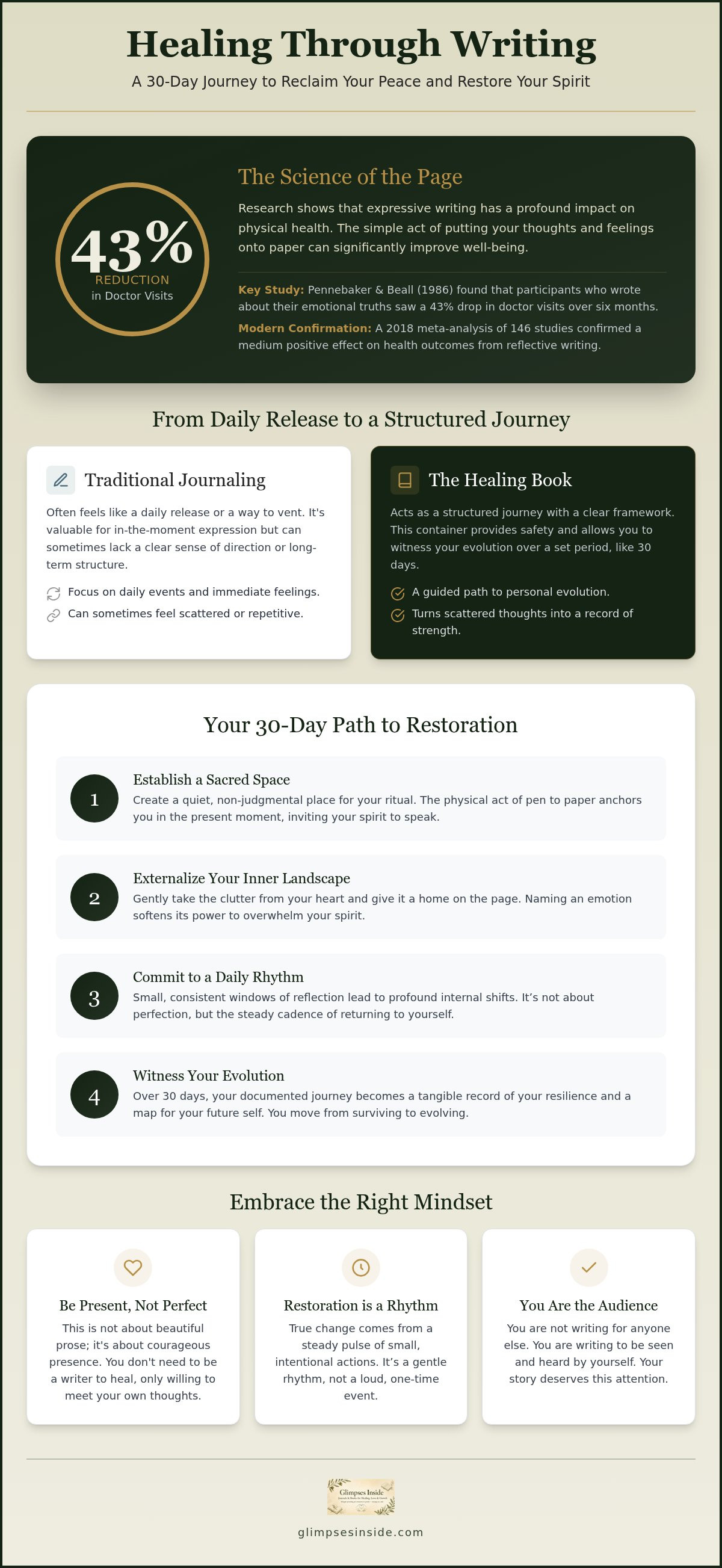
Restoration requires a container. It needs a place where the heart can feel safe enough to unfold. To embrace healing through writing books, you must first build a sanctuary within your own home. This isn't about elaborate rituals. It's about a chair. A candle. A quiet breath. Find a corner where the world's demands cannot reach you. Let this be your sacred space for the next month. Commit to a consistent time, even if it's only ten minutes before the house wakes. Consistency creates a rhythm that the nervous system recognizes as safety. It turns a simple habit into a supportive whisper.
Don't look at the mountain of your past. Focus on the small glimpses of your present. We often feel pressured to solve everything at once, yet healing through writing books is most effective when we look at the textures of the now. What does the air feel like today? What color is your current mood? By focusing on these small details, you bypass the anxiety of the blank page. When you close your journal each day, do so with a moment of gratitude. Thank yourself for the courage of being present. You're doing the work of personal restoration, one word at a time. It is a slow, beautiful unfolding.
Setting the Scene for Soulful Reflection
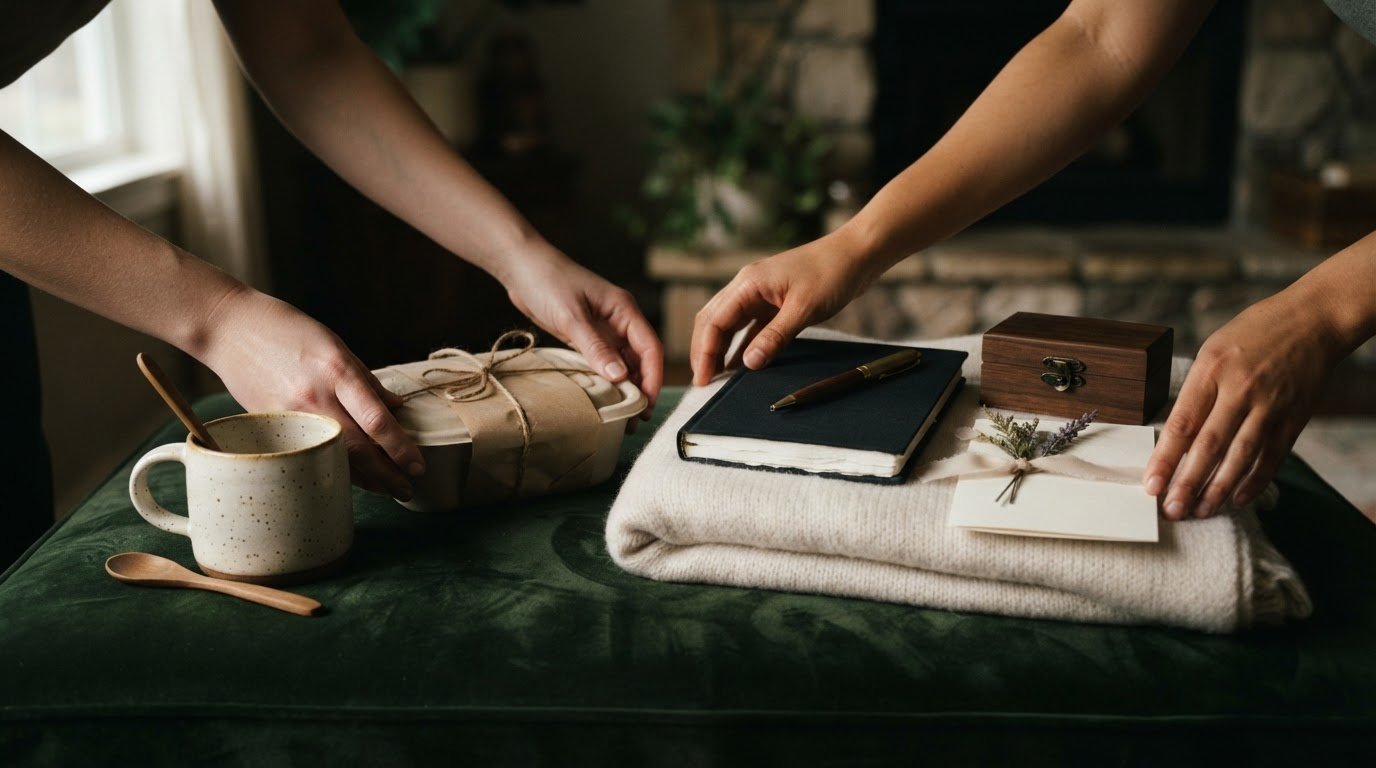
Your environment speaks to your spirit. Using curated gift boxes can transform a simple writing session into a tactile healing experience. These tools provide comfort, offering a sensory anchor that pulls you back to the present moment. A physical journal provides a weight and texture that digital screens cannot match. It invites a slower pace. It encourages a deeper connection between the hand and the heart. By choosing tools that feel nurturing and intentional, you signal to yourself that your growth is a priority. You're worthy of this quiet beauty.
Using Prompts for Personal Evolution
A prompt is a gentle guide. It is a supportive whisper that helps you begin when the words feel stuck. Daily prompts for personal growth move you past surface-level answers. They invite a deeper emotional intimacy with your own story. Instead of asking "How was my day?", try something more evocative. For example: "What is one small thing my heart needs today?" This question shifts the focus from external events to internal needs. It allows your inner landscape to breathe and expand. Find your entry point on this journey with the Just 30 Days series and curated gift boxes.
Finding Your Glimpse Inside: Tools for a Soulful Journey
Healing is not a destination. It is a shared path. As you explore the potential of healing through writing books, you need tools that respect the quiet pace of your heart. The "Just 30 Days" series, provided by Glimpses Inside, acts as a gentle companion on this road to restoration. These publications are not just journals. They are structured frameworks for personal evolution. Ianthe Writes creates these works with a deep intentionality, ensuring every page feels like a safe harbor for your thoughts. It is a soft-spoken confidence. A supportive whisper for your spirit. You aren't walking this path alone.
The brand's commitment to emotional safety means that every resource is designed to nurture, not overwhelm. We believe that small, consistent actions lead to the most profound internal shifts. By choosing tools that prioritize your heart and spirit, you create the necessary environment for lasting change. This is the beauty of an unfolding process. It is a slow, methodical approach to self-awareness that values patience and presence over surface-level interaction. Your story is sacred, and the tools you use should honor that truth.
The Just 30 Days Series: A Month of Discovery
Transformation cannot be forced. It must be invited. The Just 30 Days series offers a month of discovery that prioritizes your emotional safety. Each publication provides a steady, unhurried framework. You move from the clutter of the mind to the clarity of the spirit. There is a profound value in gradual growth. It allows your roots to find solid ground before you reach for the light. These books don't demand perfection. They only ask for your presence. By documenting your journey over a month, you create a tangible record of how far you've come. It is a record of personal restoration.
Thoughtful Gifts for the Spirit
Sometimes, the journey is too heavy to carry alone. Curated gift boxes offer a tactile comfort that words alone cannot provide. These are intentional gift boxes for her, designed to honor a unique story. They support a friend in a hard season by grounding the senses. The scratch of a pen. The weight of a bound book. The warmth of a shared intention. These sensory anchors make the act of healing through writing books feel supported and nurtured. It is a soulful way to say, "I see your journey." Each box is a collection of intentionality, designed to help the reader feel seen and understood in their private landscape.
Your evolution deserves a witness. You are worthy of the time it takes to heal. Explore the Just 30 Days collection at Glimpses Inside to find the companion your spirit needs.
Embrace the Rhythm of Your Restoration
The path of healing through writing books isn't about becoming a literary master. It's about returning to yourself. You've discovered how 30 days of focused attention can calm the nervous system and clear emotional clutter. Small, rhythmic actions lead to profound internal shifts. Your story doesn't need to be perfect to be powerful. It only needs to be true. It needs a place to land.
By creating a sacred space and using gentle frameworks, you allow your inner landscape to breathe. Ianthe Writes offers these reflective works to act as a supportive whisper in your private journey. Together with curated gift boxes for intentional living, these tools provide the tactile comfort your spirit deserves. You're ready to move from chaos to clarity. Trust the steady, unhurried pace of your own heart. Your evolution is a beautiful map of where you've been and where you're going.
Begin your 30-day journey to restoration with Glimpses Inside. You are seen. You are understood. Let the unfolding begin.
Frequently Asked Questions
Do I need to have a background in writing to benefit from this process?
No background in writing is required to begin this journey. This practice isn't about professional authorship or perfect grammar. It's about the heart. You're documenting your internal landscape, not creating a bestseller. If you can hold a pen and listen to your own breath, you have everything you need. Healing through writing books is a tool for every soul seeking restoration.
What if I find it too painful to write about my past experiences?
You don't have to face the whole storm at once. If the past feels too heavy, focus on a single, small glimpse of the present. Write about the light in the room or the weight of the pen. This gentle approach creates a sanctuary for your spirit. You're in control of the pace. There's no pressure to exorcise trauma; just be present with what is.
How much time should I dedicate to writing each day for healing?
Aim for small, manageable windows of quiet. Ten to fifteen minutes each day is often enough to create a rhythmic cadence of reflection. Consistency matters more than length. These brief bursts of attention allow your ideas to breathe. They prevent the process from becoming another chore on your list. A steady pulse of daily writing leads to the most profound internal shifts.
Can I use a digital app, or is a physical journal better for reflection?
A physical journal is often better for deep reflection. The tactile experience of pen on paper acts as an anchor for stillness. It forces you to slow down, mimicking a calm pulse. Digital apps can be distracting and fast paced. In contrast, the sensory act of documentation helps you stay grounded in the present moment. It turns your ritual into a tangible record of evolution.
What is the "Just 30 Days" series and how does it help with healing?
The "Just 30 Days" series is a gentle month-long framework for personal evolution. These publications provide the structure needed for emotional safety. They guide you through a process of gradual transformation. Instead of forced change, they invite a slow unfolding of your own story. Each book acts as a steady, non-judgmental hand, helping you navigate the nuances of healing through writing books.
How do I choose the right prompts for my personal growth journey?
Choose the prompt that feels like a supportive whisper to your heart. If a question feels too loud or intrusive, set it aside. The right prompt should invite curiosity, not judgment. Look for prompts that focus on small details of your inner landscape. A simple question, like "What does my spirit need today?", can open the door to deep, unhurried clarity and peace.
Is healing through writing a substitute for professional therapy?
Writing is a powerful companion to restoration, but it's not a substitute for professional therapy. It is a tool for self-awareness and processing. If you're navigating severe trauma or mental health conditions, please seek support from a licensed professional. This practice works best as a daily ritual that complements your broader journey toward health. It's a way to listen, while therapy is a way to be heard.